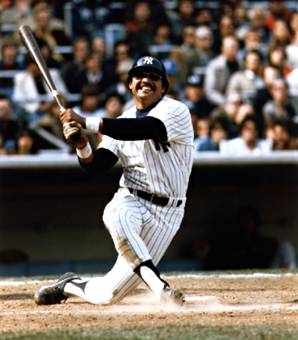
"A New York Treasure" --Village Voice

Blog Archives

           Newer posts

A Tie We Can Agree On

With a debate raging over our reactions to yesterday’s draw with England, we went to bed a Banter divided. Tonight, because of a tie of a different sort, a tie for first place, we’re reunited in contentment, or as our esteemed founder would say, as a bunch of heppy kets.

The Yankees completed their sweep of the Astros 9 to 5 just before the Marlins won their series with the Rays, dead-heating the AL East rivals at 40 and 23. The Rays’ funk came after the Yankees’ rut, but they are remarkably similar. After a blistering 21-8 start, the Yankees lost one to the Red Sox and proceeded to gag 12 of 20. The Rays were a mind-boggling 30-11 before getting swept by the same Red Sox on their way to losing 11 of 19. At least the Yankees can point to some injuries – the Rays can only blame gravity. And the schedule plays a part in this too. The Rays benefitted from a soft start, the Yankees are currently enjoying the Snuggle Fabric Softener portion of their schedule en route to a fluffy-fresh bounce back – 11 wins over the last 14 games.

If Phil Hughes falls short of any statistical milestones this season, I think he’ll look back on the rain-soaked battle with Tony Manzella in the sixth inning today and the ensuing four runs will stick between his teeth like broken pieces of sweet summer corn. Six innings, five hits, one inconsequential run and six strikeouts would have been another fine plank in his pleasantly plausible Cy Young platform. As the box score reads, he got bombed by the weak-hitting Astros. I was miffed about Jeter’s inability to get to Manzella’s topper, and before I could finish the grouse, Cash had homered.

(more…)

Jabulani!

Hard to imagine that the biggest tournament in the world would introduce a new ball, but that’s what they’ve always done.

USA vs England at 2:30. Hope the boys bring it today, England will be looking to deconstruct the States back into to colonies.

Million Dollar Movie

In one of Burt Lancaster’s finest roles he had the misfortune, and then the great fortune, to go head-to-head for the audience’s affection with Susan Sarandon’s lemons.

Louis Malle’s Atlantic City (1980) traces the decay and rebirth of a city and a man as Lou (Burt Lancaster), an aged one-bit-hood who’s sniffed but never tasted a life of crime, bumbles his way into his beautiful neighbor’s screwed-up life. That neighbor is Sally (Susan Sarandon), and her daily work in a casino oyster bar leads to the ritual cleansing of her bare breasts and arms with lemon juice each night. Watching the painstakingly thorough application of said juice through Sally’s kitchen window, we share a voyeur’s perch with Lou from his darkened room next door. Thus begins our identification with Lou–through our common depravity.

The first fifteen minutes spread out silently, setting the plot and place like a gentle ocean wave lapping the shoreline. Such sustained quiet in a film is striking in its own right, but all the more unlikely when you realize it was written by a playwright. This is John Guare’s only attempt at conceiving a project explicitly for the silver screen, and you wonder if he just got bored with the medium because it came so naturally to him.

Louis Malle has juxtaposed much of the opening action with scenes of demolished and decayed buildings. Old Atlantic City was razed and rebuilt with the legalization of gambling in 1976, a metamorphosis etched in the lines of Lou’s rumpled suits. Gone is the city’s axis of organized crime, replaced by the glitz of the legal jackpot and the free-for-all drug trade. Lou is just another decrepit structure, waiting for the wrecking ball. Watching Lou running numbers through the poverty stricken parts of town, or trying to hock a shamefully stolen cigarette case, he seems outside of time–like a guy selling Christmas trees in May.

(more…)

I Can Lose That Game in 5 Pitches

My TV is busted. Been without the glow and hum since May 20th, and really, it’s not that bad. But it makes writing a game recap a little more difficult. There’s always the radio though, and I planned on listening to the game and relaying that experience to you. It wasn’t the best laid plan, but damn if it didn’t go astray anyway.

Photo by Greg Stone

What happened is the new public art project in New York called “Key to the City” and it’s unexpected popularity at 5:45pm on Friday night. The project is designed to recreate the experience of receiving a key to the city, but one that actually opens things – 24 locations scattered around the five boroughs. I work right next door to the kiosk where they are handing out the keys, and figured I would surprise my wife and bestow a key upon her, and make it home in plenty of time for the first pitch, natch.

Two hours later, the Yanks were already knee deep in Cecil-induced frustrations and I was finally getting that key. Starving, we headed to Bon Chon on 38th for some fabulously fried chicken wings and plopped down right in front of AJ Burnett and Jose Bautista facing off in the bottom of the second.

We stayed through the bottom of the fourth. As we left, I had a strong suspicion (and trail of garlic-soy) I had seen the five pitches that would be worth writing about. Here they are chronologically:

1) Bottom 2nd, none out, none on, 3-2 count on Jose Bautista. Blammo. A string-straight fastball, crushed appropriately. As he circled the bases, a YES graphic informed me it was his 17th of the year. What the shit?

2) Top 3rd, man on 2nd, 2 out, no count on Derek Jeter. Derek swung at the first pitch and was badly beaten on a change-up. He grounded out weakly to 3rd. I think a large part of why Cecil was so effective was his use of the change-up versus aggressive hitters in big spots. Jeter got totally abused there, as did Cano in the fourth when he struck out on five straight balls, none of them close.

3) Top 4th, man on 1st and 2nd, 0 out, 0-1 count to Arod. Ball in the dirt, scooted through Buck’s legs and he jumped up with no clue where the ball was. Swisher was not ready to take third. Shoulda, woulda, coulda. It immediately occurred to me as important, but that is not because of any prescience, it’s just because I’m a buzzkill.

4)  Top 4th, man on 1st and 2nd, 0 out, 1-1 count to Arod. Somewhat well struck one hop liner turned into a DP with a high degree of difficulty for both the shortstop and the second baseman. The former had to stick with the hard hit ball to his left and the latter had to barehand an errant shovel pass. Not only was this double play made possible by Swisher’s failure to run the bases aggressively, I think it was a base hit if Gonzalez is not playing at double play depth.

5) Bottom 4th, man on 1st, 1 out, 2-0 on Bautista. Hard to believe, but this pitch was even more hittable than the last one, and number 18 went even further than number 17 (or seemed to anyway, I don’t have the distances). To make matters worse, there was a guy on first via one of the cheapest hits you’ll ever see.

And then a nice subway ride home and a check on the score did nothing to inspire me to catch Sterling’s call of the final few futile innings of the 6-1 loss. Not a good game, and the Rays are only down 3 runs in the seventh right now, so that’s probably an 80-20 shot at another victory for them. Glad I waited on line for that key.

Revising A Miracle, Part 3: Bridge & Tunnel

Hat Design by Ben DeRosa

This is a collaborative effort of words, numbers (Chris & Jon DeRosa) and original artwork (Ben DeRosa) dedicated to the memory of Joseph DeRosa, our grandfather, who pretty much hated every personnel move his beloved New York Mets ever made.

In Parts 1 and 2, we relived the meat of the Mets championship years. We now revisit the end of the 70s, when the Mets, disco and SkyLab succumbed to the inevitable pull of gravity.

1976 – 2nd Place NL East

Hitters

player avg obp slg ws
Grote c 0.272 0.350 0.365 12
Milner 1b 0.271 0.362 0.447 19
Millan 2b 0.282 0.341 0.343 16
Garrett 3b 0.223 0.359 0.311 9
Harrelson ss 0.234 0.351 0.298 13
Singleton lf 0.288 0.379 0.418 24
Otis cf 0.280 0.341 0.446 25
Jackson rf 0.283 0.358 0.513 25

Hurlers

pitcher ip hits bb k era Ws
Seaver 271 211 77 235 2.59 20
Ryan 271 198 188 312 3.75 17
Matlack 262 236 57 153 2.95 18
Koosman 247 205 66 200 2.69 20
Lockwood 94 62 34 108 2.67 15
Apodaca 90 71 29 45 2.81 6

Anticipation for the first ever Bridge & Tunnel Series ran high as the Mets had their best club since 1973, and Yankees were charged up under new skipper Billy Martin. Each led their divisions into September, but the while Yankees went wire-to-wire by a stride, the Mets couldn’t shake Philadelphia. Rallying behind former Mets fireman Tug McGraw, the “You Gotta Believe” Phils snuck ahead at the finish line. Cincy beat the Phils and then swept the Yanks for their second straight title. The disappointment got the best of M. Donald Grant and, believing the team needed a spark to get back to the top, replaced manager Yogi Berra with veteran third baseman Joe Torre (“Joe Who?” wondered the writers accustomed to the Mets being managed by heroes of ‘50s New York baseball scene). Shocked and hurt to be cast aside despite his successful record, Berra did not return to Shea Stadium for Old Timer’s Day for another ten years.

(more…)

Revising A Miracle, Part 2: The Kings of New York

This is a collaborative effort of words, numbers (Chris & Jon DeRosa) and original artwork (Ben DeRosa) dedicated to the memory of Joseph DeRosa, our grandfather, who pretty much hated every personnel move his beloved New York Mets ever made.

In Part 1: Meet the Amazins, we covered 1966-1971, the infancy of the Mets dynasty, as they consolidated their young talent and took one huge step forward, but two minor steps backwards in seek of their first world championship.

1972 1st Place NL East

Hitters

player avg obp slg ws
Dyer c 0.231 0.299 0.375 16
Milner 1b 0.238 0.340 0.423 15
Boswell 2b 0.211 0.274 0.318 5
Garrett 3b 0.232 0.374 0.315 13
Harrelson ss 0.215 0.313 0.266 13
Singleton lf 0.268 0.357 0.406 18
Otis cf 0.310 0.372 0.440 22
Jackson rf 0.286 0.376 0.516 26

Hurlers

pitcher ip hits bb k era ws
Ryan 269 174 164 311 2.78 24
Seaver 262 215 77 249 2.92 22
Matlack 244 215 71 169 2.32 22
Gentry 164 153 75 120 4.01 4
McGraw 106 71 40 92 1.70 22
Frisella 67 63 20 46 3.34 6


Patience paid off the next year. Yogi Berra, taking over for the late and lamented Gil Hodges, committed a rotation slot to live-armed but underachieving 25-year-old right-hander Nolan Ryan. Ryan was another one of those great deals-not-made. Rumors at the time had him nearly traded to California Angels for 30-year-old shortstop Jim Fregosi. But with bats like Jackson, Otis, and Singleton’s in the outfield, the Mets decided they could take a chance on a light-hitting infield. The slumping Cleon Jones, who never really was a first baseman, lost playing time to John “The Hammer” Milner. And Ryan broke out with 17 wins and 311 strikeouts. The Mets won 98 games, defeated the talented Reds in the NLCS, and bested the Detroit Tigers in the World Series to bring New York City its first championship in a decade. Reggie was the series MVP.

1973 1st Place NL East

Hitters

player avg obp slg ws
Grote c 0.256 0.290 0.316 7
Milner 1b 0.239 0.329 0.432 15
Millan 2b 0.290 0.332 0.353 20
Garrett 3b 0.256 0.348 0.403 21
Harrelson ss 0.258 0.348 0.309 13
Singleton lf 0.294 0.416 0.466 28
Otis cf 0.294 0.361 0.478 29
Jackson rf 0.306 0.398 0.554 32

Hurlers

pitcher ip hits bb k era ws
Ryan 308 251 171 362 3.39 28
Seaver 290 219 64 251 2.08 29
Matlack 263 234 76 156 2.84 16
Koosman 242 210 99 205 3.20 18
McGraw 119 106 55 81 3.87 10
Sadecki 117 109 41 87 3.39 7

Led by four stars they’d nearly traded and one they won in a lottery, the 1973 Mets won 105 games and their second consecutive championship. The only stumbling block to this juggernaut was the spirited fight put up by the Cincinnati Reds in the playoffs—a series made famous by Pete Rose taking out Bud Harrelson at second base in the fifth inning of Game 3, and the fight it sparked. Furious at Rose’s apparent bullying of the smaller Harrelson, Shea fans pelted the Cincy outfielder with barrage of the free Reggie Bars passed out at the gate that day. Sparky Anderson had to pull his team off the field.  Mets players begged their fans to calm down while the grounds crew quickly cleared the field of the familiar orange-and-blue-wrapped confections. The Mets and their wild fans outlasted the Reds in five games, and it was on to the World Series against the game but overmatched Oakland A’s. Reggie added another Series MVP trophy to his regular season NL MVP Award.

Of course, ‘72-73 Mets were not merely a great team. They were the great team that ran the Yankees out of New York. If the Mets had somehow let this star-studded back-to-back championship team get away from them, would George Steinbrenner have gone through with his rumored plan to renovate the original Yankee Stadium? As it was, the prospect of playing second-fiddle in Shea Stadium to the city’s #1 team was distasteful enough, and with Mayor John Lindsay wearing his Mets’ cap everywhere, the Yanks were not in a position to hold up the city for a lot of help in the Bronx. Shortly after the series, Steinbrenner announced that the Yanks would move to a state-of-the-art facility in the Meadowlands in 1976.

1974 – 1st Place NL East (tie)

player avg obp slg Ws
Grote c 0.256 0.290 0.316 5
Milner 1b 0.239 0.329 0.432 15
Millan 2b 0.290 0.332 0.353 13
Garrett 3b 0.256 0.348 0.403 16
Harrelson ss 0.258 0.348 0.309 14
Singleton lf 0.273 0.382 0.373 16
Otis cf 0.286 0.350 0.439 22
Jackson rf 0.314 0.420 0.556 30

Hurlers

pitcher ip hits bb K era ws
Ryan 311 235 215 343 3.50 21
Matlack 265 258 76 195 2.41 24
Koosman 265 258 85 188 3.36 17
Seaver 236 199 75 201 3.20 16
Apodaca 103 92 42 54 3.50 7
McGraw 89 96 32 54 4.16 4

The Mets seemed to be on cruise control in 1974, winning 88 games to finish in a first-place tie with Pittsburgh. They snapped into crisp form in time, however, to win the special best-of-3 playoff with the Pirates, defeat a powerful Dodger team in the NLCS and finally get their revenge on the Orioles in the World Series. The series against the Pirates, with each team wining in their last at bat at home in all three games, is known as the greatest non-postseason series of all time. The bad blood that had simmered for years of ultra-close competition boiled over as the Pirates instigated a brawl during the Mets champagne celebration. To this day, the Pirates and Mets can’t fit in a three game series without a bench-clearer. By the time the World Series rolled round, the Mets were firing on all cylinders, which many attribute to the brawl. The punchless O’s couldn’t put any rallies together against Ryan, Seaver, and Matlack’s shutdown pitching. The series sweep drew comparisons to the Orioles’ own domination of the Dodgers in ’66.

1975 – 1st Place NL East

Hitters

player avg obp slg ws
Grote c 0.295 0.357 0.373 18
Torre 1b 0.247 0.317 0.357 8
Millan 2b 0.283 0.329 0.348 17
Garrett 3b 0.206 0.379 0.383 13
Phillips ss 0.256 0.300 0.326 8
Singleton lf 0.315 0.431 0.478 33
Otis cf 0.252 0.348 0.395 17
Jackson rf 0.254 0.330 0.515 27

Hurlers

pitcher ip hits bb k era ws
Seaver 280 217 88 243 2.38 26
Koosman 240 234 98 173 3.42 13
Matlack 229 224 58 154 3.38 12
Ryan 190 156 135 179 3.79 12
Baldwin 97 97 34 54 3.33 6
Apodaca 85 66 28 45 1.49 13

It seemed as if the Mets could just turn it on when they had to, and the team again edged their division rival Pirates in a close race with 93 wins. But winning on muscle memory wouldn’t work against Cincinnati’s retooled Big Red Machine, who swept New York from the playoffs and from their perch as the best team in baseball. Reggie gave a thoughtful, self-critical interview to Sport magazine taking all the blame for the NLCS collapse. “I’m the straw the stirs the drink,” he ruminated. “When we lose, it’s because I stirred it bad.”  Teammates and reporters praised Reggie for his leadership and he inadvertently coined his own enduring nickname: The Straw.

Coming tomorrow… The icy hand of death gropes the dynasty, but not before one last lurch at victory, in Revising a Miracle, Part 3: Bridge & Tunnel.

Win Shares from Bill James & Jim Henzler, Win Shares (2002); ersatz Met stats derived from Baseball Reference’s cool neutralized stats feature.

To see more of Ben’s artwork, check out inkstink.

Revising a Miracle, Part 1: Meet the Amazins

Original Artwork by Ben DeRosa

This is a collaborative effort of words, numbers (Chris & Jon DeRosa) and original artwork (Ben DeRosa) dedicated to the memory of Joseph DeRosa, our grandfather, who pretty much hated every personnel move his beloved New York Mets ever made.

Over at the Hardball Times, one of our favorite baseball writers, the estimable Steve Treder, does these fascinating roster reconstructions, speculating on what might have happened if this or that team hadn’t gone through with some pivotal personnel decisions. In one piece, he imagined what might have become of the Braves had they not passed on Willie Mays. In another, he asked what if the Giants had sorted out their talent correctly in the 1960s. The “what if” scenario that most tantalizes Yankee fans is, of course, “what if the Yankees had held onto the group of prospects they produced in the mid-90s?”

What if the Yankees hadn’t given up on Andy Pettitte and dealt him off the National League in 1994? Then they might not have been so desperate for left-handed pitching that they were willing to swapfuture all-stars Jorge Posada and Mariano Rivera to Detroit for David Wells. While Mariano has earned a reputation as a postseason choker due to his memorable meltdown in his first and only postseason appearance in 2006, it’s quite possible that with a few more chances he might have sorted things out.

What if the Yankee front office saw the charismatic future star they had in Derek Jeter, and hadn’t traded him to the Reds? Unlikely? Sure. But just pretend for a minute that Tony Fernandez had gotten injured at the outset of the 1996 season, and Jeter had gotten a chance to play in pinstripes.

It is difficult, even in the form of a Marvel Comics “What If?” fantasy, to imagine Bernie Williams starring for the Yanks instead of the Sox—when has George Steinbrenner ever given an unproven outfielder 1300 plate appearances to blossom?—but for the sake of argument, let’s just say that George was somehow suspended from making a premature call on Bernie and he roamed centerfield for an entire decade. What then?

With their actual free-agent signings to buttress this up-the-middle talent core, the Yankees might have had some kind of ballclub in the late 90s-early ‘00s.

To indulge such an exercise, you have to imagine the very same people behaving differently, but even still, it is remarkable that such a thin tissue of attitudes and circumstances means the difference between a great team coming together or not. Go back and check the trade rumors swirling around the NL forty years ago, for instance, and you will see that but for a few key decisions, the Amazin’ Mets dynasty of the 1970s might too have been scattered to the winds.

(more…)

The Battle of Emergency Starters

Sergio Mitre took the ball to the hill for an emergency start against the Tigers tonight. That’s not a good initial ingredient for a victory, but his opposite number was also a fill-in named (checking his name…) Brad Thomas. So there was some reason to hope. The Tigers cracked Mitre for four runs, but the Yankees merely dented Thomas for two. And after some radar-gun frying relief pitching, the clearing smoke revealed a 5-4 victory for Detroit.

Both starting pitchers were bad, but Jim Leyland tossed his pea-shooter aside earlier than Joe Girardi. The bridge to the endgame flame throwers featured only an annoying run charged to Boone Logan’s suspiciously modest account (Is he hiding runs in an off-shore ERA?).

Zumaya, Chamberlain and Valverde took turns trying to short circuit the radar gun – Zumaya winning bragging rights by going over 100 mph several times. However, he almost lost the game, as the Yanks did manage to get to him for two runs in his third inning of work. Jeter had a particularly brutal game at the plate, but almost delivered the game-changing hit with the tying and go-ahead runs on with two outs in the eighth. I never thought it was going to fall, but at least he worked the count and hit it hard. The game ended on six straight K’s and only one of the victims even managed a foul ball.

(more…)

Wish Fulphilment

I have to admit, in June of 2004, I was not paying attention to the Amateur Draft. Nor was I terribly familiar with the Yankee farm system beyond whatever floated to the surface to fill in for the big club when necessary. But when the Yankees stopped appearing in the World Series, when the Red Sox completed their 86 year design to capture a title, and then improved that design by 83 years to win a second, I began to look to the Minor Leagues for hope. And hope quickly became personified in Phil Hughes.

As the Yanks kept slipping further and further away from another championship, the future of Phil Hughes became more and more important to the future of the Yankees. Thus, it was doubly frustrating when his prospects started to fade the closer he approached the Major Leagues. Injuries and mixed results, promotions and demotions, trade rumors and the emergence of other young Yanks all combined to lessen expectations significantly.

But I think a good many Yankee fans (and a high percentage of the Banteratti) never gave up on Phil. The connection I established with him in the Minors, when he provided a glimpse of a possible successful future for the Yankees at a time when the varsity team kept concocting disappointments, was strong enough to withstand the false starts and setbacks. So now that he has twirled his fourth solid game and second absolute gem of the 2010 season, his early performance is my favorite story line of the young season.

Hughes dominated the White Sox today and the Yankee offense had its best game of the year and they cruised to an easy 12-3 victory. On a day that was hot-as-heck, the Yanks wisely won this one without breaking a sweat.

Phil followed a very similar pattern to his near-no-no in which he established an excellent 94 mph fastball early in the game, and then worked his 89 mph cutter in liberally before turning to the slow curve ball (which looked to me like his best curve ball of the season) later in the game. In stark contrast to the nibbling, insecure and drawn out style he had exhibited in starts in 2008 and 2009, Hughes has been a pleasure to watch this year.

On offense, Brett Gardner crushed one. Really leveled it and sent it several rows back in right center field. From the vantage point we’re afforded on TV, it was a no-doubter. Mark Teixeira had four hits. That’s six hits in two May games, 11 hits in 22 April games. How many strong Aprils would Teix have to submit before he could alter the narrative he’s now established as a slow-starter? The fact that he began hitting the day the calendar changed set this thing is stone for New Yorkers, I think.

(more…)

Short Work

CC you later, Texas. After nine games against very good, and very disciplined offenses, it was friggin’ beautiful to see the Texas Rangers swing at everything. And they missed almost everything, so that made it even better. The rain shortened the affair to a 5-1 Yankee victory in only six innings, but the only consequence of the premature end was to cap the number of whiffs for CC at nine. Had the weather been dry (and had Jeter made a very makable play in the first inning) we’d be looking at a second consecutive deep dominant game and quite possibly a nifty little 16 or 17 inning April scoreless streak.

CC had all his pitches working tonight. Check out how he worked over the Rangers for the nine whiffs. It was a classic case of a brilliant starting pitcher turning the lineup over like a flapjack. As he got into the fifth, he had tempted three lefties to chase the slider. And three righties went fishing for the change-up (he also froze Cruz on a fastball in the first). Then a string bean named Arias (a previous changeup fisherman) held back long enough on another well placed two strike changeup to guide it into centerfield for a base hit.

If you have access to the game, watch CC’s reaction as the ball floats up the middle and past Jeter. He was pissed. He had this guy dead to rights, and then he’s standing on first base. He knew at that moment, he had gone with plan A long enough. But with all his pitches working, plan B was dynamite, and if he needed it, he could have come close to completing the alphabet. The next time a righty got two strikes, CC suspected Teagarden was sitting on the change-up, so he dropped in an impeccable slider for the backwards K. Then when he got two strikes on a lefty, he encouraged Hamilton to expect the slider away, and promptly buried him on the inside corner with the heater.

(more…)

Big Ben, Parliament

Phil Hughes and Joba Chamberlain, the Yankees’ two best right handed pitching prospects of my lifetime, don’t stand at a crossroads of their careers – they stand at a cloverleaf freeway entrance. Since 2007, Joba has been a starter, a reliever, a starter, a reliever, a starter, a reliever, a competitor for a starting job, and currently, a reliever. Phil has a more reasonable track record. He’s been a starter, a reliever and currently a starter. The buzz is that Joba may never make it as a starter, and if Phil also fails, they Yankees will have to ask if they handled them correctly.

Off the top of my head, I can think of several high profile, pitchers who jumped back and forth between starting and relieving roles and whose destinies were not forever derailed. Adam Wainwright and David Price pop immediately into mind as starters turned relievers turned back to starters with little detriment. And who could think that Mariano Rivera or Jonathan Papelbon were meant to do anything but hasten the extinction of rally caps and monkeys? Did the Yankees do anything that differently with Joba and Phil than has been done in the past?

I think the Yankees have a healthy respect for pitch counts and innings limits and are willing to pre-determine usage quantity for their young guys in the name of injury avoidance. But after that, I think they really don’t see much difference in which roles their pitchers accumulate those innings. What this may mean is that the arms are protected, but the starting pitching skills are severely under-developed.

Joba throws a 96-97 mph fastball out of the pen. He throws a 92-93 mph fastball in the rotation. Hughes throws 95 in the eighth, but only 91 in the first. These guys have to learn how to get out MLB hitters with the lesser stuff if they want to make it as starters. In short relief, they rarely work in a third pitch, and they never have to face any hitter more than once in a game.

(more…)

The Price of Business

Through three innings, David Price was so dominant that it looked to me like he was a real threat for a no-hitter. He painted the corners with 97 mph fastballs and induced swings so late that you could hear the thud of the catcher’s mitt before you saw the barrel of the bat cross the plate.

(AP PHOTO/MIKE CARLSON)

He eventually lost a few mph on the heater as the game progressed. Alex Rodriguez and Nick Swisher got good wood on a couple of fastballs over the middle of the plate in the third and staked the Yankees a very, very brief 2-0 lead. Price quickly regrouped. He mixed in some of his other pitches and cruised into the eighth before losing the script. The Rays bullpen got the production back on track for an easy 9-3 victory.

For the first three innings, Javier Vazquez kept up his end of a potential pitching duel. He complimented an ordinary, but well-placed 89 mph fastball with impressive breaking balls and a really good looking change-up. While he clearly didn’t have the stuff of his counterpart, he looked like he would be effective for several innings. He wasn’t.

With a freshly minted lead, Vazquez walked Ben Zobrist on four pitches to lead off the bottom of the fourth. With one out and the count even at 1-1, Javy went to the gopher ball, 89 mph, perfectly located up and out over the plate… for Carlos Pena to poop on. Vazquez didn’t have much else to offer that inning, and with Marcus Thames playing left field like he was handling nuclear waste, the Rays made Javy’s assortment of previously impressive pitches look like just so much slop. Hit after hit after hit made it 5-2.

Javy’s night wasn’t done there. Somehow he was still in there in the sixth to ensure Willy Aybar’s first start of the 2010 season be a memorable one. All in all Vazquez allowed eight earned runs in five and 2/3 innings. He allowed 11 baserunners in the process of recording 17 outs. It was worse than any start in the entire 2009 season with the Braves.

When Vazquez came aboard in the winter, I anticipated a divide within the fan base. Those who put great value in advanced metrics loved the move and harbored little to no grudge for 2004. Others would just not accept the guy who etched in stone the most embarrassing choke in team sport history. I tried to come down with the smarties, but tonight, as Vazquez evaporated in the 4th, I just found myself unable to do it. I really expect nothing from this guy this year.

Anyway, as much fun as it would be to pile on Javy’s dud, the real story was Price. Cliff was all over it in the pre-game post; Wright is the key to the Rays’ season. He looks like he is ready to take a huge step forward this year. He may have dropped some weight – it was especially evident in his face. His large, sad eyes, peer out from sunken sockets under the shadow of the bill of his cap. His milk saucer ears, and long, gaunt, face with big rubber-ish features reminded me of Brad Daugherty from his UNC days.

He had his best stuff for three innings, and his b-grade issue was excellent until the eighth. He looks to be a scary opponent for a long time.

The Wisp

These are words that occur to me while watching Brett Gardner swing the bat: flick, flip, flail, fling, wisp,  slice,  slash,  stab,  slap, poke, yank, jerk, and (perhaps a case of wishful thinking) drag and bunt. Doesn’t this unique hack deserve a nickname?

I have a batting tee set up in the living room for my two young sons (one and two-and-a-half) and occasionally they paddle over and take a swipe at the ball without provocation and sans instruction. The bat we’ve got is a little too hefty for the one year old to manage on his own, so he turns it around, holds the barrel, and addresses the ball with the handle. He doesn’t blast the ball off the windows, but he makes contact. 

Brett Gardner has never gone up holding the wrong end of the bat (though in his debut season, he had considerable difficulty holding onto the right end – I personally saw him chuck the bat on a swing and miss three times in two games), but he has taken a similar approach to hitting. He has developed a convoluted swing that allows him to make consistent contact against Major League quality pitching. This is no small feat, but the result is not pleasing to watch. In his brief time in the Majors, I have developed a strong negative opinion of him as a player because of this swing and the often meager results. I’ve never looked forward to watching his at bats.

(more…)

Looking Forward to…

…Curtis Granderson.

Curtis Granderson’s 2007 numbers read like fiction. It’s hard for me to imagine a player with 38 doubles 23 triples who stole successfully 26 of 27 tries, and still managed to insert 23 homers into his statline. And for good measure, one of those homers was an inside-the-park job versus the Yanks. You’d feel ashamed to create such a player’s strat-o-matic card or video game profile because you know you’d be cooking the books.

Curtis bats with an exaggerated squat, open hips, and active hands. His long swing is powerful but imprecise and finishes high, with only the bottom hand left on the bat. I remember thinking he was an easy whiff in Game 2 of the 2006 ALDS when Mussina faced him in 2 crucial need-a-K-here at bats. Granderson, who whiffed 171 times that year, responded with a sacrifice fly and a triple in those trips and swung the series for good. Perhaps that says more about Mussina’s stuff in 2007 than Granderson’s ability to make solid contact when necessary, but I left the Stadium day impressed with the young left hander (and of course, extremely pissed off).

This player is donning pinstripes for the upcoming season and I’m thrilled. But between 2007 and Sunday night, a few things have transpired to temper expectations for score-sheet-stuffing. 1) Granderson turned in a 2009 performance that reads like a speedier Nick Swisher without the walks. 2) The Yankees have choses for Granderson to replace Damon in the matrix rather than the Melky/Gardner combo. It was inconceivable to project a Melky/Gardner platoon as superior to even a diminished Granderson. But the Yankees are now relying on Curtis, who is 2 years removed from the sublime (but only one removed from the very good), to be a big bat. When first acquired, I thought of Granderson as gravy. Now he is meat.

But even with expectations tempered, there are a lot of great reasons to expect Granderson to thrive in Yankee Stadium. His doubles and triples will never recover to 2007 levels in Yankee Stadium, but, much to the chagrin of the Ken Burns commentator who longs for the “old fashioned batter who doubles to left and triples to right,” a substantial number of them should turn into homeruns. And when he hits the roads, I expect Granderson to put up crooked numbers in often neglected corners of the scoresheet.

Aside from needing for Mariano to be perfect and hoping for Jeter to continue his march toward 3000 hits (with power please), there’s no player I’m looking forward to watching in 2010 than Curtis Granderson. Which player(s) will you be focusing on when the season starts tonight?

Messrs October

I received Sixty Feet, Six Inches for Christmas. In fact, the book is so directly in my wheelhouse, I received it twice. If you haven’t heard about it, it’s a book length conversation between Bob Gibson and Reggie Jackson, guided off-page by co-author Lonnie Wheeler,  about the duel the between pitcher and batter. They delve deeply into the mechanics and psychology, the preparation and the consequences, but mostly, they tell detailed anecdotes about the wily bastids that they couldn’t quite master and the poor stooges they could.

Upon first glance, they did not strike me as a natural pair. Reggie’s hunger for attention and approval seemed an odd match for Gibson’s stoic surliness. But at least some of each player’s professional personality was an act. And some of what remained has eroded in the years following their retirements and enshrinements.

So what we get in this conversation are two ballplayers who no longer occupy the exact personalities they made famous, but who can (and do) slip into those familiar characters when necessary – like putting on a vintage uniform for old-timer’s day.

(more…)

Playing Favorites

Frank Lashes

How do you mend a broken heart? I don’t know a decent answer to that question, but after several decades my strategy has not deviated much from the one I formulated when I was 6: ignore the offending party as much as possible and try to get on with your life. Back in 1981, the original offending party was the Yankees, and following George’s decision to let Reggie trickle away following the season, I pretty much ignored them for the next 10 years or so – hat-tip to the Yanks for not being too interesting in those years.

When Reggie retired in 1987, I found myself oddly un-tethered from any team or player’s fortunes and my rooting interest free to land anywhere in the MLB. I initially gravitated towards the awesomeness of Don Mattingly, but I was too gun shy to submit myself to the Yanks again. Their whole non-Donnie situation reeked of flailing disappointment. I admired him dearly, but wished he played for another team. I also quickly got into and out of the Mets, like an aborted flirtation with cocaine, heard it might be fun, but the tragic warning signs were everywhere.

(more…)

Five is Right Out

I used to make an effort to get to the theater to see all five Oscar films before the ceremony. Looking back on those years through glasses smudged with the fingerprints of two grabby toddlers, it wasn’t that much of an effort after all. But even if getting to a movie theater these days didn’t involve an absurd symphony of conspirators, bribes and logistics, the Oscar race of 2009 would have marked the end of my quest to watch ’em all.

Ten films to be nominated for Best Picture? I am never one to pine for a golden age of film or ballplayers when they “still told good stories” and “played the right way” but even the most ardent supporter of the current cinema cannot possibly think there are 10 films out there worth nominating for best picture. Can they?

Well, here, I have to leave a wide berth to stand corrected. I haven’t seen one critically acclaimed film in a theater this year and am just getting into the 2009 portion of the Netflix queue, so maybe there are 10 worthy choices out there. But whenever I find there is a great film that is shut out, it’s rarely because it got squeezed by 5 other great ones – it’s because there is some idiotic choice in there. I recently devoured Pictures at a Revolution by Mark Harris. If a truly worthy film gets denied, it’s usually by a “Dr. Dolittle.”

I know we often discuss the futility of debating the MVP and Cy Young awards. The criteria are opaque and the judges are inaccessible. Yet the MVP award is a freshly Windexed pane and the sportswriters are your first cousins compared to Oscar. If debating the MVP is futile, debating the Oscars is masochistic.

But in the same way that Jeter’s 1999 and 2006 MVP robberies will always stick in my craw, Gladiator felling Crouching Tiger, Hidden Dragon or (insert your big disappointment here) will always feel like a typo in the history book. I want history to reflect – and validate I guess – my interpretation of reality. And when there is some cognitive chasm, I tend to wail about it. So here come this year’s nominations, anything to wail about?

Hideki Matsui and the Loss of (My) Revenue

Hideki Matsui was my meal ticket.  This may smack of metaphor, but it’s almost literally true: every time Matsui homered, the curry shop/Matsui Shrine nearby my office handed me a coupon good for a $2 discount on a future meal. He helped put hundreds of dollars in my pockets over the years – in July 2007 I cleared over $20 bucks just by scheduling my curry fix to coincide exclusively with Godzilla’s crazy dinger binge. Other periods were not so lucrative.

His lengthy injury bouts took a toll on my bank account (pack a lunch? never!) but even a few months on the DL had not prepared me to contemplate a Matsui-less (ergo curry-for-more) future. Based on the resurgent 2009 campaign topped off with the two pillars of Yankee immortality, the World Series Championship and MVP, and the lack of superior options, I assumed Hideki Matsui would collect his ring in pinstripes.  And another $50 bucks or so would be in play for me in 2010.

Brian Cashman assumed no such thing. Matsui was either not in his plans for 2010 or he was such a low priority that the Angels could snap him up with some lip service about the outfield and a reasonable 1 year contract.  But whereas Matsui’s water logged knees may have been deemed too risky, Nick Johnson’s taffy tendons and balsa wood bones apparently pass muster. Matsui must have some grim future knee-cap disintegration scheduled to finish second to Nick “the wrist” Johnson in a reliability ranking.

All of this is to say I will miss Matsui. He was a terrific Yankee and, probably because he lacked a readily accessible English-speaking public persona, I created a very favorable one for him. I’ll miss his unorthodox bail-out hitting approach that seemed to preclude anything but a foul ball to the first base side and abandoned the outside corner as scorched earth, but remarkably produced a heckuva lot more variety than that.  And by opening up his front side so early, he got a good look at left-handed release points and smushed them accordingly.

His booming extra base hits in Game 6 of the latest World Series were fantastic representations of his pull-power skill, but it was the opposite field single that was the key hit of the game for me . That 2 out, 2 strike, “getting the job done” liner dulled the razor edge of the game to something less dangerous.  While in the stands for an interleague game versus the Cubs in 2005,  I watched him size up the loogy summoned to preserve a slim Chicago lead and I knew Matsui was taking him deep.

And yet after 7 years as a Yankee, my lasting visual memory of him is going to be from his very first year here.  In Game 7 of the ALCS, Matsui bested a tiring Pedro Martinez during the Yankees epic 8th inning comeback. While I can still picture his ringing double, the indelible image from that inning is not his sweet swing. It’s his celebratory jump and spin after scoring the tying run. Millions of eyes found the spot where Posada’s bloop was going to land and then swung in unison toward home plate to see Matsui tie the game. We all jumped up together.

Go Go Curry plans to follow Matsui to Anaheim with a new branch (the Manhattan location will stay open, phew, but will they continue to celebrate his Angel homers here in New York? It’s a little unseemly, no?)  So will some fans, advertisers and some ticket sales to be sure. Even still, the Yankees coffers figure to be full. But what of their stature in Japan? Matsui grew up dreaming of being a Yankee – an advantage in the initial courtship. Future generations of Japanese stars may dream of Boston and Seattle before the Bronx – especially if the emerging consesus of Matsui’s departure harbors the specter of Yankee disrespect. This is only temporary and in the evolution of Japanese player movement, possibly meaningless, but there’s no need to hasten the Yankees decline in prestige by treating a national hero shabbily.  I hope they treated him well right to the end and he gets the send-off he deserves.

(more…)

A Tumbleweed on a Bandwagon

I’m very much looking forward to the Jets game this weekend. New Yorkers under 40 have never seen this team achieve any greater success. But despite growing up in Northern New Jersey, I’m not a Jets fan (though I prefer them to the Giants if pressed). In fact, thinking back to my high school class of 1994, I can easily recall fans of the Cowboys, Redskins, Niners, Bears, and Dolphins, but no Jets fans. And I can’t seem to find any real enthusiasm for Sunday’s game in my contact list either. There are no group emails flying around, no shared experience of a weeklong buzz like there was in October. The only collective sense of excitement is centered around a handful of guys at my office who are all over 55.

Maybe it was just dumb luck that my high school friends had no particular allegiance to the local teams, but I wonder if the New York area fans that came to sports in the early ’80s formed their attachments based on a very unique set of circumstances: the advent of free agency and the relative vacuum of local championships. My teams as a young child of 5 or so were the Yankees, the Steelers, the Sixers, and the Islanders (surprisingly, this quartet remains intact 30 years later). But much more accurately, my loyalty was to Reggie, Mean Joe, Dr. J and Mike Bossy. I wasn’t old enough to be ashamed of picking the most successful teams over the local ones and my fandom centered on a dominant personality of performer. And, other than Bossy, these were the guys featured in national ad campaigns.

Though I wasn’t drinking Coke yet, I’m pretty sure the classic Mean Joe jersey commercial was a foundational plank in my relationship with the Steelers. Dr. J’s awesome Spalding cartoons were on the back of every Marvel comic my brother brought home and the Reggie bar was the greatest frigging piece of candy ever made (at least to that 5 year old). And when push came to shove and Reggie left the Yankees, so did I.

Is that a part of why I can’t find many Jets fans under 40? Or is it all about the trophy case? What are your teams? And how did you pick them? And will you be watching the Jets on Sunday?

           Newer posts
feed Share on Facebook Share on Twitter Share via email
priteAd(300,250);
"This ain't football. We do this every day."
--Earl Weaver