"A New York Treasure" --Village Voice

Diamond Records

Baseball and rock ‘n’ roll are such elemental and ubiquitous American inventions that it’s a bit perplexing that they don’t really fit together. Baseball just doesn’t rock, no matter how hard stadium public address systems try to force the issue. Baseball is a game of calm, precision, suspense and strategy. For that reason, there are precious few worthwhile rock songs about the game.

That’s not to say there aren’t some great baseball songs in other genres. “Joltin’ Joe DiMaggio,” the 1941 novelty hit from Les Brown and his Orchestra, is a stone cold classic, and “Did You See Jackie Robinson Hit That Ball?,” written by Buddy Johnson and recorded by both Johnson and the Count Basie Orchestra in 1949, is a jump-band variation on that theme that’s nearly as good a song and a superior cultural signifier (Johnson name checks African American major leaguers Satchel Page, Roy Campanella, Don Newcome, and Larry Doby). Bob Dylan’s “Catfish” from 1975 is great as well, but it’s not rock, it’s acoustic blues.

Being more of a fan of jazz than of baseball, my dad goes for David Frishberg’s “Van Lingle Mungo”, though I consider it more of a tone poem than a song. Still, I’ll take Frishberg’s list of names over any version of Terry Cashman’s trite “Talkin’ Baseball” (originally “Willie, Mickey, & the Duke”). “Joe DiMaggio Done It Again” is a fun alt-country tune, but it’s removed from it’s place and time as part of the Mermaid Avenue sessions in which Billy Brag and Wilco set long lost Woody Guthrie lyrics to music.

There are rock tunes that reference baseball, but aren’t really about the game. Simon and Garfunkel’s “Mrs. Robinson”, speaking of DiMaggio, is the most famous. Billy Joel’s “We Didn’t Start The Fire” contains a variety of baseball references (including Joe D yet again), but Joel uses the game to greater effect in 1978’s “Zanzibar” (“Rose he knows he’s such a credit to the game, but the Yankees grab the headlines every time”) and also drops a Yankee reference into “Miami 2017”. “Zanzibar” also uses a bit of the “bases” metaphor best employed by Phil Rizzuto in Jim Steinman and Meat Loaf’s “Paradise By The Dashboard Light”. More recently, Belle and Sebastian’s “Piazza, New York Catcher” is something of a cryptic love song in which Piazza (and Sandy Koufax, who isn’t actually named) are either incidental or symbolic, and the only baseball reference in Kanye West’s “Barry Bonds” is the title. Of course, extending the conversation to hip hop brings in hundreds of references, from the Beastie Boys having more hits than Sadaharu Oh or Rod Carew to Jay-Z having “A-Rod numbers.”

For a long time, John Fogerty’s “Centerfield” seemed like the only proper rock song that was actually about baseball. As a result, it quickly became overplayed to the point that it is now one of the few 1980s hits I can’t stand (and I can stands a lot), though if it weren’t so trite it would have held up better. Fortunately, “Centerfield” finally has some company this year. A quartet of alt-rockers, the most famous of whom is R.E.M. guitarist Peter Buck, came together earlier this year as the Baseball Project and released a 13-song album devoted entirely to songs about the game and players including Ted Williams (via a rewrite of Wings’ “Helen Wheels” called “Ted Fucking Williams”), Curt Flood, Satchel Page, Fernando Valenzuela, Jackie Robinson, Willie Mays, Ed Delahanty, Harvey Haddix, and Jack McDowell (“The Yankee Flipper”).

More recently, Eddie Vedder, who is name-checked in “The Yankee Flipper,” released a Cubs anthem called “All The Way” (as in “someday we’ll go all the way”), and E Street Band guitarist Nils Lofgren released “Yankee Stadium,” a tribute to the doomed ballpark which he cowrote with his wife, Amy. Unfortunately, neither really fits on the list of rock songs about baseball. Vedder’s song deserves to be listed among the classics above, but it’s more of a prostest/drinking song than a rock song (and veers dangerously close the list of team fight songs below). Lofgren’s tune, though well-intentioned (“For every soul who entered here/we raise a glass we shed a tear”), just isn’t very good. Lofgren’s vocal delivery is off-putting and, not surprisingly, the best part of his song is the guitar solo.

Of course, Lofgren already has his baseball song bonafides from Bruce Springsteen’s “Glory Days” (that’s him in the beret with the white guitar), but that’s another one of those songs that mentions baseball, but isn’t really about it.

So what’s your favorite song about the game? What did I miss?

Note: Even though Yo La Tengo once covered “Meet the Mets” and “Here Come the Yankees” by the Sid Bass Orchestra and Chorus, a 1967 Columbia Records release that was the best thing to come out of CBS’s ownership of the team, is a personal favorite, team fight songs don’t count. That includes “Tessie” by Boston’s Dropkick Murphys, and the Sammy Hagar-meets-Kenny Loggins “Let’s Go Mets Go” from 1986. Having said that, be sure to check out Larry Romano’s trapped-in-time “Rock In The Bronx” from 1993. Also worth a look are the abominable “Super Bowl Suffle” rip off “Get Metsmerized,” also from 1986 (cripes, how many songs did the Mets need?), and the horrendous 1987 update of The Twins’ 1961 anthem “We’re Gonna Win Twins.” Actually, pregnant women and people with heart conditions should probably skip those last two.

A Great One

Sidd Finch, eat your heart out.  It’s Jimmy Scott!


The Awful Truth

Andy Pettitte’s Yankee career could be over. Pettitte, talking to Mark Feinsand in the Daily News, was critical of his own performance:

"The biggest thing was me, personally; I just pitched terrible," Pettitte said. "I don’t think we played great, I don’t think we hit in some clutch situations when we needed to, but everybody pitched really well other than me down the stretch. If I don’t win one game out of my last 10 starts, I think the last couple days of the season, we’d be right there."

…But was it his last season in the Bronx? Pettitte will be a free agent at the end of the season, and while he said he would consider playing only for the Yankees next year, he hasn’t decided whether he’s prepared to take on the mental grind that comes with another season.

"I probably just need to get away for a while, but I don’t want to drag it out," Pettitte said. "They’ve pretty much already told me they’d like to have me back, so we’ll just have to see."

I wouldn’t be surprised to see Pettitte return but I’m not counting on it.

The Kid Stays In The Picture

Untitled

Last night’s pitching matchup of Phil Hughes and likely free agent A.J. Burnett almost felt like an open audition for a spot in the Yankees 2009 rotation. I’m happy to report, Phil Hughes passed the audition. Hughes had a nasty curve working last night and used it to great effect, neutralizing yet another dominant outing against the Yankees by Burnett. After lasting just four inefficient innings in his return to the majors his last time out, Hughes stretched 100 pitches (71 of them strikes) across eight full innings, striking out six (all on curveballs), walking none, and allowing just two runs on five hits. Hughes was actually beating Burnett 2-1 with two outs in the bottom of the seventh, but Scott Rolen shot a 1-1 curve over the wall in left center to knot it up at 2-2. Hughes, who was hoping to pick up his only major league win of the season, was furious at himself for allowing Toronto to tie the game, but settled down to retire the next four batters and pass the game to the bullpen.

After Jesse Carlson and Jose Veras swapped zeros in the ninth, Juan Miranda, who started at first and picked up his first major league hit in the fourth, led off the tenth with a double. Chad Moeller failed to bunt Miranda to third, but wound up working an eight-pitch walk, passing the buck to Brett Gardner, who bunted the runners up on the first try. Carlson hit Robinson Cano with his next offering to load the bases, and Bobby Abreu cashed it all in with a grand slam that handed the Yankees a 6-2 win. Sidney Ponson, of all people, pitched a 1-2-3 bottom of the tenth to seal the deal.

“One good outing isn’t going to erase an awful season with injuries and being in the minor leagues,” said Hughes, “but it’s good to end on a positive note and carry that over into next year.” Hughes didn’t get the win, but he shaved 1.3 runs off his season ERA. He finishes the year having thrown just 69 2/3 innings between the majors and minors and will go on to pitch in the Arizona Fall League in order to get his innings total up to a higher baseline for next season, though he’s unlikely to get past 100 innings all together, even with the AFL work.

Still, Hughes looked great last night. Joe Girardi said, “he did everything right tonight.” His curveball, which is his put-away pitch, was monstrous, and the cutter he developed this summer is already rivaling his four-seamer. When Hughes is able to locate the latter, he should be able to dominate the way we’ve all expected him to, which was exactly the case last night. Phil Hughes needed that start, and the Yankees needed that start. True, one good outing won’t erase the lost season that preceded it, but it served an important reminder that Hughes is still one of the top pitching prospects in the game.

No Pressure, Kid

Phil Hughes was seven years old the last time the Yankees were eliminated during the regular season. Tonight he’ll be the first pitcher to start a game for an eliminated Yankee team since Sterling Hitchcock took the Camden Yards mound on September 28, 1993. Like Hughes, Hitchock was a well-regarded 22-year-old pitching prospect at the time, but he never fulfilled his potential due to a combination of injuries and ineffectiveness. Here’s hoping Hughes, who pitched well though inefficiently in his last start, won’t meet the same fate.

Untitled Fittingly, tonight’s matchup of Hughes and Yankee killer A.J. Burnett should conjure up a fair bit of hot-stove conversation. Burnett is all but certain to opt out of his contract this fall as he’s set career highs in games, starts, innings, strikeouts and wins this season and could finish with 19 victories by beating the Yankees tonight. His 1.78 ERA in four previous starts against New York has certainly piqued the Yankees’ interest, but they’d do well to notice that Burnett’s season ERA is barely above average and dips below average when you take away his dominance of the Bombers. He’s also going to be 32 on Opening Day next year and has a very sketchy injury history. In fact, all of those career highs this year are the result of the fact of that, at age 31, Burnett has been healthy enough to start 30 games for just the second time in his career this year. Burnett has better stuff than former Marlins teammate Carl Pavano, but the Yankees would do well to remind themselves of the similarities between the two pitchers when contemplating the free agent Burnett.

Phil Hughes’ one quality start in the majors this season came back on April 3 against the Blue Jays. Another one in this, his last start of the season, would go a long way toward building both his confidence and the team’s confidence in him heading into next year, and would reduce the chances of the Yankees making a desperation move for an expensive injury-prone veteran like Burnett or Ben Sheets. In that way, Hughes beating Burnett tonight would be a tremendous victory for the future of the franchise. But, hey, no pressure.

Getting Closer

Nothing original here, but…Go Moose.

Lasting Yankee Stadium Memory #17

By Charles Euchner

I’ve seen a lot of great players at Yankee Stadium — Munson and Jackson, Catfish and Guidry, Jeter and A-Rod — but my most memorable moment came at my first game in the Bronx. The Tigers came to town in 1971, just a few weeks after my family moved to Long Island from Iowa. I was a Mets fan but wanted to see any baseball game. My dad got tickets from his job at Con Ed, one of the team’s sponsors. So off we went.

My most enduring memory is how empty the stadium was. About 12,000 went to the game, a quick check of Retrosheet.org tells me. Foul balls did not set off a mad contest of reaching, grasping hands. Foul balls bounced around empty seats while fans raced to retrieve them from other sections. Since it was a blowout — a 9-1 Yankee victory, which improved their record to 68-71, good for fourth place, 18 1/2 games behind the Baltimore Orioles — most people who came left early. Those who stayed sat around looking bored. I tried to convince myself I was watching something special. I wasn’t. The Yankees had only one superstar, catcher Thurman Munson. Roy White and Bobby Murcer were decent. Not much else.

In the next couple years, I experienced some real Yankees excitement during promotions like Bat Day that filled the stadium. I have always been amazed how great it feels to be in a stadium with 55,000 other people. Even when the team is out of the race, it can still feel like a playoff atmosphere. I also experienced how rowdy things can get during bad games. I never smoked pot, but I inhaled plenty when I went to Yankee games in the 1970s. At every game, fights broke out and fans got high and drunk. Then, in the late 1970s, the Yankees started winning. I guess George decided he could set some standards for fan conduct. Whatever happened, things didn’t get so ugly in the stands.

I have a funny kind of nostalgia for those bad old Yankee teams. I went to the stadium because baseball was fun, not because the team was the best. The Yankee dynasty teams of later years were obviously better “products,” as the number-crunching GM’s say these days. But I miss the bygone days when winning more than you lost was good enough, before failure was defined as not crushing everyone every day. I’d love to get in a way-back machine and watch that 1971 Yanks-Tigers game again. Maybe I missed something.

Charles Euchner is the author of The Last Nine Innings.

Hey Nineteen

With one out in the bottom of the third inning of last night’s game against the Blue Jays, Toronto’s rookie left fielder Travis Snider hit a comebacker that ricocheted off Mike Mussina’s pitching elbow and shot into foul territory, allowing Snider to reach base with an infield single. The ball hit Mussina flush on the head of his radius, and when trainer Gene Monahan and manager Joe Girardi ran out to attend to their veteran ace, the conclusion to Mussina’s terrific comeback season was clearly hanging in the balance. The Yankees had a 1-0 lead at the time, but Mussina needed to finish the third and pitch two more innings without giving it up in order to qualify for his nineteenth win and keep his hopes for his first twenty-win season alive.

UntitledMussina asked the assembled group to let him throw a few pitches, and after tossing a fastball and a sharp curveball, he declared himself fit to pitch. He was right. Despite a large red welt on the outside of his elbow the size of a golf ball, Mussina allowed just one more hit before being pulled after going the minimum five innings required for the win. By then his lead had doubled to 2-0 thanks to Jason Giambi’s 32nd home run of the season.

The Yankees added a third run in the seventh when Robinson Cano doubled off Blue Jays starter Jesse Litsch, moved to third on a wild pitch, and scored on a passed ball. Never mind that Cano was actually out at home as the ball bounced right back to catcher Gregg Zaun, who tossed to Litsch, who made a great play sliding across the opposite side of the plate and tagging the sole of Cano’s foot as it came down to touch home. Home plate ump Larry Vanover blew the call and spent the rest of the game calling strikes in a manner that found the middle ground between a sea lion and the Swedish Chef (strike one: “BORK!” strike two: “BORK!” strike three: “ARF! ARF!”).

The Jays got that run back in the bottom of the seventh when lefties Adam Lind and Lyle Overbay singled and walked against Damaso Marte and Scott Rolen greeted Joba Chamberlain with a single that scored Lind. With two out and none on in the eighth, the Jays loaded the bases against Chamberlain thanks to some sloppy defense by Cody Ransom, who replaced Derek Jeter and his sore left hand at shortstop just before game time (Jeter said after the game that he couldn’t swing), and an intentional walk, but Chamberlain won a seven-pitch battle with Lyle Overbay on a slider breaking down and away for a called strike three (ARF! ARF!). Otherwise Phil Coke, Brian Bruney, and Mariano Rivera were perfect in relief, nailing down the 3-1 win and giving Mussina his nineteenth win.

Hard Times Befallen The Soul Survivors

Untitled

Unfortunately, the Red Sox also won, putting up a five-spot against likely Cy Young award winner Cliff Lee at Fenway to squeek out a 5-4 win behind Tim Wakefield and a quintet of relievers. The decisive run was scored by Dustin Pedroia on a two-out single by Jason Bay in the fifth (“sweet things from Boston, so young and willing”). With that, the Yankees have been eliminated from the postseason for the first time since 1993, the last year before the Wild Card was introduced.

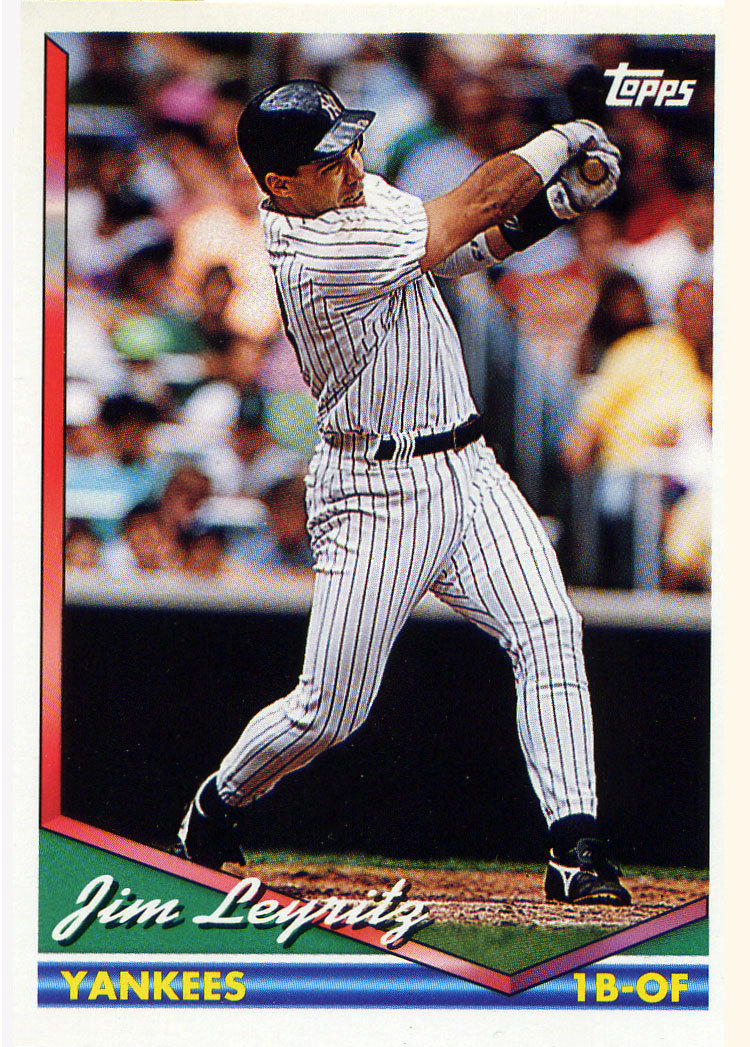
That year it was Toronto that won the AL East, though the Yankees avoided being eliminated head-to-head by beating Todd Stottlemyre and the Jays behind Jim Abbott in their final game at SkyDome that season. The Yankees won again the next day, beating Rick Sutcliffe and the Orioles 9-1 behind Scott Kamieniecki (playing right field in place of an injured Paul O’Neill, Jim Leyritz homered in both games), but the Jays clinched anyway by beating the Brewers 2-0 behind Pat Hentgen and a trio of relievers that included Mike Timlin. The Jays would go on to win their second consecutive World Championship that October with Joe Carter delivering the Series-ending home run off Phillies closer Mitch Williams.

Please take me along when you slide on down.

Toronto Blue Jays VI: Elimination Edition

Though the Yankees are still alive with just six games left to play, a single loss or a single Red Sox win will eliminate them from the postseason for the first time since 1993. Elimination is all the more likely because the Yankees will be facing both A.J. Burnett and Roy Halladay yet again in this series, having already gone 2-7 in games started by those two this season. Of the Yankees’ 18 games against Toronto this season, 11 will have been started by Halladay or Burnett. The Yanks are 5-1 against Toronto this year in games started by other Blue Jay pitchers.

Fortunately, Mike Mussina has drawn Jesse Litsch tonight as he goes for this 19th win of the season. Mussina, who will start the final game of the season in Boston, has won 19 games in a season twice in his career, but never for the Yankees. The Yankees are 21-11 in Mussina’s starts this year, the fourth time in his eight years with the Bombers that the team has won 20 or more of the games he has started.

(more…)

Silly Sousa

I really enjoyed the fact that the Yankees brought out the U.S. Army Field Band to kick off Sunday’s pre-game ceremonies by playing a pair of Sousa marches thereby echoing the band John Philip Sousa himself led on Opening Day in 1923.

This ain’t that:

(more…)

The Decline and Fall

Over at Baseball Prospectus, Jay Jaffe has a scathing piece about how the Yankee Stadium experience has changed in recent years. Check it out.

Lasting Yankee Stadium Memory #16

By Maury Allen

This was in 1972 in the old Yankee Stadium, the one where Ruth, Gehrig, DiMaggio and Mantle had played, long before the 1974-75 refurbishing and a dream location across from The House That Steinbrenner is building for 2009.

I walked on that green grass again as I had for a dozen years or so as a sportswriter, looked out at those monuments, examined that façade above the third deck and waited for my pitching pal.

Fritz Peterson, the left-handed anchor of the bad Yankee pitching staff of the late 1960s and early 1970s, was on the field now, a smile on his face as always, his baseball cap tipped back, his eyes wide with glee and amusement.

“I got another Tugboat post card,” he said, with that wry smile. “I put it in his locker.”

Peterson had a habit of collecting post cards of big boats or even bigger women and dropping them off in the locker of Thurman Munson, the best Bronx Bomber catcher since Yogi. It irritated the surly Munson no end.

Sparky Lyle, another laughing teammate, had once described Munson as not really moody.

“Moody is when you can smile some of the time,” Lyle once said of his unfortunate batterymate, later to lose his life in a 1979 plane crash.

We chatted a while about Peterson’s next start in another strong season (17-15 in 1972 after 20 wins in 1970) and then I asked him if he was available on the next Yankees off day for a barbecue at my suburban home.

“Sure,” he said. “Can I bring Kekich?”

He had become pals with another Yankee lefty, Mike Kekich and the two couples, Fritz and Marilyn Peterson, Mike and Suzanne Kekich had spent a lot of time together.

The four of them arrived at my home on a beautiful summer night. My wife Janet had gone all out with her best cooking, our best dishes and a beer-filled refrigerator. A good time was had by all.

Soon, the information was out. Peterson and Kekich had arranged that night to swap wives, kids, cars, dogs, houses and hearts.

Marilyn and Mike never lasted as a couple. Fritz and Suzanne are going on some 35 years together.

Some people will always remember the giant home runs at the Stadium hit by Mickey Mantle or the clutch World Series shots by Yogi Berra or the brilliance of Whitey Ford on the mound and Elston Howard behind the plate.

Me? I just remember standing on that famous green grass and simply asking Fritz Peterson to join us for a barbecue. Who knew what evil lurked behind that question.

Maury Allen, a veteran newspaperman and author, writes for The Columnists.com.

The Final Week

With six days left in the regular season, five of the eight playoff spots are still in play and nine teams are still in the hunt.

In the NL East, the Phillies have won ten of their last 11 to build a 2.5 game lead over the Mets. They have just five games left, two against the Braves, and three against the Nationals. The Mets have six games left, the first three against the NL best Cubs. That race looks over.

Fortunately for the Mets, they still hold a one-game lead over the Brewers in the NL Wild Card race. The Brewers also have three games left against the Cubs and have gone just 5-15 on the month. Milwaukee’s other three games are against the Pirates, the Mets’ against the Marlins. Since the top two teams here are choking their seasons away, it’s worth mentioning that the third horse in that race is Houston, which is 3.5 games back this morning and has seven games left against the Reds, Braves, and a season-ending makeup game against the Cubs. All four teams mentioned above play all of their remaining games at home. The other two teams still alive in the NL Wild Card race are the Marlins and Cardinals, both of whom could be eliminated to day with a loss and a Mets win.

The Cardinals host the Diamondbacks for the next three days, then send them home to face the Rockies. The D’backs trail the Dodgers by two games in the West. Joe Torre’s team finishes up against the Padres and Giants.

The AL finds four teams still in play for the remaining two spots, though one of them is the Yankees, who can do no better than tie the Red Sox for the Wild Card. The Sox will clinch the Wild Card with a win or a Yankee loss. Boston also has a chance to pass the Rays for first place in the East (they trail by 2.5 games), though that’s less significant since the Rays have already clinched a playoff spot.

That just leaves the race in the Central, which is where the real action is over the next three days as White Sox, who hold a 2.5 game lead in the division, travel to Minnesota to try to put away the second-place Twins head-to-head. If they fail, the Twins will finish at home against the Royals, while the White Sox host the Indians (actually, that will happen anyway, it just won’t mean as much if the White Sox clinch in Minneapolis).

Here’s the schedule for the White Sox’s series in Minnesota:

Tue 9/23 8:10 (Vazquez v Baker)
Wed 9/24 8:10 (Buehrle v Blackburn)
Thu 9/25 8:10 (Floyd v Slowey)

Sadly, none of these games will be nationally televised.

Lasting Yankee Stadium Memory #15

Seven Layer Chocolate Cake

By Jane Leavy

May 18, 1962 was a raw spring night in the Bronx. A mean chill filled Yankee Stadium suppressing attendance at the Friday night game between the Yanks and the Minnesota Twins. A forgotten tributary of the Harlem River, on whose banks the stadium was built, runs on a diagonal from left field toward the hole between third and short—like a cut off throw. The ancient waterway, Cromwell’s Creek, buried deep beneath the sedimentary rock of urbanization, asserted itself in the dew and chill of that otherwise fine Friday evening. Mist enveloped the scalloped copper frieze that ringed the upper deck of the Stadium. I remember thinking: if Mick hits one tonight nobody will ever see it again.

That was the thing about Mantle: you never knew what might happen when he stepped to the plate or what might happen to him.

My father, who grew up on the other side of the Harlem River cheering for the Giants from a rocky perch on Coogan’s Bluff, had gotten box seats behind the dugout along the third base line. It was the best seat I would ever have in a ballpark until I went to work as a sportswriter fifteen years later.

I was ten years old that sweet evening. What could be better-a visit to see The Mick and a sleepover at my grandmother’s? Her apartment was just up the street in a building called The Yankee Arms, a long, loud foul ball from home plate.

Mickey was my guy but I was grandma’s girl, her favorite, I thought (as did all her grandchildren). I knew this because although she loved frilly things and rose sachet, because canasta not baseball was her game, because in the 20 years she lived in the shadow of the ballpark she was never once tempted to step inside, despite all this she put on her mink stole and open-toed shoes and took me to Saks Fifth Avenue to buy my first baseball glove. It was an odd place to go in search of a mitt but she only wanted the best for me.

Providence intervened–a mannequin in the front window had a Sammy Esposito glove on her hand. “We’ll have that one,” my grandmother told the flummoxed salesman, who pointed out it was not for sale. He was no match for a Jewish grandmother, mine anyway. I took Sammy home; I took Sammy everywhere, including the stadium on May 18, 1962.

My grandfather, a manic-depressive immigrant tailor, had made me two identical wool, plaid skirts, one in tones of beige, brown and gold, the other in red and green, Christmas-tree green, perfect for Hanukah. They were reversible and indestructible. A whole wardrobe, these skirts. They went with everything and nothing. He was in a manic mode when he sewed them; their oscillating hems reflected his ups and downs.

In an act of filial devotion (and parental betrayal), my mother had made it a condition of attendance that I wear one of these atrocities. I chose the more muted tones and an overly generous straw-colored Irish cable knit sweater over a white turtleneck. I looked like a pre-pubescent haystack.
In an act of solidarity for which I remain grateful five years after his death, my father went to the concession stand and bought me an adult-size Yankee cap, large enough to hide most of my embarrassment.

I knew it was going to be Mick’s year. It had to be after the disappointment of 1961. God owed him after allowing Roger Maris to claim Babe Ruth’s title as home run king. Being second fiddle made him more loveable to the masses, but not to me–I couldn’t love him anymore than I did already.

“In 1961 I became an American hero because he beat me,” he would say later. “He was an ass and I was a nice guy. He beat Babe Ruth and he beat me so they hated him. Everywhere we’d go I got a standing ovation. All I had to do was walk out of the dugout.”

(more…)

The Final Game

Untitled

I spent nearly 12 hours at Yankee Stadium yesterday. What follows, believe it or not, is the short version of that experience.

(more…)

Graduation Day

Untitled

At roughly half past midnight last night, my wife, Becky, and I were standing next to our car in the darkened parking lot near the Harlem River, finishing off the soft-serve ice cream cones we had picked up on our way under the Major Deegan. As Yankee Stadium sat glowing behind us, the blue aura of the stadium lights reaching up toward the half moon set low in the sky over center field, Becky compared the emotions we were feeling to a junior high graduation. We will still see the same people and do the same things next year, she reasoned, it will just be in a different place. I resisted the comparison at first, rattling on about history and landmarks and what will be lost when the Stadium is razed, but upon reflection, and still flush with the emotion of the night as I write this in the wee-morning hours, I’ve found the truth in her comparison.

Becky and I were high school sweethearts, and though our school days have receded deep into our past, they remain with us both through our relationship with each other, through our closest friends, most of whom we can also trace back to high school, and through the many other ways in which those years shaped our lives and set us upon the course we are on today. Becky was sad to leave high school, for reasons I didn’t completely understand. I couldn’t wait to leave it behind. Perhaps that’s why it took me a moment to find the truth in her statement.

As I wrote earlier this week, the strongest of my many mixed emotions leading up to last night’s final game at Yankee Stadium was anger. That anger has expressed it self in criticism of the public expense, abuses, and design flaws of the new Stadium, but ultimately my anger stems from the private hurt of being evicted from a place that I consider home. I imagine that’s how Becky must have felt upon graduation, angry that forces beyond her control were robbing her of a place of comfort and familiarity, a place filled with elemental memories, and place in which she had grown from a timid 14-year-old girl into a confident young woman.

My feelings about Yankee Stadium are similar. Just 12 years old when I attended my first game there, I was a kid caught between childhood and maturity, still searching for my place after the dissolution of my parents’ marriage and amid their subsequent relationships, still searching for an identity of my own, but beginning to sense that baseball might play a part. Last night I left that Stadium for the last time a grown man of 32, a husband hoping to become a father, a man who has found true happiness in his own marriage and who has followed his muse through a variety of rewarding and creative endeavors, not the least of which is the blog you’re reading right now.

Other than my parents, the only constant in my life throughout that journey has been baseball, specifically Yankee baseball, and though I’ve been in locker rooms and press boxes in other ballparks, my relationship with baseball has been no more intimate than when I’ve been in the stands in Yankee Stadium. Now that’s gone, and I’m hurt, and angry, and sad, but I’m also hopeful and excited about what the next twenty years might bring, for both myself and the team, and about the people I’ll be able to share those experiences with. Perhaps most of all, I’m thankful. Thankful that I had the opportunity to see scores of games at the old ballpark. Thankful that I could share those experiences with Becky, both of my parents, and a variety of friends from across twenty years. Thankful that I have this forum to express myself and to share my thoughts and feelings with countless readers, who in turn share theirs with me and each other. Better yet, I’m thankful that I have lived a life privileged and pleasant enough that the closing of a sporting venue could have such a profound impact on me. While I’ll never get to set foot in Yankee Stadium again, this morning I’m going to be thankful for the many wonderful things I do have rather than be bitter about the one thing I just lost.

Yankee Stadium: 1923-1973; 1976-2008

I’ve never been to Yankee Stadium. Oh sure, I’ve seen the Yankees play in the Bronx more than one hundred times over the past 20 years, but Yankee Stadium, the limestone behemoth that was home to Yankee greats from Babe Ruth to Mickey Mantle is something I’ve only seen in books, grainy film footage, and in the background of old baseball cards. That cavernous coliseum, with its copper frieze trimming the roof that hung over the upper deck and its career-altering death valley in left center, was destroyed following the 1973 season. Its last game was a forgettable 8-5 Yankee loss to the Tigers that concluded an equally forgettable 80-82 fourth-place season for the home team.

Two and a half years later, in its place, sat a different Yankee Stadium. A modernized, yet instantly-dated, grey, concrete bowl filled with royal blue seats and orange light bulbs that relayed information from a flat-black scoreboard. The copper frieze had been melted down and replaced with a concrete replica that sat on a lower perch atop the outfield scoreboard, like an artifact on one’s mantle. The roof had been largely removed. The wall in left center was now 27 feet closer to home plate and would come in another 31 feet before I ever got to see it in person. Behind that wall, the three marble-and-bronze monuments that had formed a half circle around the flag pole in the grass of center field sat in concrete and were surrounded by a black chain-link fence that separated the two bullpens.

Still, though the structure had been changed, and the field which had played host to 27 World Series and two All-Star Games had been torn up and replaced, there remained a connection between the remodeled Yankee Stadium, as it would become unofficially known, and the original. Just as the Yankees inaugurated Yankee Stadium with the franchise’s first World Championship in 1923, the team inaugurated the remodeled Stadium in 1976 with their first World Series appearance in 12 years and followed that up with championships in 1977 and 1978. In its 33 years of existence, the remodeled Stadium hosted 10 World Series and two All-Star Games. Unless the Dodgers reach the World Series this year, no other stadium will have hosted more than four Fall Classics over that same span. The remodeled Stadium quickly established itself as a worthy successor to the original not because of its own grandeur, which was lacking, but because of the grandeur of the games which took place there.

When the last out at Yankee Stadium is recorded tonight, baseball won’t be losing a great piece of architecture; the remodeled Stadium is no beauty. What it will lose is the living memory of some of the game’s greatest moments. What makes Yankee Stadium great is not the concrete replica of the frieze in center field or the relocated monuments beyond the wall in left field. It’s not even the great views from the upper deck or the camaraderie and passion of the bleacher creatures. It’s the history that was made there.

One can look around the current park and see where legendary home runs by Aaron Boone and Scott Brosius fell into the left field box seats, Reggie’s moon-shot off Charlie Hough clanged off the black batter’s eye, homers by Tino Martinez, Derek Jeter, and Chris Chambliss made post-season history by clearing the wall in right, with and without help. One can envision Mariano Rivera and Goose Gossage appearing through the bullpen gate in left center, Derek Jeter diving into the stands behind third base, David Wells punching the air and David Cone falling to his knees after the final outs of their perfect games. One can see Dave Righetti, Jim Abbott, and Dwight Gooden celebrating no-hitters, Thurman Munson crouching behind home plate as Ron Guidry strikes out 18 Angels, Don Mattingly bringing down the house with a home run into the right-field bleachers, Dave Winfield ripping bullets down the left field line, Rickey Henderson and Mickey Rivers burning up the bases, Willie Randolph turning two, Tom Seaver, Phil Neikro, and Roger Clemens winning 300, Alex Rodriguez hitting 500, and George Brett storming out of the visitor’s dugout, a victim of Billy Martin’s chicanery. One can also see Paul O’Neill meekly slumping his shoudlers as an entire Stadium chants his name, Reggie doffing his batting helmet to the crowd in front of the home dugout, Charley Hayes squeezing the final out of the 1996 World Series, Wade Boggs riding a police horse around the warning track, and both Jackson and Chambliss plowing their way through the swarms of celebrating fans toward the safety of the clubhouse.

Though the field has been torn up, replaced, moved, and lowered, it doesn’t take much imagination to envision the old park. In fact, that has been one of my favorite things to do when visiting the Stadium. I’d squint at the left-handed batters box and imagine Babe Ruth taking a mighty swing and christening the new park with a home run or Lou Gehrig, hat in hand, addressing the crowd. Looking around, I could see Joe DiMaggio kicking the dirt near second base, Mickey Mantle launching a ball off the frieze, Jackie Robinson breaking for home, Yogi Berra leaping into Don Larson’s arms, the Dodgers celebrating Brooklyn’s first and only championship, Roger Maris circling the bases after number 61, and Bobby Murcer chasing a ball around the monuments in center. Because the Yankees were in the World Series with such regularity, all but a select few of the game’s greats (most of them Cubs) played there, from Ty Cobb, to Ted Williams, to Tony Gwynn, Walter Johnson, to Sandy Koufax, to Pedro Martinez, Jackie Robinson, to Curt Flood, and Roberto Clemente, and so on. In 1928, Knute Rockne implored his team to “win one for the Gipper” there. In 1938, Joe Luis beat Max Schmeling there. In 1958, Johnny Unitas beat the New York Football Giants in the NFL Championship Game there.

That is what will be lost. Not the building, but the place and the tangible connection to what happened there. The Yankees may only be moving a few hundred feet to the north to play on a field of similar dimensions in a ballpark with an identical name, but Yankee Stadium, the real Yankee Stadium, in both its incarnations, will soon be resigned to the page, the screen, and the memory of those who were fortunate enough to have seen a ballgame there, whether they witnessed a great moment, or simply gazed out at the field and imagined all the great moments that had come before.

Lasting Yankee Stadium Memory #14

By Ed Alstrom

I’ve been to a lot of great and wacky games at the Stadium, like everyone else: the Chambliss home run, several other playoff and World Series games, some crazed comebacks, and some of those insane asylum games from the early 90s with people running onto the field at random (one game against the Red Sox, there were seven of them at different intervals, in the rain).

And, of course, auditioning for the organist position at the Stadium (with Eddie Layton himself standing in the doorway requesting song snippets!) was priceless, and fulfilling my childhood dream of playing the organ there is very special, every single time I do it.

But for my part, I’d have to say that my lasting memory of the Stadium after it’s gone will be a little different from most, and that is having gotten to hang out with Bob Sheppard.

Mr. Sheppard (that’s what all of us in the Press Box call him) has his public address booth right next to mine at the organ. Only a pane of Plexiglas separates us. Sometimes I’ll knock on his door, sometimes he’ll tap on my window and motion me in, and we chat, sometimes during the game. He’ll be talking, and then point his index finger in the air mid-sentence, to say ‘wait a minute,’ step on a pedal to activate the mike, announce the next player (in the same exact tone of voice he’s speaking to me in), and then continue where he left off. When a Yankee makes an error or a bad play, he’ll look at me and very slowly point his palms skyward and shrug his shoulders.

His end of game routine is really beautiful: with 2 out in the ninth and Mariano on the hill, he’ll slowly don his cap and coat, salute me, lock his door, and wait in the runway. If the game ends then and there, he is off like a shot, walking so briskly I can barely keep up with him (and I’ve tried it!). If that batter reaches base, though, he’ll unlock the door, come back in, give me that same shrug, step on the pedal, announce the next batter, and repeat the procedure. His determination to beat that traffic (and his success rate, I’m sure) is admirable indeed.

Several times, I’ve gone down to the press lunch room and broken bread with him at ‘his table,’ which is the one in the corner of the room with a cardboard handwritten sign with his name on it. He surely deserves a gold plaque or something more dignified (well, he does have a Monument in the Park), but everyone knows anyway that that’s his domain.

You’ve probably heard what a class act he is, and he exceeds all expectations on that count. I’ve spoken to him many, many times, but oddly it’s almost never about baseball: usually music and theater. In fact, he usually changes the subject to music when I try to engage him about baseball.

He loves the music of the 40s, and the big bands. He told me once he was especially fond of the great singer Jo Stafford, so I went home and found a bunch of her recordings and put them on CD for him, and he was delighted and talked about her at length, and about how he was stationed in Aruba during World War II, and they used to get her 78s shipped to them, and play them at their bar in the ‘Quonset hut’ (you can just hear Shep saying ‘Quonset hut,’ right?).

He loves poetry, so he is quite enamored of the lyrics of Hart, Hammerstein, Gershwin, Porter, et al., and we’ve spent quite a bit of precious pre-game time analyzing those. And I’ve spent some time (at his behest) trying to explain the merits of rock and roll, or any music recorded after 1955 (with limited success, I think).

At times, he’ll approach me with some handwritten poetry he’s composed, which is invariably literate, funny, and sometimes biting. He once wrote a concise and venomous little masterpiece about Kevin Brown’s bout with a cinderblock wall, and showed it to me; I am not at liberty to disclose it, but lemme tell you, it’s incredible. I said to him, "You must have a lot of these." He said, "Oh, hundreds." I said, "You should get these published," to which he replied, "Oh, no, Mr. Steinbrenner would fire me!"

One Saturday afternoon, it was Military Day at the Stadium, and the formalities were to begin with the Golden Knights parachuting onto the field. It was about two minutes before the ceremony was to begin, and Mr. Sheppard was nowhere in sight.

I knocked on the control room window, got the director’s attention, and pointed to myself and then to Shep’s booth. He said, "Yeah, go ahead." So, I gave the script a speed read, got the cue, stepped on the pedal to activate the mike, and very deliberately said… "Good afternoon, ladies and gentlemen; welcome to Yankee Stadium!"

Now, I didn’t have time to think about it, but my instinct was to not attempt my Shep imitation, because I felt it would be disrespectful somehow, but I did try to phrase it as he might have, veer a course somewhere down the middle vocally, and create the illusion that it was him.

It was a very long script, about two pages, and it was a real roller coaster moment. Toward the end of it, I noticed out of the corner of my eye that Mr. Sheppard was standing behind me! I finished with the read, released the pedal, and looked at him gingerly, feeling somewhat like a child about to be scolded. Instead, he grinned broadly, and said very slowly, "Were you trying to imitate me?" Imagine that thrill!

But the best of all was when he approached me one day, and said, "You know, I wrote a song many years ago." Of course, I wanted to hear it, so he showed me the lyrics and sang it to me. I told him the next day I was coming back with a recorder, and he sang it again for me, acapella, and then I got him to talk into the recorder for about 15 minutes about it. I then went home and created a musical track for his melody, chopped his vocal track into pieces and flew it in over the accompaniment, and presented him with a finished product worthy of Sinatra. He was very touched, and I was touched to be able to do that for him. He wrote a handwritten note of thanks, which is more valuable to me than any piece of memorabilia could be. Believe me, Mr. Sheppard, the pleasure was all mine.

Whatever our collective vignettes are of Yankee Stadium, Bob Sheppard’s narration to that soundtrack is a thread that runs through all of them, and an essential component of it. His humanity, wit, and warmth are every bit as momentous as that voice, and I am honored to have shared some time on this Earth with him. He is Yankee Stadium, in a lot of ways.

Ed Alstrom will be playing the organ from the early afternoon until late tonight at Yankee Stadium.

Sob Story

It’s Hanky Time for Yankee Stadium today.  The tributes just keep a comin.  Yesterday, Paul Simon had a piece about the old place in the New York Times, today, it’s Henry Kissinger’s turn.  Also in the Times, comes memories from Billy Crystal, Robert Creamer, Jane Heller, and B-Girl Penny Marshall.

Here is Maury Brown’s ode to the cathedral, as well as Alan Sepinwall’s memories.   

Read em and weep.


Penultimate

It was a near perfect afternoon in the Bronx yesterday as the Yankees and Orioles played the final day game at Yankee Stadium. Amid sharp shadows and under a cloudless sky, the Stadium gleamed, the cool early autumn air adding a crispness to the day. The Yankees and Orioles played scoreless baseball for eight-plus innings, but the lack of action on the field mattered little as most everyone on hand and watching at home was more concerned about drinking in the doomed ballpark, which has rarely looked more welcoming or more vibrant.

Afredo Aceves got things started off in style in the first inning. Following a Brian Roberts lead-off double, Adam Jones popped up a bunt in front of the mound. Aceves, who has shown himself to be a solid infielder, caught the ball on a lunge before tumbling forward to his knees. He then spun to double Roberts off of second, but Roberts had been running on the pitch and had actually rounded third base slightly, so rather than throw to Cody Ransom covering second base, Aceves, with a big grin on his face, jogged the ball over to second for an unassisted double play, a play rarely turned by a pitcher (paging Bob Timmermann).

Aceves wouldn’t allow a runner past second base all day, and after six innings and 92 pitches, he was replaced by Brian Bruney, Damaso Marte, and Mariano Rivera, who kept that streak intact. The Yankees didn’t do much better against lefty spot-starter Brian Burres. With two outs in the first, Bobby Abreu doubled and moved to third on a wild pitch, but Alex Rodriguez popped out to strand him, and the Yankees didn’t get another man past second until the bottom of the ninth.

Though it would ultimately prove a fitting conclusion to a beautiful day, the bottom of the ninth started off ominously when a 1-1 pitch got away from rookie reliever Jim Miller and hit Derek Jeter on the back of his left hand. Jeter spun to avoid the pitch, but it caught him flush and sent him skipping toward the visiting batting circle in obvious pain. Joe Girardi and trainer Gene Monahan quickly attended to Jeter, who was the DH yesterday to give him a breather before today’s final game at the Stadium, and almost immediately pulled Jeter from the game. Jeter didn’t make a fist with the hand when Monahan was checking him out on the field, and as he headed into the tunnel toward the clubhouse, Jeter slammed his batting helmet on the dugout floor. Fortunately, post-game x-rays were negative and Jeter is expected to be in the lineup for the Stadium’s finale . . . of course.

Brett Gardner ran for Jeter at first base and stole second base easily on Miller’s first pitch to Abreu. After Miller fell behind Abreu 3-0, Orioles manager Dave Trembley decided to make use of that empty base and pass the buck to Alex Rodriguez. Rodriguez took two strikes then hit into a near double play, but managed to beat out the relay to put runners on the corners with one out for Jason Giambi. Trembley called on veteran lefty reliever Jamie Walker to pitch to Giambi, and Walker responded by striking Giambi out on six pitches. Rodriguez stole second on strike three, so Trembley had Walker put Xavier Nady on base and pitch to fellow lefty Robinson Cano. Cano, who still holds the distinction of having hit the last home run at Yankee Stadium, jumped on Walker’s first pitch, delivering a line-drive single just to the right of second base, plating Gardner with the winning run.

So in the final day game at Yankee Stadium, the Yankees beat the Orioles 1-0 on a walk-off single by Robison Cano. Mariano Rivera got the win, and the Yankees staved off elimination for at least one more day. The day was so close to perfect that, in some peverse way, I almost wish yesterday’s game was the last ever at the Stadium. The only way tonight’s game could be better would be for a Yankee to hit a home run and for Jeter to be somewhere other than the trainers’ room when the game ends.

(more…)

feed Share on Facebook Share on Twitter Share via email
"This ain't football. We do this every day."
--Earl Weaver