"A New York Treasure" --Village Voice

Blog Archives

Older posts            Newer posts

No Pressure, Kid

Phil Hughes was seven years old the last time the Yankees were eliminated during the regular season. Tonight he’ll be the first pitcher to start a game for an eliminated Yankee team since Sterling Hitchcock took the Camden Yards mound on September 28, 1993. Like Hughes, Hitchock was a well-regarded 22-year-old pitching prospect at the time, but he never fulfilled his potential due to a combination of injuries and ineffectiveness. Here’s hoping Hughes, who pitched well though inefficiently in his last start, won’t meet the same fate.

Untitled Fittingly, tonight’s matchup of Hughes and Yankee killer A.J. Burnett should conjure up a fair bit of hot-stove conversation. Burnett is all but certain to opt out of his contract this fall as he’s set career highs in games, starts, innings, strikeouts and wins this season and could finish with 19 victories by beating the Yankees tonight. His 1.78 ERA in four previous starts against New York has certainly piqued the Yankees’ interest, but they’d do well to notice that Burnett’s season ERA is barely above average and dips below average when you take away his dominance of the Bombers. He’s also going to be 32 on Opening Day next year and has a very sketchy injury history. In fact, all of those career highs this year are the result of the fact of that, at age 31, Burnett has been healthy enough to start 30 games for just the second time in his career this year. Burnett has better stuff than former Marlins teammate Carl Pavano, but the Yankees would do well to remind themselves of the similarities between the two pitchers when contemplating the free agent Burnett.

Phil Hughes’ one quality start in the majors this season came back on April 3 against the Blue Jays. Another one in this, his last start of the season, would go a long way toward building both his confidence and the team’s confidence in him heading into next year, and would reduce the chances of the Yankees making a desperation move for an expensive injury-prone veteran like Burnett or Ben Sheets. In that way, Hughes beating Burnett tonight would be a tremendous victory for the future of the franchise. But, hey, no pressure.

Hey Nineteen

With one out in the bottom of the third inning of last night’s game against the Blue Jays, Toronto’s rookie left fielder Travis Snider hit a comebacker that ricocheted off Mike Mussina’s pitching elbow and shot into foul territory, allowing Snider to reach base with an infield single. The ball hit Mussina flush on the head of his radius, and when trainer Gene Monahan and manager Joe Girardi ran out to attend to their veteran ace, the conclusion to Mussina’s terrific comeback season was clearly hanging in the balance. The Yankees had a 1-0 lead at the time, but Mussina needed to finish the third and pitch two more innings without giving it up in order to qualify for his nineteenth win and keep his hopes for his first twenty-win season alive.

UntitledMussina asked the assembled group to let him throw a few pitches, and after tossing a fastball and a sharp curveball, he declared himself fit to pitch. He was right. Despite a large red welt on the outside of his elbow the size of a golf ball, Mussina allowed just one more hit before being pulled after going the minimum five innings required for the win. By then his lead had doubled to 2-0 thanks to Jason Giambi’s 32nd home run of the season.

The Yankees added a third run in the seventh when Robinson Cano doubled off Blue Jays starter Jesse Litsch, moved to third on a wild pitch, and scored on a passed ball. Never mind that Cano was actually out at home as the ball bounced right back to catcher Gregg Zaun, who tossed to Litsch, who made a great play sliding across the opposite side of the plate and tagging the sole of Cano’s foot as it came down to touch home. Home plate ump Larry Vanover blew the call and spent the rest of the game calling strikes in a manner that found the middle ground between a sea lion and the Swedish Chef (strike one: “BORK!” strike two: “BORK!” strike three: “ARF! ARF!”).

The Jays got that run back in the bottom of the seventh when lefties Adam Lind and Lyle Overbay singled and walked against Damaso Marte and Scott Rolen greeted Joba Chamberlain with a single that scored Lind. With two out and none on in the eighth, the Jays loaded the bases against Chamberlain thanks to some sloppy defense by Cody Ransom, who replaced Derek Jeter and his sore left hand at shortstop just before game time (Jeter said after the game that he couldn’t swing), and an intentional walk, but Chamberlain won a seven-pitch battle with Lyle Overbay on a slider breaking down and away for a called strike three (ARF! ARF!). Otherwise Phil Coke, Brian Bruney, and Mariano Rivera were perfect in relief, nailing down the 3-1 win and giving Mussina his nineteenth win.

Hard Times Befallen The Soul Survivors

Untitled

Unfortunately, the Red Sox also won, putting up a five-spot against likely Cy Young award winner Cliff Lee at Fenway to squeek out a 5-4 win behind Tim Wakefield and a quintet of relievers. The decisive run was scored by Dustin Pedroia on a two-out single by Jason Bay in the fifth (“sweet things from Boston, so young and willing”). With that, the Yankees have been eliminated from the postseason for the first time since 1993, the last year before the Wild Card was introduced.

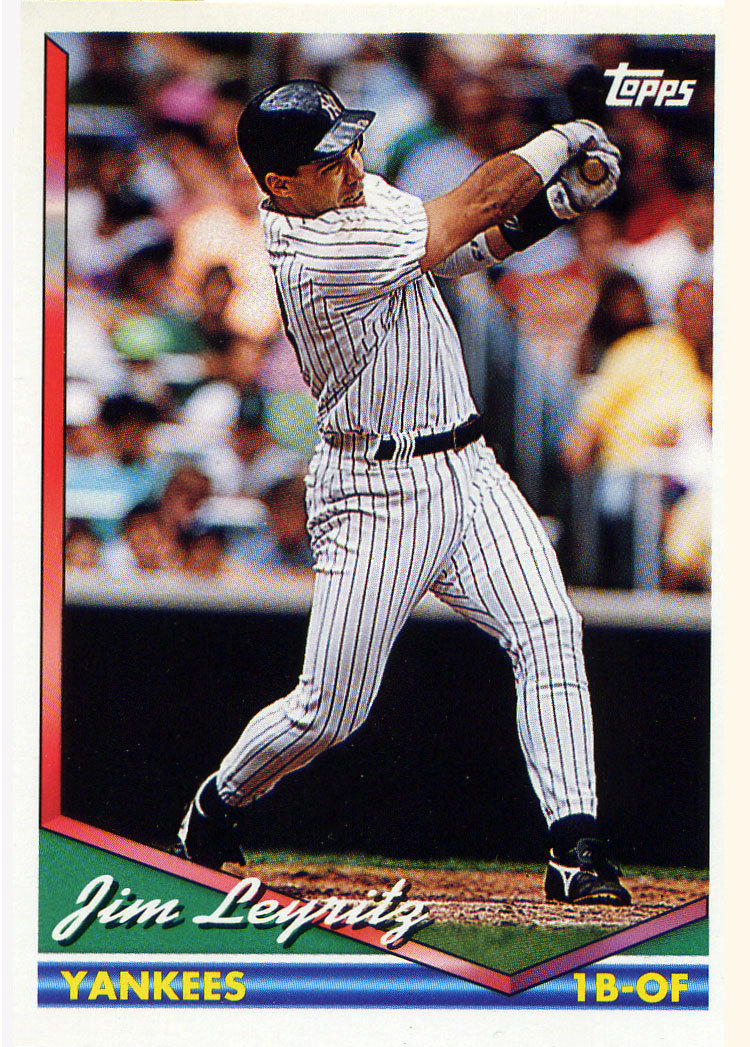
That year it was Toronto that won the AL East, though the Yankees avoided being eliminated head-to-head by beating Todd Stottlemyre and the Jays behind Jim Abbott in their final game at SkyDome that season. The Yankees won again the next day, beating Rick Sutcliffe and the Orioles 9-1 behind Scott Kamieniecki (playing right field in place of an injured Paul O’Neill, Jim Leyritz homered in both games), but the Jays clinched anyway by beating the Brewers 2-0 behind Pat Hentgen and a trio of relievers that included Mike Timlin. The Jays would go on to win their second consecutive World Championship that October with Joe Carter delivering the Series-ending home run off Phillies closer Mitch Williams.

Please take me along when you slide on down.

Toronto Blue Jays VI: Elimination Edition

Though the Yankees are still alive with just six games left to play, a single loss or a single Red Sox win will eliminate them from the postseason for the first time since 1993. Elimination is all the more likely because the Yankees will be facing both A.J. Burnett and Roy Halladay yet again in this series, having already gone 2-7 in games started by those two this season. Of the Yankees’ 18 games against Toronto this season, 11 will have been started by Halladay or Burnett. The Yanks are 5-1 against Toronto this year in games started by other Blue Jay pitchers.

Fortunately, Mike Mussina has drawn Jesse Litsch tonight as he goes for this 19th win of the season. Mussina, who will start the final game of the season in Boston, has won 19 games in a season twice in his career, but never for the Yankees. The Yankees are 21-11 in Mussina’s starts this year, the fourth time in his eight years with the Bombers that the team has won 20 or more of the games he has started.

(more…)

Silly Sousa

I really enjoyed the fact that the Yankees brought out the U.S. Army Field Band to kick off Sunday’s pre-game ceremonies by playing a pair of Sousa marches thereby echoing the band John Philip Sousa himself led on Opening Day in 1923.

This ain’t that:

(more…)

The Final Week

With six days left in the regular season, five of the eight playoff spots are still in play and nine teams are still in the hunt.

In the NL East, the Phillies have won ten of their last 11 to build a 2.5 game lead over the Mets. They have just five games left, two against the Braves, and three against the Nationals. The Mets have six games left, the first three against the NL best Cubs. That race looks over.

Fortunately for the Mets, they still hold a one-game lead over the Brewers in the NL Wild Card race. The Brewers also have three games left against the Cubs and have gone just 5-15 on the month. Milwaukee’s other three games are against the Pirates, the Mets’ against the Marlins. Since the top two teams here are choking their seasons away, it’s worth mentioning that the third horse in that race is Houston, which is 3.5 games back this morning and has seven games left against the Reds, Braves, and a season-ending makeup game against the Cubs. All four teams mentioned above play all of their remaining games at home. The other two teams still alive in the NL Wild Card race are the Marlins and Cardinals, both of whom could be eliminated to day with a loss and a Mets win.

The Cardinals host the Diamondbacks for the next three days, then send them home to face the Rockies. The D’backs trail the Dodgers by two games in the West. Joe Torre’s team finishes up against the Padres and Giants.

The AL finds four teams still in play for the remaining two spots, though one of them is the Yankees, who can do no better than tie the Red Sox for the Wild Card. The Sox will clinch the Wild Card with a win or a Yankee loss. Boston also has a chance to pass the Rays for first place in the East (they trail by 2.5 games), though that’s less significant since the Rays have already clinched a playoff spot.

That just leaves the race in the Central, which is where the real action is over the next three days as White Sox, who hold a 2.5 game lead in the division, travel to Minnesota to try to put away the second-place Twins head-to-head. If they fail, the Twins will finish at home against the Royals, while the White Sox host the Indians (actually, that will happen anyway, it just won’t mean as much if the White Sox clinch in Minneapolis).

Here’s the schedule for the White Sox’s series in Minnesota:

Tue 9/23 8:10 (Vazquez v Baker)
Wed 9/24 8:10 (Buehrle v Blackburn)
Thu 9/25 8:10 (Floyd v Slowey)

Sadly, none of these games will be nationally televised.

The Final Game

Untitled

I spent nearly 12 hours at Yankee Stadium yesterday. What follows, believe it or not, is the short version of that experience.

(more…)

Graduation Day

Untitled

At roughly half past midnight last night, my wife, Becky, and I were standing next to our car in the darkened parking lot near the Harlem River, finishing off the soft-serve ice cream cones we had picked up on our way under the Major Deegan. As Yankee Stadium sat glowing behind us, the blue aura of the stadium lights reaching up toward the half moon set low in the sky over center field, Becky compared the emotions we were feeling to a junior high graduation. We will still see the same people and do the same things next year, she reasoned, it will just be in a different place. I resisted the comparison at first, rattling on about history and landmarks and what will be lost when the Stadium is razed, but upon reflection, and still flush with the emotion of the night as I write this in the wee-morning hours, I’ve found the truth in her comparison.

Becky and I were high school sweethearts, and though our school days have receded deep into our past, they remain with us both through our relationship with each other, through our closest friends, most of whom we can also trace back to high school, and through the many other ways in which those years shaped our lives and set us upon the course we are on today. Becky was sad to leave high school, for reasons I didn’t completely understand. I couldn’t wait to leave it behind. Perhaps that’s why it took me a moment to find the truth in her statement.

As I wrote earlier this week, the strongest of my many mixed emotions leading up to last night’s final game at Yankee Stadium was anger. That anger has expressed it self in criticism of the public expense, abuses, and design flaws of the new Stadium, but ultimately my anger stems from the private hurt of being evicted from a place that I consider home. I imagine that’s how Becky must have felt upon graduation, angry that forces beyond her control were robbing her of a place of comfort and familiarity, a place filled with elemental memories, and place in which she had grown from a timid 14-year-old girl into a confident young woman.

My feelings about Yankee Stadium are similar. Just 12 years old when I attended my first game there, I was a kid caught between childhood and maturity, still searching for my place after the dissolution of my parents’ marriage and amid their subsequent relationships, still searching for an identity of my own, but beginning to sense that baseball might play a part. Last night I left that Stadium for the last time a grown man of 32, a husband hoping to become a father, a man who has found true happiness in his own marriage and who has followed his muse through a variety of rewarding and creative endeavors, not the least of which is the blog you’re reading right now.

Other than my parents, the only constant in my life throughout that journey has been baseball, specifically Yankee baseball, and though I’ve been in locker rooms and press boxes in other ballparks, my relationship with baseball has been no more intimate than when I’ve been in the stands in Yankee Stadium. Now that’s gone, and I’m hurt, and angry, and sad, but I’m also hopeful and excited about what the next twenty years might bring, for both myself and the team, and about the people I’ll be able to share those experiences with. Perhaps most of all, I’m thankful. Thankful that I had the opportunity to see scores of games at the old ballpark. Thankful that I could share those experiences with Becky, both of my parents, and a variety of friends from across twenty years. Thankful that I have this forum to express myself and to share my thoughts and feelings with countless readers, who in turn share theirs with me and each other. Better yet, I’m thankful that I have lived a life privileged and pleasant enough that the closing of a sporting venue could have such a profound impact on me. While I’ll never get to set foot in Yankee Stadium again, this morning I’m going to be thankful for the many wonderful things I do have rather than be bitter about the one thing I just lost.

Yankee Stadium: 1923-1973; 1976-2008

I’ve never been to Yankee Stadium. Oh sure, I’ve seen the Yankees play in the Bronx more than one hundred times over the past 20 years, but Yankee Stadium, the limestone behemoth that was home to Yankee greats from Babe Ruth to Mickey Mantle is something I’ve only seen in books, grainy film footage, and in the background of old baseball cards. That cavernous coliseum, with its copper frieze trimming the roof that hung over the upper deck and its career-altering death valley in left center, was destroyed following the 1973 season. Its last game was a forgettable 8-5 Yankee loss to the Tigers that concluded an equally forgettable 80-82 fourth-place season for the home team.

Two and a half years later, in its place, sat a different Yankee Stadium. A modernized, yet instantly-dated, grey, concrete bowl filled with royal blue seats and orange light bulbs that relayed information from a flat-black scoreboard. The copper frieze had been melted down and replaced with a concrete replica that sat on a lower perch atop the outfield scoreboard, like an artifact on one’s mantle. The roof had been largely removed. The wall in left center was now 27 feet closer to home plate and would come in another 31 feet before I ever got to see it in person. Behind that wall, the three marble-and-bronze monuments that had formed a half circle around the flag pole in the grass of center field sat in concrete and were surrounded by a black chain-link fence that separated the two bullpens.

Still, though the structure had been changed, and the field which had played host to 27 World Series and two All-Star Games had been torn up and replaced, there remained a connection between the remodeled Yankee Stadium, as it would become unofficially known, and the original. Just as the Yankees inaugurated Yankee Stadium with the franchise’s first World Championship in 1923, the team inaugurated the remodeled Stadium in 1976 with their first World Series appearance in 12 years and followed that up with championships in 1977 and 1978. In its 33 years of existence, the remodeled Stadium hosted 10 World Series and two All-Star Games. Unless the Dodgers reach the World Series this year, no other stadium will have hosted more than four Fall Classics over that same span. The remodeled Stadium quickly established itself as a worthy successor to the original not because of its own grandeur, which was lacking, but because of the grandeur of the games which took place there.

When the last out at Yankee Stadium is recorded tonight, baseball won’t be losing a great piece of architecture; the remodeled Stadium is no beauty. What it will lose is the living memory of some of the game’s greatest moments. What makes Yankee Stadium great is not the concrete replica of the frieze in center field or the relocated monuments beyond the wall in left field. It’s not even the great views from the upper deck or the camaraderie and passion of the bleacher creatures. It’s the history that was made there.

One can look around the current park and see where legendary home runs by Aaron Boone and Scott Brosius fell into the left field box seats, Reggie’s moon-shot off Charlie Hough clanged off the black batter’s eye, homers by Tino Martinez, Derek Jeter, and Chris Chambliss made post-season history by clearing the wall in right, with and without help. One can envision Mariano Rivera and Goose Gossage appearing through the bullpen gate in left center, Derek Jeter diving into the stands behind third base, David Wells punching the air and David Cone falling to his knees after the final outs of their perfect games. One can see Dave Righetti, Jim Abbott, and Dwight Gooden celebrating no-hitters, Thurman Munson crouching behind home plate as Ron Guidry strikes out 18 Angels, Don Mattingly bringing down the house with a home run into the right-field bleachers, Dave Winfield ripping bullets down the left field line, Rickey Henderson and Mickey Rivers burning up the bases, Willie Randolph turning two, Tom Seaver, Phil Neikro, and Roger Clemens winning 300, Alex Rodriguez hitting 500, and George Brett storming out of the visitor’s dugout, a victim of Billy Martin’s chicanery. One can also see Paul O’Neill meekly slumping his shoudlers as an entire Stadium chants his name, Reggie doffing his batting helmet to the crowd in front of the home dugout, Charley Hayes squeezing the final out of the 1996 World Series, Wade Boggs riding a police horse around the warning track, and both Jackson and Chambliss plowing their way through the swarms of celebrating fans toward the safety of the clubhouse.

Though the field has been torn up, replaced, moved, and lowered, it doesn’t take much imagination to envision the old park. In fact, that has been one of my favorite things to do when visiting the Stadium. I’d squint at the left-handed batters box and imagine Babe Ruth taking a mighty swing and christening the new park with a home run or Lou Gehrig, hat in hand, addressing the crowd. Looking around, I could see Joe DiMaggio kicking the dirt near second base, Mickey Mantle launching a ball off the frieze, Jackie Robinson breaking for home, Yogi Berra leaping into Don Larson’s arms, the Dodgers celebrating Brooklyn’s first and only championship, Roger Maris circling the bases after number 61, and Bobby Murcer chasing a ball around the monuments in center. Because the Yankees were in the World Series with such regularity, all but a select few of the game’s greats (most of them Cubs) played there, from Ty Cobb, to Ted Williams, to Tony Gwynn, Walter Johnson, to Sandy Koufax, to Pedro Martinez, Jackie Robinson, to Curt Flood, and Roberto Clemente, and so on. In 1928, Knute Rockne implored his team to “win one for the Gipper” there. In 1938, Joe Luis beat Max Schmeling there. In 1958, Johnny Unitas beat the New York Football Giants in the NFL Championship Game there.

That is what will be lost. Not the building, but the place and the tangible connection to what happened there. The Yankees may only be moving a few hundred feet to the north to play on a field of similar dimensions in a ballpark with an identical name, but Yankee Stadium, the real Yankee Stadium, in both its incarnations, will soon be resigned to the page, the screen, and the memory of those who were fortunate enough to have seen a ballgame there, whether they witnessed a great moment, or simply gazed out at the field and imagined all the great moments that had come before.

Penultimate

It was a near perfect afternoon in the Bronx yesterday as the Yankees and Orioles played the final day game at Yankee Stadium. Amid sharp shadows and under a cloudless sky, the Stadium gleamed, the cool early autumn air adding a crispness to the day. The Yankees and Orioles played scoreless baseball for eight-plus innings, but the lack of action on the field mattered little as most everyone on hand and watching at home was more concerned about drinking in the doomed ballpark, which has rarely looked more welcoming or more vibrant.

Afredo Aceves got things started off in style in the first inning. Following a Brian Roberts lead-off double, Adam Jones popped up a bunt in front of the mound. Aceves, who has shown himself to be a solid infielder, caught the ball on a lunge before tumbling forward to his knees. He then spun to double Roberts off of second, but Roberts had been running on the pitch and had actually rounded third base slightly, so rather than throw to Cody Ransom covering second base, Aceves, with a big grin on his face, jogged the ball over to second for an unassisted double play, a play rarely turned by a pitcher (paging Bob Timmermann).

Aceves wouldn’t allow a runner past second base all day, and after six innings and 92 pitches, he was replaced by Brian Bruney, Damaso Marte, and Mariano Rivera, who kept that streak intact. The Yankees didn’t do much better against lefty spot-starter Brian Burres. With two outs in the first, Bobby Abreu doubled and moved to third on a wild pitch, but Alex Rodriguez popped out to strand him, and the Yankees didn’t get another man past second until the bottom of the ninth.

Though it would ultimately prove a fitting conclusion to a beautiful day, the bottom of the ninth started off ominously when a 1-1 pitch got away from rookie reliever Jim Miller and hit Derek Jeter on the back of his left hand. Jeter spun to avoid the pitch, but it caught him flush and sent him skipping toward the visiting batting circle in obvious pain. Joe Girardi and trainer Gene Monahan quickly attended to Jeter, who was the DH yesterday to give him a breather before today’s final game at the Stadium, and almost immediately pulled Jeter from the game. Jeter didn’t make a fist with the hand when Monahan was checking him out on the field, and as he headed into the tunnel toward the clubhouse, Jeter slammed his batting helmet on the dugout floor. Fortunately, post-game x-rays were negative and Jeter is expected to be in the lineup for the Stadium’s finale . . . of course.

Brett Gardner ran for Jeter at first base and stole second base easily on Miller’s first pitch to Abreu. After Miller fell behind Abreu 3-0, Orioles manager Dave Trembley decided to make use of that empty base and pass the buck to Alex Rodriguez. Rodriguez took two strikes then hit into a near double play, but managed to beat out the relay to put runners on the corners with one out for Jason Giambi. Trembley called on veteran lefty reliever Jamie Walker to pitch to Giambi, and Walker responded by striking Giambi out on six pitches. Rodriguez stole second on strike three, so Trembley had Walker put Xavier Nady on base and pitch to fellow lefty Robinson Cano. Cano, who still holds the distinction of having hit the last home run at Yankee Stadium, jumped on Walker’s first pitch, delivering a line-drive single just to the right of second base, plating Gardner with the winning run.

So in the final day game at Yankee Stadium, the Yankees beat the Orioles 1-0 on a walk-off single by Robison Cano. Mariano Rivera got the win, and the Yankees staved off elimination for at least one more day. The day was so close to perfect that, in some peverse way, I almost wish yesterday’s game was the last ever at the Stadium. The only way tonight’s game could be better would be for a Yankee to hit a home run and for Jeter to be somewhere other than the trainers’ room when the game ends.

(more…)

Baltimore Orioles VI: The Final Series Edition

The just-completed series against the White Sox had some interest beyond the impending closing of Yankee Stadium thanks to Chicago’s fight for the AL Central, Mike Mussina’s still-active quest for 20 wins, the return of Phil Hughes to the Yankee rotation, and the major league debuts of three Yankee prospects last night. This weekend’s series against the Orioles has none of that. These last three games will be about Yankee Stadium and nothing else. With that in mind, here are the three other opening and closing dates in the Stadium’s 86-year history:

April 18, 1923 – the first game at Yankee Stadium, Yankees beat the Red Sox 4-1 behind Bob Shawkey, who scored the first run at the new park on a single by third baseman Joe Dugan in the fourth inning. Ruth followed Dugan with a three-run homer, the Stadium’s first. Second baseman Aaron Ward had picked up the park’s first hit in the previous inning.

Sept. 30, 1973 – the final game at the original Stadium, Yankees lost to the Tigers 8-5 as Fritz Peterson and Lindy McDaniel combined to allow six runs in the eighth inning. Backup catcher Duke Sims, in his only start of the year, hits the last home run at the old park in the seventh. Winning pitcher John Hiller gets first baseman Mike Hegan to fly out to center fielder Mickey Stanley to end the game.

April 15, 1976 – the first game at the renovated Stadium, Yankees beat the Twins 11-4 with Dick Tidrow picking up the win with five shoutout innings in relief of Rudy May and Sparky Lyle getting the save. May gave up the first hit and home run in the remodeled Stadium to Disco Dan Ford in the top of the first. Twins second baseman Jerry Terrell, who led of the game with a walk, scored the first run ahead of Ford. The first Yankee hit was delivered by Mickey Rivers in the bottom of the first. The first Yankee home run at the redone park would come off the bat of Thurman Munson two days later.

Untitled The relocated St. Louis Browns first played at the Stadium as the Baltimore Orioles on May 5 and 6 of 1954, losing to Eddie Lopat and Allie Reynolds by scores of 4-2 and 9-0. The O’s first visit to the renovated stadium came in a three-game weekend series starting on May 14, 1976. The O’s took two of three in that series, beating Catfish Hunter in the opener. The first batter in that game was Ken Singleton, who struck out looking, but the next six Orioles delivered hits off Hunter, among them a two-run homer by O’s center fielder Reggie Jackson (!) as the O’s cruised to a 6-2 win behind Ross Grimsley.

For the curious, the action depicted in the Merv Rettenmund card pictured here occurred on August 9, 1970 in the seventh inning of the first game of a Sunday doubleheader. With the O’s leading 1-0 behind Jim Palmer, Rettenmund led off the seventh with a double off Fritz Peterson. Andy Etchebarren then hit a hot shot to third base that Jerry Kenney either booted or bobbled, allowing Etchebarren to reach and Rettenmund to advance. The photo on the card freezes the action as Kenney, ball in hand, checks Rettenmund at third base. The O’s would go on to score three unearned runs in that inning, but the Yanks got two in the eighth and two in the ninth to tie it, the latter two on a single by Roy White after Earl Weaver had replaced Palmer with Pete Richert. White would later end the game in the 11th with one out and Horace Clarke on first base by homering off Dick Hall to give the Yankees a 6-4 win.

Finally, here’s an account of the last game at the original Stadium from Glenn Stout’s outstanding Yankees Century:

The Yankees ended the season on September 30, closing down old Yankee Stadium to accommodate the scheduled renovation. In the final week of the season, the Hall of Fame hauled away a ticket booth, a turnstile, and other memorabilia. Anticipating souvenir takers, the club had already removed the center-field monuments and a hoard of equipment scheduled to follow the Yankees to Queens.

The club hired extra security to head off bad behavior, but the crowd of 32,328 arrived at the Stadium in an ugly mood and packing wrecking tools. Disappointed at the late season collapse, banners urging the Yankees to fire [manager Ralph] Houk ringed the park.

The game was only a few innings old when it became clear that souvenir hunters weren’t going to wait. In the outfield and the bleachers fans turned their backs on the game and started demolishing the park. The Yankees took the lead over Detroit but lost it in the fifth [sic]. When Houk came to the mound to change pitchers, exuberant fans waived parts of seats over their heads like the angry they had become.

As soon as Mike Hegan flied out to end the 8-5 loss, 20,000 fans swamped security forces and stormed the field. The Yanks had plans for objects like the bases, but the mob had other ideas. First-base coach Elston Howard scooped up the bag for a scheduled presentation to Mrs. Lou Gehrig, but he had to fight his way off the field, clutching the base like a fullback plowing through the line. Cops stood guard at home plate to make sure it went to Claire Ruth, but a fan stole second base, and third was nabbed by Detroit third baseman Ike Brown. Some 10,000 seats ended up being pulled loose.

(more…)

Providing Closer Views For All

This below is a very unscientific comparison of the seating bowls in the new Yankee Stadium (on the left from a photo posted on the WCBS web site) and the current Yankee Stadium (on the right from a photo I took three weeks ago). It’s an imperfect comparsion to be sure (the photo on the left appears to have been taken from in or near the press box, while my photo was taken from a seat in the upper deck behind home plate), but the difference in the upper deck seating is striking nonetheless.

Untitled

Two Faces of Fandom

As an antidote to my vitriol from this morning, I wanted to share this Star-Ledger story on blind Yankee season ticket holder Jane Lang. Mrs. Lang hales from my home town of Morris Plains, New Jersey, and I remember her coming to my school to give presentations on the Seeing Eye (which was founded in neighboring Morristown) when I was in elementary school. Mrs. Lang has long been an important role model in our community and is a die-hard sports fan (here’s a two-year-old Times article on her trips to see the Rangers at Madison Square Garden). Mrs. Lang can often be seen sitting next to Harlan Chamberlain in the special-needs seating behind home plate (where she’s protected from foul balls by the netting) and was brought upstairs earlier this year to pull the countdown lever. For all of my cynicism about the Yankees organization, the genuine love of the game of fans such as Jane Lang continues to inspire me.

Also, those of you who actually sat through both games the last two nights likely noticed that a fan in the right field bleachers caught home runs in both games. That was not entirely a coincidence. The fan in question is Zack Hample, a Mets fan and Manhattan native who has “snagged” more than 3,700 baseballs and written a book how to do it. Hample has a blog on MLB.com, and you can read his account of the last two nights here and here. Hample is one of the more unusual affirmations of my belief that it’s possible to get better at anything if you work hard enough at it.

The Rich Get Richer: The Ugly Truth About The New Yankee Stadium

As the Yankees play their final games at Yankee Stadium, I’ve come to realize that I’ve never really shared my reaction to the organization’s decision to move across the street into a new billion-dollar stadium built primarily with public money. When they announced the plans for the new stadium in June 2005, I said nothing. When they broke ground in August 2006, I remained silent. Beyond a few kinds words for the old park and some photos of the construction taken out of curiosity and a desire to document a significant event, I’ve almost ignored the entire stadium business altogether in this space.

I realize now that the reason I haven’t said much is that every time I start to think seriously about the move, I become overwhelmed with mixed emotions. Certainly there’s a sadness that comes from knowing that after Sunday I’ll never again be able to watch a game at the old ballpark, which has been a part of my life and my love of baseball for 20 years and which I’ve visited more than 125 times. There’s also a curiosity about what the new place will bring and an optimism about the new memories that might be made there. There’s also resignation, as this moment was sure to arrive at some point during my lifetime, even if it didn’t necessarily need to be now. Above all else, however, there’s anger.

I’ll put it as plainly as I can. The new Yankee Stadium has been conceived and built exclusively for the high-end luxury customer. It is not for Yankee fans; it is for corporations and the super-rich. It is an oversized ATM built primarily with public money, and the cash it spits out will go directly into the coffer of the New York Yankees, a private corporation. It is a monument to corruption, greed, and the failures of our municipal and state governments to act in the best interests of the people they are supposed to represent, and a vile and disgusting insult to all but the wealthiest of Yankee fans.

(more…)

One Last Record

Last night, Andy Pettitte had one bad inning, the bullpen couldn’t hold the line, the offense couldn’t break through, and the Yankees lost 6-2. Sing me a new song.

Untitled
Over the last 14 years, Jeter has helped fill those empty seats behind him.

As early as tomorrow this game will be remembered for just one reason. In the bottom of the first inning, Derek Jeter hit a hard grounder to third base on the first pitch he saw from White Sox starter Gavin Floyd. Sox third baseman Juan Uribe was playing in and dropped to one knee in an attempt to backhand the ball. Instead it shot through his legs. Jeter was awarded a hit, which pushed him past Lou Gehrig as the man with the most hits in the history of Yankee Stadium. It looked like an error to me, but Jeter made that irrelevant with a single in the fifth.

I mocked the attention lavished on Jeter for passing Babe Ruth for second on the Yankees’ all-time hit list, and YES’s coverage of last night’s hit and the hits leading up to it–particularly Michael Kay’s call of the hit (“Hit or error? Error or history?”)–was every bit as over-the-top if not moreso, but I actually think this record is pretty nifty. For one thing, it’s an actual record. For another, as Kay histrionically pointed out on the broadcast, it’s a record that can’t be broken. Sure, Gehrig had far fewer at-bats at the old Yankee Stadium than Jeter has had in the remodeled one, but there’s a purity and an absoluteness to “the most ever” that even applies to Barry Bonds.

Best of all, this is a record that honors not just the man who broke it, but the Stadium in which it was achieved. Yankee Stadium will go dark for good six days from now, but though there will never again be a meaningful game played in the old yard, and the Yankees as an organization have completely punted the opportunity to do something special for the final season of baseball’s most significant ballpark, Jeter was able to give us one last piece of history, and a private kind of history at that. For all of the great performances, accomplishments, and players who have graced the field on the southwest corner of 161st and River Ave over the past 86 years, the player who got more hits on that piece of real estate than anyone else ever has or ever will is Derek Jeter. I think that’s pretty cool.

Deep Six

There are six games left at Yankee Stadium including tonight’s. Last night Alfredo Aceves was the story. Tomorrow night it will be Phil Hughes, but tonight, with Andy Pettitte pitching what amounts to a warm-up for the Stadium’s finale on Sunday, there is nothing else. Yes the White Sox are in a tight race for the AL Central. Yes, Robinson Cano is back in the lineup after his disciplinary benching. Yes, Brett Gardner is finally getting another look in center field and making his fourth-straight start there tonight, but with the Yankees on the brink of elimination (nine games out with 12 left to play), I think we’re finally at the point tonight at which the Stadium will become the primary focus.

The Yankees have a record of 4,128-2,429 at Yankee stadium. That’s a .630 winning percentage. They have to win four of these last six games to avoid dropping below .630. That’s utterly meaningless, but maybe it’s something for them to play for. For a variety of reasons, I’m going to find these last six games very hard to watch, and the six season-concluding road games that follow them will be even harder.

Twice As Nice

Alfredo Aceves matched Mark Buehrle for six innings last night. Xavier Nady put the Yankees on top with a two run jack to dead center in the second. Aceves uncharacteristically started the fourth by walking leadoff hitter Orlando Cabrera, his only walk of the night, then was made to pay for it when Dewayne Wise turned on an inside cutter and kept it fair into the left field box seats to tie the game. Otherwise, both pitchers kept the game moving (official time: 2:39) and the opposition at bay.

Untitled Aceves was inexplicably pulled after just 87 pitches (69 percent strikes and just two three-pitch counts), but Phil Coke worked a 1-2-3 seventh to set up the Yankees breakthrough after the stretch. With Buehrle out after 101 pitches, Xavier Nady led of the bottom of the seventh by coming back from 0-2 to work a walk off sidearming righty Erin Wasserman. Cody Ransom, starting at second base for the still-benched Robinson Cano, then bunted Nady to second, and Joe Girardi sent Wilson Betemit in to pinch-hit for Chad Moeller. Ozzie Guillen called on Horatio Ramirez to turn Betemit around to the right side. Betemit took ball one from Ramirez, fouled a fastball straight back, swung through another, fouled an outside pitch down the right field line, took ball two, then laced ground-rule double over the wall in the left-center field gap to plate Nady with the go-ahead run. Brett Gardner followed with deep fly that moved Betemit to third, and Johnny Damon drove Wilson in with a single through the right side.

Girardi handed that 4-2 lead to Joba Chamberlain, who pitched around an infield single in the eighth striking out two, and Mariano Rivera, who passed Lee Smith for second on the all-time saves list with a 1-2-3 ninth. Rivera’s reaction to passing Smith: “S’arright.” Pete Abe says, “The closer is furious the team isn’t going to the playoffs. Furious.”

As with Aceves’ first start, it was a nice, quick, clean Yankee win. It also moved the Yankees into a tie for third place with the Blue Jays, for what it matters. Elsewhere, the Red Sox pulled into a technical tie for first place by stomping the Rays 13-5, though Tampa Bay still holds a one-game lead in the loss column.

Chicago White Sox Redux: Fight To The Finish Edition

Untitled The Yankees haven’t seen the White Sox since late April, when the Yankees took two of three from the Pale Hose in Chicago. Surprisingly little has changed for the Sox since then. The White Sox had a slim 2.5 game lead in the AL Central when the Yankees left the Windy City on April 24, and arrive in the Bronx tonight holding an even smaller 1.5 lead over the Minnesota Twins. The Sox briefly slipped down to third place in early May (though they were never more than 2.5 games out of first), but otherwise have been battling the Twins for the division lead all season long. The two teams haven’t been more than three games apart since June 19, when the Sox had a four-game lead, and the White Sox haven’t been more than a game behind since May 15.

A year ago, the White Sox stumbled to a surprising fourth-place finish with a mere 72 wins due largely to the impotence of their offense, which fell from third-best in the AL in 2006 (5.36 runs per game) to dead last in the league (4.28 R/G). It should come as no surprise, then, that the Sox’s resurgence this year has been led by their resurgent offense, which has scored 5.05 runs per game, the fifth-best rate in the league.

Leading that charge, and thus throwing his had into the ring for league MVP, has been Carlos Quentin, who was acquired in the offseason from the Diamondbacks in exchange for minor league first-baseman Chris Carter, who was subsequently flipped to Oakland in the Dan Haren deal. Slotted in as the D’backs’ starting right fielder last year, Quentin suffered through an injury-plagued season and struggled mightily in his major league stints, but crushed the ball when rehabbing in the minors. A career .313/.413/.527 hitter in the minor leagues, the 25-year-old Stanford product won the Chisox left field job out of camp this year and proceeded to set the junior circuit on fire with .288/.394/.571 rates and the league lead in home runs.

Unfortunately, the fragile Quentin broke his right wrist when punching his bat during an at-bat on September 1 and is out for the season. Similarly, first baseman Paul Konerko is out indefinitely after spraining a ligament in his right knee during a run-down on September 9. Konerko suffered a decline last year that was part of the offense’s problem and has continued that decline this year. Still, his injury moves Nick Swisher to first base, creating a hole in the lineup filled by minor league veteran Dewayne Wise. The 30-year-old Wise has hit well for the Sox this year, but he’s a career .220/.256/.389 hitter in the major leagues even with his solid 91 plate appearances as a White Sock mixed in. Quentin’s injury makes room for deadline acquisition Ken Griffey Jr. to play full time despite his having hit just .245/.330/.347 since returning to the AL.

That all leaves the Chicago offense in the hands of the resurgent Jermaine Dye. Dye was the World Series MVP when the Sox won in 2005 and an MVP candidate in 2006 (.315/.385/.622), but last year he was one of the main reasons that the offense collapsed as he was barely above league average, and was far worse for most of the season prior to a hot August. This year he’s back to bashing (.295/.348/.555), but with Quentin out, the only other man in the lineup who’s meaningfully above average is 37-year-old Jim Thome, who has been healthier this year than last, but less productive on a game-to-game basis.

The Sox’s postseason hopes are further imperiled by the season-ending Achilles’ tendon rupture suffered by Jose Contreras, which has handed the fifth-starter’s job to rookie Clayton Richard, who has a 7.09 ERA in seven major league starts.

Still, this year the Central has been one of those divisions that no one seems to want to win. The Indians came within a game of the World Series last year, but never got off the mat this year and cashed out early by flipping C.C. Sabathia to the Brewers three weeks before the deadline. The Tigers were the preseason favorites, but have traced a parabolic path this season, starting out poorly, looking unbeatable in June, and since falling back below even the Indians. The Twins have been in the fight all season but took an inexplicably long time to bring Francisco Liriano back up from the minors (he’s gone 5-0 with a 1.57 ERA since returning). In fact, that could have been the difference in the division had Quentin not gotten hurt. Now things are back in flux, and the White Sox will arrive tonight desperate to keep their noses out in front.

They send reliable lefty Mark Buehrle to the mound tonight. Buehrle has made 30 starts in each of his eight full seasons in the major leagues and could pass 200 innings for the eighth-straight season with a strong outing tonight. Buehrle had a rough August (5.86 ERA), but has allowed just one run in 13 1/3 innings in September. He’ll face off against Alfredo Aceves, who aced the Angels in his first major league start his last time out and will make his first start in the Bronx tonight.

(more…)

Tampa Bay Rays VI: How They Done It Edition

The Rays enter their final series against the Yankees in a virtual dead-heat with the Angels and Cubs for the best record in the majors. Everyone saw the Angels and Cubs coming, but even the bold prediction made by Nate Silver’s PECOTA only had the Rays winning 88 games, a total they can achieve with a victory over the Yanks tonight. So what happened? How did a franchise that had never won more than 70 games in a single season and had finished in last place in the AL East in all but one of it’s previous ten seasons suddenly find themselves atop not just the most competitive division on baseball, but challenging for the best record in the game?
Untitled The short answer is pitching and defense and just enough offense to make the first two count. A year ago, the Rays went 66-96 while enduring by far the worst defense in the majors according to defensive efficiency. This year they have the majors’ best defensive efficiency. A year ago they turned just 65 percent of all balls put in play against them into outs. This year, they’re turning 70.9 percent of those balls into outs. That’s no small matter. The Rays had roughly 4,500 balls put in play against them last year (not counting home runs, which are typically not playable by the defense). The difference between a 65 percent and 70.9 percent defensive efficiency on 4,500 balls in play is about 265 outs, or the equivalent of nearly ten shutouts. Taken another way, the improvement in the Rays defense has shortened their opponents scoring opportunities by an average of 1.6 outs per game over the entire season. There’s a lot of rounding going on in those numbers, but the impact is clear and impressive, and quite reminiscent of how the Rockies got to the World Series last year.

This improvement was no accident. It is exactly what the Rays had in mind when they asked that shortstop Jason Bartlett be included in the deal that sent Delmon Young and others to the Twins for Matt Garza and another pitching prospect. Bartlett has disappointed in the field, but the team’s decision to move Akinori Iwamura to second base and (eventually) install Evan Longoria at third base has had a lot to do with their improved defense, and the overall effect of an infield of Longoria, Bartlett, Iwamura, and Carlos Peña has done wonders for the Rays’ pitching staff, as has having B.J. Upton in center field for a full season to complement Carl Crawford in left.

One might suspect that superior pitching deserves some of the credit for this statistical improvement on defense, but research has shown that good pitchers to not consistently post above-average numbers on balls in play. Rather, I offer that it’s the defense that has helped the pitching improve. If a pitcher knows that his defenders are more likely to catch up with his mistakes, he’s more likely to pitch with the confidence necessary to challenge hitters, which is a key to success in the major leagues. (Don’t take my word for it, click the Rockies link above and see what Brian Fuentes had to say about the Rockies’ defense last year).

Consider the improvement made by former Dodger prospect Edwin Jackson. Last year he walked 4.92 men per nine innings and posted a 5.76 ERA. This year his walks are down by more than one per nine innings and his ERA is down to a league-average 4.06. Consider also sophomore Andy Sonnanstine, a pitcher who walks almost no one to begin with. Sonnanstine has seen his strikeout rate dip by more than a K per nine innings this year and has been handsomely rewarded for his increased reliance on his defense as his ERA had dropped from 5.85 to 4.47.

Opposing batters are having roughly league average success on balls in play against Jackson and Sonnanstine this year, which is a huge improvement over what happened last year when Sonnanstine’s BABIP was .333 and Jackson’s was .349. Put those two behind lefty ace Scott Kazmir, James Shields, who emerged as a solid number two last year, and Garza, and the Rays have one of the best rotations in baseball. In fact, the Blue Jays, led by Roy Halladay and A.J. Burnett, are the only American League team with a lower starters’ ERA than Tampa this season. A year ago, the Rays had the third-worst starters’ ERA in baseball.

The Rays have experienced a similar turnaround in their bullpen, which was baseball’s worst last year with a staggering 6.16 ERA but has shaved more than 2.5 runs off that mark this year to post the third-best pen ERA in the AL. One big reason for that has been the emergence of 25-year-old lefty J.P. Howell, a failed starter victimized by a .381 BABIP a year ago. Coming into this season, Howell hadn’t pitched in relief since rookie ball, but with that improved defense behind him, he’s thriving in his new role. With veteran Trever Miller around as a match-up lefty (southpaws are hitting .207/.313/.280 against him this year), Joe Maddon has used Howell for longer stints. Howell has responded with a 2.44 ERA and more than a strikeout per inning while leading the Rays’ pen in innings pitched.

Veteran Dan Wheeler, acquired at last year’s trading deadline for utility man Ty Wigginton, has been another boon to the pen, filling in ably when rejuvenated closer Troy Percival has gone down with injuries. An even lower-profile acquisition from last year’s deadline, Grant Balfour, picked up from Milwaukee for Seth McClung, didn’t hit the major league roster until the end of May, but he’s been a revelation ever since, posting a 1.63 ERA and striking out 12.87 men per nine innings. After missing most of 2005 and 2006 due to both elbow and shoulder surgery, former Twins prospect Balfour was similarly dominant in the minors last year and could prove to be a real find, provided he doesn’t get hurt again.

Combine those drastic and related improvements in pitching and defense, and the end result is a tremendous decrease in the number of runs the Rays have allowed. Last year, the then-Devil Rays allowed 944 runs. This year, with just 18 games left to play, they’ve allowed a mere 582. That’s an average of nearly two runs less per game (1.79 to be exact). With their opponents scoring just 4.04 runs per game, the Rays offense has had a much easier row to hoe, which is good, because the offense is the one thing that’s gone backwards this year, though that was the bargain the team intended to strike when it traded Young.

That’s why the Rays have gone from worst to first, but now that they’ve done that, they seem to have a momentum of their own. They’ve won six games more than their run differential would suggest, and early August injuries to stars Longoria and Crawford haven’t slowed them down a lick. In fact, August was their best month of the season as they went 21-7 (.750). You can credit manager Joe Maddon with some of that. As the Yankees saw in spring training, this Rays team has fight. Indeed, after opening September with a 1-6 skid against intradivision opponents (including dropping two of three to the Yankees at home), the Rays staged a pair of late-game rallies to fend off the charging Red Sox at Fenway. On Tuesday they staged a ninth-inning comeback against Jonathan Papelbon to keep the Red Sox from passing them in the standings, and Wednesday night they matched the Sox zero-for-zero for 13 innings before dropping a three-spot in the top of the 14th to push the Sox back another game.

The Rays haven’t changed much since we last saw them. Longoria has been activated, but has yet to return to action (though he could do so this weekend). Former A’s first baseman Dan Johnson has been added to the Rays stock of September call-ups and made an immediate impact with the game-tying home run off Papelbon on Tuesday night in his first at-bat in the majors since April 2. The Rays have also called up former Yankee farmhand-turned-minor league journeyman Michel Hernandez. Hernandez has been with five organizations in five years since making his major league debut as a Yankee in 2003, and has yet to see major league action for any of them. This is his second stint in the Rays’ organization in that span.


A Change Is Gonna Come

Hitting coach Kevin Long has promised to follow Robinson Cano home to the Dominican this winter and rebuild his swing. He has the technology:

The work there will be extensive and represents a complete overhaul of the infielder’s swing.

The promise is of a completely revamped player in advance of Spring Training. Long outlined pieces of his blueprint for Cano by eliminating excess action, while putting him in a better position to hit, squaring up more with the pitcher. Addressing Cano’s strike-zone discipline is also high on the to-do list.

“You’re going to see a huge difference visually,” Long said. “You’ll see less movement, an explosive, compact swing, and you’ll probably see more home runs. I think his average will go way up and I think his walks will go way up.”

MLB.com’s Bryan Hoch as the story.

Caught In A Clinch

Yesterday afternooon, for the third game in a row, the Yankees got out to a quick start and emerged with little to show for it. Sure they wound up blowing out the Angels on Tuesday night, but only after Alfredo Aceves had made a 1-0 score hold up for five innings. Yesterday, the Yankees got two runs in the top of the first on a pair of walks, a Jason Giambi RBI single and a balk by Angels spot-starter Dustin Moseley, but Andy Pettitte gave one back in the bottom of the inning on a Garret Anderson double, a wild pitch, and an RBI groundout by Juan Rivera.

Johnny Damon led off the third with a walk, but got picked off ahead of a single by Derek Jeter, who was subsequently stranded at first base. A one-out single by Xavier Nady in the fourth was erased by a 3-6-3 double play off Hideki Matsui’s bat. Then in the fifth, Pettitte fell apart. Singles by Gary Matthews Jr., Anderson, and Guerrero loaded the bases with none out. Pettitte then rallied to strike out Rivera and Kendry Morales, and got ahead of Robb Quinlan 1-2, but Quinlan battled back to a full count before delivering a two-RBI single that gave the Angels the lead which was inflated to 4-2 when Guerrero scored on Nady’s subsequent throwing error.

Untitled And that was that. Pettite walked the next batter and got the hook. Jose Veras, Phil Coke, and Joba Chamberlain stopped the scoring there, but so did Moseley and relievers Jose Arredondo and Scot Shields, passing the game to Francisco Rodriguez. Down to their last out, The Yankees mounted a threat with a walk by Giambi and a single by Xavier Nady that put pinch runners on the corners, but Rodriguez got Hideki Matsui looking to earn his 56th save of the year and move into second place on the single-season saves list. He’ll pass Bobby Thigpen soon enough.

At that point attention turned to the Rangers-Mariners game, which was broadcast for the remaining fans on the Angel Stadium scoreboard. The M’s had an early 4-0 lead, but the Rangers tied it up with a pair of two-run homers off M’s starter Jared Wells in the fifth. Seattle got back out ahead with two runs off Kevin Millwood in the fifth, but another two-run homer tied the game back up at 6-6 in the sixth. The M’s took the lead again with a run in the bottom of the sixth and added another in the bottom of the seventh. That was enough to survive a Chris Davis solo homer off Miguel Batista in the eighth and when J.J. Putz struck out Michael Young to wrap up Seattle’s 8-7 win, the Angels clinched the AL West for the fourth time in five years.

As things stand now, the Angels will face the Wild Card team in the ALDS. As of this writing, the Rays had a 1.5 game lead on the Red Sox and the two teams were tied 1-1 in the 12th inning at Fenway. The Angels have faced the Red Sox in the postseason three times, but have lost all three series. In recent years, they’ve been swept twice in the ALDS by Boston and haven’t won a postseason game against the Sox since they held a 3-1 in the 1986 ALCS. The fifth game of that series was the game in which Dave Henderson homered off Donnie Moore in the ninth inning to prevent the Angels from reaching their first World Series. So, you think the Halos are hoping they wind up facing the Rays?

Older posts            Newer posts
feed Share on Facebook Share on Twitter Share via email
"This ain't football. We do this every day."
--Earl Weaver