C’mon. Please.
Let’s go Yan-Kees.



C’mon. Please.
Let’s go Yan-Kees.
Two days ago I saw a guy in a suit talking on his i-phone. It was 8:15 in the morning on the northeast corner of 7th avenue and 50th street.
“Hi, the is Willie Randolph,” he said smiling, “I’m looking for a new job.”
It’s just about come to that for the Mets who lost another game today that can be safely described as pure agony. It’s been like Groundhog Day for Met fans only each day brings new and horrible twist. I mean only a nihilist, an absurdist, sadist or a true Met-hater could take pleasure in what’s happened, really ever since Yadier Molina hit that dinger a few years ago. Otherwise, there isn’t much funny about what’s going on with this team.
These Mets aren’t as bad as the worst team money can buy, they’ve got some great stars, but they’ve also been a constant letdown for a year now. If there has been anything funny about them it’s been the steady stream of caustic, often furious commentary that I’ve heard from my fellow New Yorkers, the Met fans. They are self-knowing in their suffering and they roll with that quality during the worst of times. They aren’t funny because they are suffering, they are funny because they are just funny as they are suffering. And I mean that as the highest of compliments.
I’m left thinking, “Whew, at least that’s not us.”
2004 and 2001 aren’t that long ago. Reminds me of Eddie Murphy’s old routine about getting hit by a car in Brooklyn. “Damn, that looked like it hurt too.”
Our team has it’s own problems but there isn’t the same degree of angst in the Bronx, is there? It’s maybe not happy but it isn’t rock bottom. Girardi’s job isn’t on the line. Whether the Yankees officially recoginze this as a re-building season or not, it is considered just that by a sizable part of their fan-base. And the team will provide pleasure regardless of the final record–watching A Rod hit, Joba start, Jeter strut, Jorgie, squat, Mariano close. Giambi’s Porn Stach of Doom. If they aren’t going to be great the least they can be is fun.
Over at River Ave Blues, Ben Kabak rounds up the latest on the new Yankee Stadium.
Bronx Liason features a Q&A with Dan Graziano of the Newark Star-Ledger:
BL: You said earlier that this team’s clubhouse has shown some fire of late. What sort of uncharacteristic behavior would the casual baseball fan be surprised to hear about the Yankees who are often portrayed as robotic, corporate, drones?
Graziano: The mustache thing, I guess. Mussina’s quote board. I just get a different feel in there than I used to. I mean, fans like to talk about those Tino Martinez/Scott Brosius/Paul O’Neill teams playing with “fire,” but that didn’t translate to the clubhouse. That clubhouse was quiet, corporate and stuffy. This one is much looser in general, and a more comfortable place for us to do our jobs for sure. This is a more approachable, friendly group of players who seem to like each other a great deal. They’ve even come to tolerate Alex. [laughs]
Finally, in the New York Observer, Howard Megdal profiles the new best thing for the Bombers.
Boys, when they are young and troubled, do not talk to each other about what bothers them, no matter how close the friendship. There is no real intimacy among us. We talk about things of the exterior, about sports. Baseball was not merely a subject for us, it provided us a social form as well.
From “Why Men Love Baseball,” by David Halberstam
Halberstam was talking about boys, but I think the same often applies to us when we become men. Not that the conversation here at Bronx Banter, and so many other blogs, is just for men, of course. Still, I believe that most men are drawn together because of a mutual interest–sports, cars, video games, record collecting–and that’s how we express intimacy.
The Halberstam bit quoted above is part of a satisfying collection of the author’s sports writing, Everything They Had (edited by Glenn Stout). It is a handsome volume that features pieces on fishing, baseball, football, and basketball. The Stuff Dreams are Made of, an expert analysis of the Lakers and Celtics in the 1987 NBA Finals finds Halberstam at his best, and is just one of many highlights.
An ideal father’s day gift if there ever was one.
Michael Bamberger has a good piece on Chipper Jones, professional craftsman, in the latest issue of SI. The story reminded me of just how difficult it is to play the game, as well as how hard it is to stay healthy once an athlete reaches his mid-thirties. The mental and physical grind is considerable, no matter how well-paid these guys are. But my favorite part concerns just how tricky it is to measure success, even for a sure-fire Hall of Famer. Numbers are so enlightening in baseball, much more so than in the other major sports, but they can’t tell us everything:
When Atlanta was in Philadelphia in May, Glavine started the second game of the series, still looking then for his first win of the season. In the fourth, with the Braves leading 5-0, Phillies cleanup hitter Ryan Howard headed to the plate. With the Howard Shift on, Jones moved from third to short, and the shortstop, Yunel Escobar, a young Cuban émigré whom Glavine barely knows, moved to the outfield grass just to the right of second base. Glavine walked out to Jones and said, “I’m hearing whistling, from their dugout or bullpen — from somewhere. I don’t know if they’re stealing signs or what. Tell me if you hear or see anything.”
Jones was surprised. He could never remember Glavine coming off the mound to ask him a question before, let alone one about possible sign stealing. He was flattered that Glavine recognized that Jones could stay focused on the batter but also open his ears to the external sounds of the game, if that’s what his pitcher needed him to do. More than anything, he was impressed. He could feel Glavine’s urgency, his need to win a baseball game.
Glavine retired Howard, and when the inning was over, Jones told Glavine that the whistling was coming “from one of our guys” — from Escobar, a serial whistler — and that fans in the stands were whistling in response to him. Nobody, he said, was stealing signs.
The Braves won, and Glavine got the decision. The box score shows that Jones went 2 for 4, with a home run. It doesn’t show how he helped settle down his pitcher. What Chip Jones did that night was nothing and everything.
He went to the team hotel, slept in, woke up, got his old body moving again and headed back to the park, looking for any little baseball thing that he could do right.
There is always more to learn about the game. I feel as if the more I know, the more I realize how much I have yet to learn. There are always more nuances, details and insights to soak up. And that’s why we do this every day.
“We’re consistently inconsistent. That’s the best way to put it.”
Derek Jeter
There isn’t much mystery left for baseball fans today when batting averages and ERA’s are updated by Game Day after each at-bat. You don’t have to wait an entire week to see the league leaders. It’s all right there at our finger tips. Not only can we see pitch sequences, we learn how fast the pitch was thrown and at what angle.
One of the last remaining elements of suspense for me are west coast games, because I don’t generally stay up for them, and I never have. When I was a kid, I’d doze off in the first few innings. Now, I just won’t put myself through it. I get too worked up. If I had been watching Tuesday night’s nail-biter I don’t know how I would have settled down to fall asleep. So I’ll watch the first few innings and then turn the TV off. After I saw Alex Rodriguez strike out for the second time–he was absolutely baffled by Justin Duchscherer–I said, that’s it for me.
I like the anticipation that comes with waking up in the morning, wondering what actually happened while most of the east coast was sleeping–or at least the early birds like me. The heat wave is gone in New York, and there was a lovely, cool breeze that accompanied me on my walk to the subway. I don’t check the scores on TV the moment I get up, or catch them on the radio or turn my computer on. I walk to the subway and buy the papers.
What a drag it was to discover that the Yanks took it on the chin last night in Oakland, 8-4. “Damn,” I said as I scanned the back page of the News; the kid who sells the papers looked up at me with a quizzical expression. And such a nice morning too. Oh, well. On with the day. Still, no matter the result, I cherish the moments of anticipation, filled with fantasy and imagination, the ten minutes it takes to reach the subway, that lead up to discovering what actually happened.
It’s Rasner vs. Duchscherer tonight in Oakland.
Can the Bombers jump to two whole games over .500?
I can’t call it, man.
Let’s Go Yanks!

Or…

Joe P takes on Joe D and Junior Griffey. This is a good one.
The 13 strikeouts just boggles the mind.
Eliot was one of the great characters in baseball.
–Jim Bouton
 Eliot Asinof, the accomplished author most famous in baseball circles for Eight Men Out, his classic narrative of the 1919 Black Sox Scandal, passed away yesterday at the age of 88. Asinof enjoyed a long, varied career, that saw him through the dark days of the blacklist, and later found him flourishing as a screen writer, journalist–he was a frequent contributor to the New York Times magazine in the late ’60s and also wrote for Sports Illustrated–and author (he wrote about civil rights in Bed Stuy, Brooklyn, the television industry as well as many novels).
One of his novels, The Fox is Crazy Too, about a con man/master criminal who pretends to be insane to escape responsibility for his crimes, was found alongside a handful of books and a postcard addressed to Jodie Foster in John Hinckley Jr’s hotel room the day Hinckley shot President Ronald Reagan. Asinof was once married to Jocelyn Brando, Marlon’s sister, and he also dated Rita Moreno.
This morning, I received the following e-mail from Roger Kahn:
Eliot was a fine and gifted friend, with a remarkable work ethic and an enduring anger at what he perceived to be injustice. Aside from his writing, quite an aside, he was a good ball player, a good carpenter, a good chef, and an excellent pianist.
He was an Army lieutenant during World War II, sent to lead a platoon on Adak Island. Since a Japanese invasion of the Aleutians seemed imminent, this was not exactly a plum assignment. "You’ll love it on Adak," his colonel told him. "There’s a beautiful woman behind every tree."
As Eliot told me more than once, "When I got there, I found there are no trees on Adak Island."
Ralph Blumenfeld, writing in the New York Post, once described Asinof as "balding and muscular, a cross between Ben Hogan and Leo Durocher on looks." After graduating from Swarthmore college in 1940, Asinof played in the Phillies farm system for a few years before being drafted. "My bonus was a box of cigars," Asnioff told Blumenfeld, "and I didn’t smoke."
In 1955, Asinof published a baseball novel, "Man on Spikes," roughly based on the career of a friend as well as his own stint in pro ball. In a recent e-mail, John Schulian told me:
You could smell the sweat of honest labor on Asinof’s work. If you’ve read "Eight Men Out," you know what I mean. But there’s something about "Man on Spikes" that touches me even more profoundly, for here was a guy who’d kicked around in the bushes describing just how back-breaking and heartbreaking that life can be. I never met Asinof, but I like to think that he carried what baseball taught him to his grave.
In the original New York Times review, John Lardner wrote:
Eliot Asinof, in giving his reasons for writing "Man on Spikes," says, "The folklore and flavor of baseball fascinated me then [when he was playing ball in the Philadelphia Phillies’ farm system, some years ago], and it still does today." That sounds a little ominous; but Mr. Asinof, I’m gald to say, has not let his sense of the game’s folk-meaning involve him in a Bunyaneque or a comic-Faustian or a dream-symbol treatment of baseball. "Man on Spikes" is a plain and honest book, the first realistic baseball novel I can remember having read."
Years later, in a piece on the All-Star team of baseball fiction, Daniel Okrent wrote (also in the Times):
In print for about an hour and a half in the middle 50s, Asinof’s book is about a young man of endeniable talent, whose career is thwarted and eventually destroyed by the arrogance of the men who ran baseball back then, and the servitude players were forced to live in. It is a harsh book, unsettling and, finally, depressing. It is also perhaps the truest baseball novel ever written.
New York Sun columnist Tim Marchman is interviewed by Maury Brown:
Marchman: The Yankees are entertaining as usual; this is a transition year for them and I’m mainly surprised that they seem to be sticking with the idea of developing the young talent while trying to squeeze a last run out of the older players, rather than visibly panicking. I do have the sense that Hank Steinbrenner could become a really serious problem for them, just because you never want an owner expressing opinions on which players should be in the rotation or the lineup, especially when those opinions are different from those of people with actual professional qualifications, but for right now he’s a harmless diversion. The Yankees may not be good, but there’s never any sense of abject hopelessness about them, and that puts them up on the Mets.
…Bizball: We’re about to see the end of two very different stadiums in New York in Yankee Stadium and Shea Stadium. As they get ready to dance off into the sunset, what are your thoughts on the two?
Marchman: I’m utterly appalled by both of them. Yankee Stadium is on the merits one of the worst places in the country to watch a ballgame, and there’s really little that’s more hilarious in baseball than the pretense that this giant concrete bowl is some magnificent cathedral and monument to the glories of the game. It just drips with pompousness and fake old-timiness, and I won’t miss it at all. Shea Stadium has immense sentimental value to me, but while I consider the giant neon ballplayer on the side, the apple in the hat, the swamp gas rising from the field and so on to be really charming, in essence it’s the physical representation of the whole failed idea of Queens as the locus of the future and as such is somewhat depressing. Mainly I think it’s too bad that the new Yankees park is displacing public parks, that the Mets park is displacing the really vibrant chop shop district at Willets Point, and that both seem to be simultaneously titanic monuments to a really bombastic idea of New York and utterly divorced from the life of the city. At least one of them should have been built in Brooklyn.
Congrats to Junior Griffey for hitting home run #600.
Last Friday I went to see Forgetting Sarah Marshall. I didn’t expect much even though I like Jason Segel. The thought of another comedy about a self-loathing/pitying sensitive meathead turned me off, and I thought the trailers were shaky. But Segel is ideally suited for the role, he was shrewd enough not to over-play it (his woe-is-me rendition of "The Muppet Show" had me in stiches) and I enjoyed the movie a good deal. Russell Brand and Kristen Bell were both winning and Mila Kunis was fine as the down-to-earth wild child. But there was something missing in Kunis’ performance. Like I said, she was fine, but not inspired.
The part was limiting–it was more of a fantasy than a real-life character–but she didn’t add anything to it. If anything, it showed her limitations as an actress–she’s all big eyes and pursed lips, like a young girl, not woman. Which is a shame because there was an opportunity for something more. At first her character seems innocent, later it turns out that she’s had a volatile past. But the movie doesn’t turn–like it did when Ray Liotta showed up in Something Wild and the movie really became threatening, wild. Which is also fine.
But it got me to thinking about actors who go beyond the limitations of the script, who bring more to the table. I’m thinking of Debra Winger in Urban Cowboy or Officer and a Gentleman. Maybe there should be a VORS (Value Above Replacement Script) award. For me, no actor has consistently been better than his material than Gene Hackman. Some great actors can be miscast, but that never seems to be the case with Hackman. But he’s been in some lousy movies. Still, he is always credible, authentic, and has the ability to make magic out of bad material. Not every great actor can do that.
Who are some others? Spencer Tracy. Who else?

Wish I was there…
How do you beat the heat?

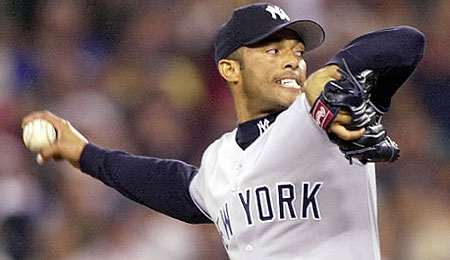
The Yankee bats let Mike Mussina down and Mo Rivera got tagged for another homer as the Royals beat the Spanks 3-2 today at the Stadium. Mussina was terrific, allowing just two runs in eight innings (89 pitches total). Alex Rodriguez cracked a two-run dinger to tie the game in the seventh. But Jose Guillen hit a lead-off homer against Rivera in the ninth. Mo yelled as Guillen circled the bases. The frustraing game ended fittingly when Melky Cabrera tapped out with the bases loaded in the bottom of the ninth. All of which will make for a long trip to the coast.
One step forward, one step back. Hard to know what you make of these guys, but the record says it all: 2-2 split against an awful Kansas City team and 32-32 overall.
Dag, it’s hot.
If Mike Mussina becomes the first pitcher in the American League to reach ten wins? (Considering how well he’s been going, perhaps that’s pushing our luck. The Royals aren’t a good offensive ball club, but considering how hot it is out there, I don’t exactly expect a pitcher’s duel today, do you?)
So, wouldn’t it just be nice if the Yanks win? If Jorge, Giambi and Rodriguez keep mashing?
If we could find old quotes (Joe Posnanski on Johnny Damon) as good as this one?
Or how about, if we could all stay cool?

Let’s Go Yan-Kees!

Crazy hot in New York. Don’t be a Herb, keep hydrated.

After my visit to the Farmer’s Market yesterday I just had to stop on 207 to get the best chicken I’ve been able to find uptown. Doesn’t matter that they don’t speak English in there. It ain’t hard to say “Pollo.” I didn’t care that I had to wait 25 minutes at the lunch counter, with the homely but tough and unsmiling dark-skinned women just inches away, everyone sweating profusely. The chicken is worth the wait. Plus, I like the commotion, the smells, the language, the music, the heat and the sweat.
Speaking of mmm, mmm good, we’ve got a tasty pitching match-up today at the Stadium, as the talented Mr. Greinke goes against Joba Chamberlain. It’s going to be nothing short of oppressive as far as the heat is concerned. Should be interesting to see if these two young pitchers can keep the ball from flying out of the yard.
Over at the Post, Mike Vaccaro writes about Joba and ‘splains why, at last count, there are 43,792 compelling reasons why baseball is the greatest game. Which brings to mind a smug, but amusing piece that Tom Boswell wrote years ago, “99 Reasons Why Baseball is Better Than Football.”
Here are just a couple:
9. Baseball has a bullpen coach blowing bubble gum with his cap turned around backward while leaning on a fungo bat; football has a defensive coordinator in a satin jacket with a headset and a clipboard.
25. More good baseball books appear in a single year than have been written about football in the past fifty years.
37. Baseball statistics open a world to us. Football statistics are virtually useless or, worse, misleading.
54. At a football game, you almost never leave saying, “I never saw a play like that before.” At a baseball game, there’s almost always some new wrinkle.
64. Baseball means Spring’s Here. Football means Winter’s Coming.
78. In baseball, fans catch foul balls. In football, they raise a net so you can’t even catch an extra point.
82. Football coaches walk across the field after the game and pretend to congratulate the opposing coach. Baseball managers head right for the beer.
86. Baseball measures a gift for dailiness.
89. Football is played best full of adrenaline and anger. Moderation seldom finds a place. Almost every act of baseball is a blending of effort and control; too much of either is fatal.
92. Turning the car radio dial on a summer night.
Let’s everyone try and stay cool today while the Yankee bats stay hot.