"A New York Treasure" --Village Voice
Category: Games We Play

Umpire State of Mind

I don’t always hate umpire schtick. The emphatic punch-out is part of the style, intensity and enthusiasm of Major League Baseball and these guys are integral to the game’s personality. I also don’t expect them to get every call correct. If they’re hustling, in the right position, and trying to be consistent I don’t get worked up about it. But when a home plate umpire spends an entire game preening and posing, but can’t be bothered to pay attention to the strike zone, it ruffles the feathers. And in rare cases, when umpire buffoonery repeatedly alters the scoreboard, I’m steamed.

Tonight, in the second inning, home-plate-umpire Dale Scott took a run away from the Yanks and second-base ump Alfonso Marquez added one to the Rangers side of the ledger. With bases loaded, Brett Gardner took what should have been ball four to drive in the first run. The pitch was not close, being low and outside (looking at Gameday, and then watching the pitch again on TV reminds me to take Gameday’s location with a grain of salt) and Gardner was noticeably peeved. He swung through strike three to end the threat.

In the bottom of the inning, Kinsler reached on a check swing dribbler in front of Cano. He attempted to steal second later in the at-bat, but Cervelli got a great pitch to throw on and drilled a dart to Derek (his best throw in recent memory) for the easy out. Or so thought everyone other than Marquez. Kinsler pulled back his lead hand and lurched into second base as Jeter swiped the tag across his fingers, chest and face. After watching it several times in replay, there was no angle which definitively showed a tag or a non-tag, but I firmly believe that some part of Jeter’s glove touched some part of Kinsler. Marquez definitely did not have a good idea either way, but decided that even though the throw beat Kinsler by five feet, he would call him safe. The Rangers bunted Kinsler to third and scored him on a ground out.

Jeter was shocked. Cervelli was confused. Vazquez, I’m sure was frustrated. Girardi was pissed. After railing against Marquez he turned to Scott to argue the strike zone. That’s reason for ejection, but Scott gave him a long leash and Girardi decided not to push it any further. The bad umpiring changed a 1-0 lead into a 0-1 hole, but the Yankees got fired up for a few innings after that and ran CJ Wilson out of the game early. Arod hit a big two-run double and Thames and Cervelli followed with two-out run-scoring singles. At 4-1 the Yankees had a nice lead but it would have been much more comfortable at 5-0. Especially with Javy Vazquez on the mound.

Actually, Vazquez was fine. Not good exactly, but adequate. He had bad luck with defense, bloopers, and the bad call. He impressed most when in the most trouble. With bases loaded in the fourth, a jam of his own making, he induced a grounder down the first base line that I’m sure most of us thought was easy pudding for Teixeira. I don’t know if he got a bad first step or missed the ball off the bat or if it just skidded through faster than it appeared off the bat, but Teix was nowhere near it. Vazquez got mad.

(more…)

Rare Air

He’s no Mo, as our man William pointed out, but Tim Marchman thinks that Trevor Hoffman still deserves our admiration:

If we’re honest, we’ll admit that Hoffman has never, with the exception of his glorious 1998, really been a great pitcher. This has less to do with closers being inherently overrated than with how good he’s been. The average, competent closer will have an ERA of somewhere between 2.50 and 3.00; Hoffman’s career ERA is 2.87. He’s had better years and a few lesser ones, but he’s mainly spent two decades being pretty good.

Being pretty good for that long is difficult, maybe more to some ways than being great. A truly great player will adapt as he ages because he does several things well and can get better at some even as he gets worse at others. A player who does one thing well — and that describes the vast majority of even good major leaguers, who can maybe field a bit or hit a home run now and then or throw a nice fastball — has almost no margin for error.

Hoffman has always been such a player. He had some significant virtues such as composure and the ability to pitch an inning every third day without hurting himself, but basically he owed his success to one thing: a change-up. In his prime it was just hideous, and then as he lost a bit to age he figured out how to keep it working well enough to do his job, solidly and well, for long enough that he’ll almost certainly make the Hall of Fame.

Mission Impossible

Check out our old pal Joe Sheehan on the Triple Crown:

“Triple Crown” is one of those phrases that has an tinge of antiquity to it, like the word “mitt” or referring to “base ball” or the mythical creature called the “doubleheader”. Leading the league in the traditional “big three” categories of batting average, home runs and RBI just isn’t done any longer. No baseball fan under 50 has a memory of seeing a Triple Crown, the last being achieved by Carl Yastrzemski in 1967. For three players — Joey Votto, Albert Pujols and Carlos Gonzalez — to be making a run at the Crown is highly unusual.

To some, the lack of Triple Crown winners in modern baseball is, like the lack of complete games or the decline in contact hitting, a sign that today’s players lack skills that their forefathers did. As with those issues and a host of others, the reasons have more to do with evolution and math than they do any change in the character of baseball players. It’s harder to lead the league in three categories now because it’s harder to lead the league in any one category now. The baseball Triple Crown went from an achievement that happened now and again to a rarity the minute baseball expanded past eight teams per league. The table at right shows the relationship of league size to Triple Crown winners.

Final Stretch

Over at SI.com, Cliff takes a look at the leading candidates for fancy awards. Here’s his take on the AL CY Young race (doesn’t include last night’s numbers):

1) CC Sabathia, LHP, Yankees (1)

Season stats: 19-5, 3.02 ERA, 1.20 WHIP, 7.3 K/9, 2.54 K/BB, 2 CG

Sabathia continued his march to the Cy Young with eight-innings of one-hit ball against the A’s on Thursday. That earned him his sixth-straight win, tying his career-high of 19. Over his last 18 starts, he is 16-2 with a 2.40 ERA. If he can get his ERA below 3.00, King Felix doesn’t stand a chance.

2) Felix Hernandez, RHP, Mariners (2)

Season stats: 11-10, 2.30 ERA, 1.09 WHIP, 8.6 K/9, 3.48 K/BB, 5 CG, 209 K

Cover up the win-loss records of the top two men on this list and see if you can make an argument for Sabathia over Hernandez. Go ahead, dig deeper into the stats. There’s no doubt that Hernandez has been the best pitcher in the American League this season, but though he finally got his record over .500 with eight strong innings against the Indians on Sunday (including nine strikeouts against juts one walk), I find it difficult to believe that enough of the voters will look past his eight-win deficit to Sabathia to give the award to Hernandez.

What is it Good For? (Absolutely Nuthin’)

Murray Chass doesn’t dig sabermetrics, Chapter 346, The Foreman Affair.

[Photo Credit: Market Watch]

You Wouldn’t Hit a Guy with Contacts, Would Ya?

Check out Keith Olbermann’s Buck Showalter story:

On Sunday, August 22nd, 1993, the New York Yankees were tied for first place in the American League East with the Toronto Blue Jays. As I watched in horrified astonishment from the press box, they were 4-hit by Chris Haney, a soon-to-be journeyman pitcher who would end an eminently frustrating career with an ERA of 5.07. The Yanks, now in second place and flying out to Chicago hours later that afternoon for a critical series, were in big trouble and had a lot to worry about. Or so I would’ve thought as I ventured into the clubhouse to commiserate with my friend Danny Tartabull.

There to my shock I found the usual crowd of reporters but – 10 or 15 minutes after the game had ended – not a single player. Worse yet, though nothing was said, several of the reporters seemed to be staring at me. That’s when Yankee factotum Arthur Richman took me aside: “The manager would like to see you.” I asked Arthur if I had been sent to the Yankees’ farm club in Columbus. “Matter of fact, you have,” he deadpanned. Inside there was second-year boss Buck Showalter, affable and cordial and welcoming. After a few pleasantries he began his soliloquy: “I asked you in here, because when I saw you on the field before the game I was frankly worried for your safety. Some of them truly do not like your style on SportsCenter and I thought someone was going to take a swing at you. These guys claim to ignore the media but every day our newspaper recycling bin is full. Actually, the players refused to come into the clubhouse until you leave. Me, I don’t care, I have a tough skin, you’re a bright fella and you know your baseball and you make me laugh. But I thought Boggs or especially O’Neill might take a swing at you.” Having startled me with this announcement, Showalter asked a question. “Far be it for me to tell you how to do your job, but how much of that job is dependent on access to the players?” I told him that conveniently the answer was none. He was silent for awhile. I told him it was all academic because I would be leaving SportsCenter soon to join our new ESPN2 product. Showalter smiled. “Well, we have a flight to catch but it’s been a pleasure. Sorry I had to be the bearer of such bad tidings about how the players feel about you but I really thought you needed to know.” I left the Stadium quickly, wondering not just about the oversensitivity of the Yankees, but more importantly why they would be worried more about me than about getting shut out by Chris Flipping Haney.

Order in the Court

Good looking to Eric Nusbaum for hipping his readers to Reeves Wiedeman’s coverage of the US Open for the New Yorker. Wiedeman is doing a wonderful job blogging the tournament. Dig…

I. Am. Sorry.

Manny Ramirez is in Boston this weekend as a member of the visiting Chicago White Sox. Here is a clip from a chat he had with reporters, via NESN:

Pete Abraham has the article in the Globe.

The Laws of Jeteronomy

Joe Pos drops science:

You know the deal. Jeter’s contract with the Yankees is up at the end of the year. Both sides understand that they HAVE no choice but to work out a deal. The Yankees cannot possibly let perhaps the most beloved Yankee of them all go somewhere else and get his 3,000th hit and retire to another place’s cheers and under another team’s cap. Can’t happen. And Derek Jeter cannot possibly go play for the Rockies or the Brewers or the Red Sox or the Mets, it’s simply unimaginable for the man who still has the voice of Bob Sheppard introduce him. Can’t happen.

So the Yankees have to keep him, and Jeter has to stay, and both sides fully understand. But it is also becoming more and more clear by the day that Derek Jeter is declining pretty rapidly as a player.

Representin' BK to the Fullest

New Gelf Varsity Letters reading in Brooklyn tonight. Dig…

In the Name of the Father

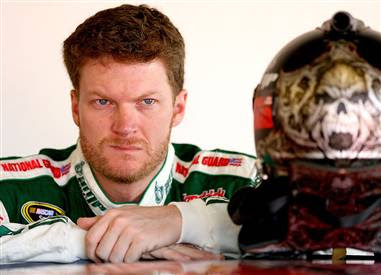
Good piece by Pat Jordan on Dale Earnhardt, Jr in the New York Times Magazine this week:

Earnhardt and I were sitting on the sofa talking; his publicist sat on another sofa. We talked for two hours, while his publicist fidgeted, casting expectant glances at us. Earnhardt said nobody calls him Junior or Little E anymore, except his fans. “That’s off my back,” he said. He looked down at his hands while he talked. When I asked him why he races, he said: “I didn’t want to work for a living. What the hell am I gonna do with my life as Dale Earnhardt’s son if I don’t race? I was a mechanic in Dad’s dealership at 18, and those were some of my happiest days. But my name was Dale Earnhardt Jr., man. Working as a mechanic would’ve been a real pain. People saying: ‘What happened to you? You’re Dale Earnhardt’s son.’ ”

…What has been the hardest thing for him to deal with in his career?

He stared at his hands and said: “All my life I’ve been the smaller measure of the man. When my Dad died, I wanted to honor him. But I wanted to distance myself from him too. I wanted to get out from under being Dale Earnhardt’s son.”

Bet a Million

Here’s Vic Ziegel, from the introduction to his collection Sunday Punch: Raspberries, Strawberries, Steinbrenner & Tysons–a Famed Sports Columnist Takes His Best Shot at Sports’ Big Shots:

Many of the pieces contained here were written in the press boxes, very close to deadline, with the stranger next to me typing a lot quicker. When sportswriters describe other sportswriters, good is high praise, quick is the ultimate. (The two words, quikc and good, make the work sound almost lewd. Me? I never got it for free and I never will.) The deadline is the problem, the enemy. It is there, at the same time, every night. You stand still and it comes closer. You can’t fake it out because it doesn’t move. It grows shorter and towers over you. It doesn’t understand that you want a better word than fast to describe a baserunner. Very fast is very bad. Fleet is out. Swift, nimble, speedy. No, no, no. Fast is starting to look better. There’s coffee spilled on my notes, you know in your heart that the press lounge has run out of beer, and now the stranger is on the telephone telling someone named Sweetie that he’s on the way.

On those days I write in the Daily News‘ sports department, and the ax of a deadline isn’t about to drop immediately, when you might think I have words enough and time, it suddenly becomes important to play chicken with the blade. So I shmooze with the guys in the office, go downstairs for another cup of cardboard coffee, call home, anybody’s home, until I have finally arrived at the moment I dread: the sports editor standing over me and saying, “Where is it?” (This is what you answer, kids. You say five minutes. And not to worry. If you miss once, nothing happens. If you miss too many times, they make you sports editor.)

And here’s John Schulian remembering his friend.

It was Vic Ziegel who once began a story with these immortal words: “The game is never over until the last man is out, the New York Post learned late last night.” If I had a nickel for every baseball writer who has paraphrased or just plain stolen that sentence, I might be able to afford a box seat at a Yankee game.

But those 19 words, no matter how often they appeared in one form or another under someone else’s byline, would always belong to Vic. He took a cliché and, with one deft addition, told his readers that he had written about a game, not the end of the world. Better still, he was setting the stage for a story filled with fun and whimsy. It would also be wise and free of self-importance, because those were trademarks of Vic’s work, too. Most of all, though, his story was going to make people laugh.

Making people laugh was what Vic did best until he died the other day, at 72, and turned my smile, and the smiles of everybody else that knew him, upside down. At the old Dorothy Schiff Post, he tickled funny bones by writing a sports advice column he called “Dear Flabby.” When Red Smith invited him to go to the horse races in some exotic, Ali-inspired locale -– oh, did Vic love the horses -– the next thing he knew, Red had written a column featuring a character named “Bet a Million” Ziegel.

And then there was a story that never made print, the one Vic told on himself about his turn as a hockey writer. The old one had left the Post, and when the new one couldn’t start for a couple of weeks, Vic volunteered the fill in even though hockey left him cold. Somehow he survived. He was such a team guy, in fact, that he even escorted the new man to the first game he covered. Soon after the puck was dropped, the new man began waxing rhapsodic about the action in the crease.

“The crease?” Vic Ziegel, hockey expert, said. “What’s the crease?”

As the story comes back to me, I can hear him laughing. Not loudly -– there was nothing loud about him -– but with the joy he got from telling a funny story well. And if he was the punch line, so what? We’re all punch lines at one point or another in our lives.

He and I might have qualified in that regard when we wrote for P.M. papers–Vic the Post, me the Chicago Daily News–and still struggled to make our deadlines. It was funny for everybody except us and the desk men who were waiting to slap headlines on our copy as dawn came creeping. For all I know, that was how our friendship was born: We were the last two guys in the pressroom. The only thing I can tell you for sure, though, is that we met at the Muhammad Ali-Alfredo Evangelista fight outside Washington, D.C., in 1977, and we became friends, just like that.

It was one more stunning development in the year and a half or so that saw me go from cityside reporter in Baltimore to sportswriter at the Washington Post to columnist in Chicago. Here was Vic, whose work in the New York Post had been making me laugh since the first time I picked up the paper, in 1968, and he was giving me his phone number and calling me “pal” and treating me as if I belonged in the kind of company he kept in Manhattan. He had worked with Leonard Shecter, Larry Merchant, Pete Hamill, and Murray Kempton, and I’d read in the Village Voice that he hung out at the ultimate writers’ bar, the Lion’s Head. Now he was my friend — how cool was that?

There was a grace and good-heartedness about Vic that never wavered throughout the 33 years I knew him. He took me to the Lion’s Head for my first visit, and made a point of introducing me to Hamill and Joel Oppenheimer and Joe Flaherty, towering figures in the pecking order in my head.

When I was married and my wife and I visited New York, Vic and his wife, the pluperfect Roberta, hosted a brunch in our honor at their apartment, and who should show up but Wilfred Sheed, another writing hero. Vic knew the Italian restaurants I should eat at, and the movies I should see (especially if they were film noir), and the old jazz I should be aware of, by Bix Beiderbecke and Jellyroll Morton. I’m partial to country music myself, but one rainy night Vic picked me up to go to dinner and then abruptly pulled his car to a stop on a side street so I could listen to what he thought was the perfect blending of our sensibilities: Jimmie Rodgers, the Singing Brakeman, backed by Louis Armstrong. If a goy from Salt Lake City may say such a thing, he was the ultimate mensch.

There are people who knew Vic longer than I did, and there are people who knew him better, but I consider myself lucky to have spent the time I did reading him and hanging out with him. The last time was after last year’s Breeders’ Cup at Santa Anita. He stayed for a couple of days in the room where I keep my crime novels and a jukebox that I’m ashamed to say has only one jazz CD on it, Miles Davis’ “Kind of Blue.” He had aged and he seemed less sure of himself physically, but if he had been diagnosed with the cancer that ultimately killed him, he never breathed a word of it. He wanted to talk, to laugh, to eat, and when I suggested that we watch The Friends of Eddie Coyle, he was up for that, too. He took the sofa, I took the easy chair, and we were both sound asleep before we got 20 minutes into the movie. It’s what old guys do. Then they say goodbye and hope they’ll see each other again.

When Vic was back in New York, he told me about the health problems that had begun to dog him, though still with no mention of cancer. But I’m not sure I ever told him about the anthology of boxing writing that George Kimball, another old friend, and I are putting together. I should have, because he’s in the book with a blissfully funny story he wrote for Inside Sports 30 years ago about the devoutly unfunny Roberto Duran. The story opens with Vic’s description of two chinchillas, Ralph and Steve, who live in a window cage in New York’s fur district. Now nobody will ever open another boxing story with chinchillas named Ralph and Steve, damn it.


[Photo Credit: NY Daily News, Corbis]

Beat of the Day

This one isn’t in the new book of boxing poetry and song lyrics but still, Uncle L’s crossover hit is still worth dropping here:

Beat of the Day

Another boxing beat:

…For the Brown Bomber:

Beat of the Day

Boxing Week continues

Beat of the Day

In celebration of the recent publication of The Fighter Still Remains: A Celebration of Boxing in Poetry and Song from Zevon to Ali (edited by George Kimbal and John Schulian), let’s do a week of boxing tunes.

First up, a classic:

Revising a Miracle, Part 1: Meet the Amazins

Original Artwork by Ben DeRosa

This is a collaborative effort of words, numbers (Chris & Jon DeRosa) and original artwork (Ben DeRosa) dedicated to the memory of Joseph DeRosa, our grandfather, who pretty much hated every personnel move his beloved New York Mets ever made.

Over at the Hardball Times, one of our favorite baseball writers, the estimable Steve Treder, does these fascinating roster reconstructions, speculating on what might have happened if this or that team hadn’t gone through with some pivotal personnel decisions. In one piece, he imagined what might have become of the Braves had they not passed on Willie Mays. In another, he asked what if the Giants had sorted out their talent correctly in the 1960s. The “what if” scenario that most tantalizes Yankee fans is, of course, “what if the Yankees had held onto the group of prospects they produced in the mid-90s?”

What if the Yankees hadn’t given up on Andy Pettitte and dealt him off the National League in 1994? Then they might not have been so desperate for left-handed pitching that they were willing to swapfuture all-stars Jorge Posada and Mariano Rivera to Detroit for David Wells. While Mariano has earned a reputation as a postseason choker due to his memorable meltdown in his first and only postseason appearance in 2006, it’s quite possible that with a few more chances he might have sorted things out.

What if the Yankee front office saw the charismatic future star they had in Derek Jeter, and hadn’t traded him to the Reds? Unlikely? Sure. But just pretend for a minute that Tony Fernandez had gotten injured at the outset of the 1996 season, and Jeter had gotten a chance to play in pinstripes.

It is difficult, even in the form of a Marvel Comics “What If?” fantasy, to imagine Bernie Williams starring for the Yanks instead of the Sox—when has George Steinbrenner ever given an unproven outfielder 1300 plate appearances to blossom?—but for the sake of argument, let’s just say that George was somehow suspended from making a premature call on Bernie and he roamed centerfield for an entire decade. What then?

With their actual free-agent signings to buttress this up-the-middle talent core, the Yankees might have had some kind of ballclub in the late 90s-early ‘00s.

To indulge such an exercise, you have to imagine the very same people behaving differently, but even still, it is remarkable that such a thin tissue of attitudes and circumstances means the difference between a great team coming together or not. Go back and check the trade rumors swirling around the NL forty years ago, for instance, and you will see that but for a few key decisions, the Amazin’ Mets dynasty of the 1970s might too have been scattered to the winds.

(more…)

The Write Stuff

Roger Angell was the first baseball writer I can remember. Actually, it was the two Rogers–Angell and Kahn–whose books were in my father’s collection, and sometimes–I’m sure I’m not alone here–I confused them. But when it came time to actually reading them and not just noticing the jacket cover of their books, Angell was my guy. Years later, when I started this blog, Angell served as a role model. Not because I wanted to copy his style or his sensibility, but because he was an example of fan who wrote well and loved the game.

So long as I was authentic and wrote with dedication and sincerity, I knew I’d be okay. Angell came to mind recently when I read a blog post by the veteran sports writer, David Kindred:

Bill Simmons is America’s hottest sportswriter. Fortunately, at the same time I came up with an explanation that enabled me to continue calling myself a sportswriter. Bill Simmons has succeeded because he is not, has never been, and will never be a sportswriter. He’s a fan.

Lord knows, there’s nothing wrong with being a fan. I love sports fans. Without the painted-face people, I’d be writing ad copy for weedeaters. But I have I ever been a sports fan. A fan of reporting, yes. Of journalism. Of newspapers. A fan of reading and writing, you bet. I am a fan of sports, which is different from being a sports fan of the Simmons stripe.
The art and craft of competition fascinates me. Sports gives us, on a daily basis, ordinary people doing extraordinary things and extraordinary people doing unimagined things. I love it.

But I have never cared who wins. I am a disciple of the Pulitzer Prize-winning sportswriter Dave Anderson, whose gospel is: “I root for the column.” We don’t care what happens as long as there’s a story.

My readings of Simmons now suggest he is past caring only about the Red Sox, Celtics, Bruins, and Patriots winning (though if they all won championships in the same year, the book would be an Everest of Will Durant proportions). He now engages, however timidly, in actual reporting of actual events; he even has allowed that interviewing people might give him insights otherwise unavailable on his flat-screen TV. Clearly, though, he is most comfortable in his persona as just a guy talking sports with other guys between commercials – which is fine if, unlike me, you go for that guys-being-guys/beer-and-wings nonsense and have infinite patience for The Sports Guy’s bloviation, blather, and balderdash.

Even though Bill James has written almost exclusively about baseball, for traditional newspaper and magazine guys, I doubt that he’d qualify as a sports writer. Not without reporting, or going into the locker rooms. Then where does that leave guys like Joe Sheehan, Tim Marchman, Jonah Keri and Rob Neyer (to name, just a few)? They aren’t fans like Simmons, but they write soley about sports.

The definition of what it is to be a sports writer is changing.

I have done some freelance writing for SI.com, gone into the locker rooms and filed stories. I’ve also worked on longer bonus pieces too. I enjoyed both experiences because it gave me an appreciation for the rigors of journalism. I also came to realize that being a beat writer, for instance, is not a job for me–I’m too old and I don’t have that kind of hustle and I don’t care enough about where being a good beat writer would take me.

Nobody grows up dreaming of beinga  columnist anymore do they? I suspect they dream of growing up and writing, or blogging, so that they can be on TV.

Here at the Banter, I’m more like Simmons or Angell. I’m not a reporter or a columnist or an analyst, and I’m certainly no expert (I’m lucky to have a sharp mind like Cliff writing analytical pieces in this space). I think of myself as an observer. More than a strict seamhead, I write about what it is like to live in New York City and root for the Yankees. Often, I’m just as interested in writing about my subway ride home or the latest Jeff Bridges movie as I am about who the Yankees left fielder will be next year. Which makes the Banter more of a lifestyle blog than just a Yankee site, for better or worse.

So I’m no sports writer and that’s cool but I’m not sure what a sports writer is anymore.

…Oh, and along with Kindred, the inimitable Charlie Pierce has started a blog at Boston.com. Pierce is a welcome addition to the landscape. Be sure to check him out.

Never Give a Sucker an Even Break

wc

Check out this wonderful first-person essay by Pat Jordan from Men’s Journal. Jordan writes how he learned about money from his father, a professional grifter:

In many ways, I am my father’s son. once, in my 60s, I told my father, in his 90s, that I was not much like him. “How so?” he asked. I said, “I never gamble.” He laughed, a dismissive laugh, and said, “You? A freelance writer for 40 years?” He was right. He had taught me how to con people early in my life. I used that knowledge in my late 20s to hustle pool like him. I wore construction clothes at lunchtime. I conned my marks into spotting me the eight and nine in nine ball, and if I lost I always went to the men’s room, climbed out a window, and left without paying. A lesson from the old man. “Always check the men’s-room window before you play,” he said. “Because even if you lose, you’re not gonna pay.” Years later, when I became a writer, I conned editors into giving me assignments. “You got to find out what they want,” he said, “then give it to them. Tell them anything they want to hear to get the assignment, then write it the way you want.”

He taught me so many things that became a part of my life, that determined how I lived my life. He taught me that only a fool believes in perfect justice. “There’s no such thing as an accident,” he said. “You’re supposed to know the other guy always runs the stop sign.” He taught me that a man never quits no matter how defeated he feels, that a man always has to have the courage of his suffering. And most important, he taught me that “there are only three vices in this world, kid: broads, booze, and gambling, and if you’re gonna do it right, pick one and stick to it.” I was in my 20s, with a wife and three kids, and there wasn’t much room in my life for vice. Years later, however, I had more than a passing acquaintance with one of those, and it wasn’t booze or gambling.

But in the one way that really mattered, to me anyway, I was not much like Dad at all. I never had his purity of understanding of the true nature of money. That has always shamed me. I have been burdened, conflicted, cursed, you might say, by my own fearful need to hoard money to forestall that looming disaster always around the bend, the foreclosed house from my youth.

feed Share on Facebook Share on Twitter Share via email
"This ain't football. We do this every day."
--Earl Weaver