"A New York Treasure" --Village Voice
Category: Staff

Kansas City Royals III: Things That Make You Go Hmmm Edition

Let’s get right into it. The Yankees just made three roster moves. The first was obvious: Dan Giese, who left Wednesday’s game with shoulder tendonitis, has been placed on the DL and replaced with Chris Britton, who will reprise his role as roster filler until the Yankees are forced to call up a fifth starter, likely Phil Hughes, next weekend.

Untitled The second was somewhat overdue. Melky Cabrera, who has hit .226/.274/.293 since May 1, was optioned to triple-A and replaced by Brett Gardner. In fairness to the Yankees, they tried to motivate this exchange in early July by calling up Gardner and giving him 16 starts in an 18-game stretch (enabled by Johnny Damon’s shoulder injury), but Gardner made Melky look like Mickey Mantle by hitting .153/.227/.169. As I reported in my Farm Report this morning, Gardner got back in the grove after his late-July demotion, hitting .339/.429/.390* in his return engagement in Scranton. He also returns to the Bronx coming off a 3 for 4 day (with a triple) and on a seven-game hitting streak. After his July performance, it’s difficult to say Gardner couldn’t be worse than Melky, and there’s legitimate concern that his total lack of power will allow major league pitchers to challenge him and thus negate his ability to draw walks, which is a huge part of his game, but desperate times call for desperate measures, and this doesn’t even qualify as the latter.

Gardner will start in center tonight and bat eighth ahead of Andy Pettitte’s new personal catcher, Jose Molina. It remains to be seen if Joe Girardi will platoon the lefty-hitting Gardner with the right-handed Justin Christian, though one suspects he will. The way I see it, if they’re going to give Gardner a second chance, they might as well let him play full time, though certainly Gardner’s performance will play a large part in determining how much playing time he loses to Christian. As for Melky, he’ll be back when rosters expand in two weeks.
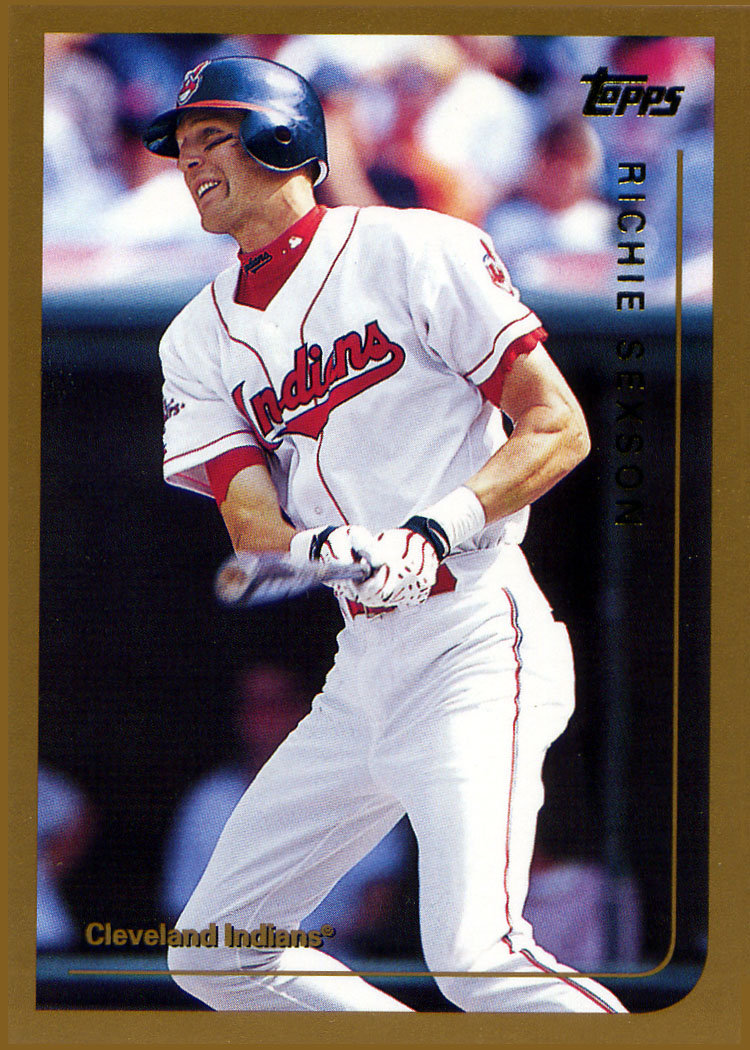
Untitled The third and final transaction saw the Yankees call up Cody Ransom, whom I also discussed in my Farm Report, and release Richie Sexson. I have to say, I’m confused about this one. Sexson was hitting .250/.371/.393 as a Yankee, which isn’t season-changing, but if nothing else, gave the Yankees a solid on-base performance from a bench player. Against lefties, Sexson hit .273/.393/.455 as a Yankee, which meant he was doing what the Yankees picked him up to do. Ransom, as I said in my Farm Report, is essentially a right-handed Wilson Betemit, but five years older and with a fraction of the big league experience. Originally a shortstop, Ransom can play all four infield positions and spot in the outfield. He transitioned to third base in 2006, but in the wake of the Alberto Gonzalez trade was moved back to short in Scranton a couple of weeks ago. He’s got some pop in his bat (22 homers in 116 games for Scranton this year, 49 in 257 games over his last two minor league seasons), but his plate discipline is ordinary at best and he strikes out a lot and hits for a low average.

Other than position flexibility, I’m not sure what Ransom offers that would be enough for the Yankees to pass on having Sexson on the bench earning the major league minimum. Derek Jeter’s in the lineup tonight at shortstop, so it doesn’t seem as though his bruised instep is enough of a problem to motivate a roster move that costs the team a productive player. The only thing I can think of is that having the extra infielder on hand will allow Joe Girardi to apply some pressure to Robinson Cano, whose play over the past two weeks has become downright problematic as he’s made numerous mental mistakes on the bases and in the field, enough so that his effort and concentration have been called into question (Cano’s also hitting .210/.279/.323 since the end of the Yankees’ eight-game winning streak coming out of the All-Star break). Still, I’m not sure it was necessary to release Sexson in order to give either Betemit or Ransom some starts at second base. Besides which, Cano’s in the lineup tonight in his usual spot.

Still, it seems to me that these last two moves are designed primarily to make the C + C Music Factory sweat, while giving Girardi some viable alternatives in the meantime. Sexson’s departure doesn’t represent a huge loss, particularly with Jason Giambi having heated back up (.288/.447/.515 since the day before the All-Star break, .364/.533/.773 on the just-completed road trip), but Cody Ransom, a career .236/.331/.364 hitter in 140 major league bats at age 31, is still a downgrade, no matter what positions he can play.

*the stats in my Farm Report don’t include Thursday’s games; these do

(more…)

July Farm Report

Better late than never, right?

There are just a few weeks left in the minor league season, so my next Farm Report will serve as a summary of the season as a whole. That makes this my last mid-season update. Here’s my June Farm Report, which in turn links to May, etc.

Triple-A Scranton/Wilkes-Barre

The big news in Scranton was the fact that three of the team’s starting pitchers were shipped to the Pirates in the Xavier Nady deal. With Daniel McCutchen, Ross Ohlendorf, and Jeff Karstens out of the system, the Scranton rotation now consists of a rehabbing Phil Hughes, three-time loser Ian Kennedy, the unwanted Kei Igawa, and double-A call-ups Alfredo Aceves, and lefty Chase Wright. When Kennedy was called up to start for the Yankees, Jason Jones was called up from Trenton to fill his spot. Jones has since been sent back to Trenton, but I expect he’ll be recalled when Phil Hughes is called back to the bigs.

Hughes is scheduled to make his fifth rehab appearance on Sunday. In two outings for low-A Charleston, he pitched 6 2/3 scoreless innings, striking out six and allowing just five baserunners (three hits and two walks). In two starts for Scranton, he’s posted a 2.70 ERA and a 0.90 WHIP. In his last start, he struck out four in 5 1/3 innings while allowing just three hits and a walk. He’s likely to return to the major league rotation next weekend when the Yankees are in Baltimore.

Aceves has not pitched well in Scranton since having a groin injury delay the start of his triple-A career. In his four starts since stretching back out, Aceves has allowed four runs every time out, resulting in a 6.97 ERA over those four starts, which is paired with a 1.60 WHIP.

Wrote Chad Jennings last week, “To be honest, Aceves has more or less lived up to my expectation — he throws strikes and doesn’t miss by much when he misses — but hitters at this level seem to be having an easier time making solid, consistent contact than the hitters in Double-A and A ball. Triple-A is an adjustment, and Aceves is going through it. He allowed three hits in the second inning and four hits in the fourth, but he also sent the side down in order in both the first and the third. I don’t think he’s overmatched at this level, he’s just challenged at this level to be more than a guy who throws strikes.”

Wright, who went 8-2 with a 2.96 ERA in 16 double-A starts, has made just three starts for Scranton, the last of which was unimpressive. Jones, who went 11-5 with a 3.03 ERA in 21 starts for Trenton, pitched well in his two triple-A starts.

Out in the bullpen is where you’ll find Phil Coke, the lefty who was initially reported to be a part of the package for Nady. He’s pitched well in his new role, but could return to starting next year.

The big name in the Scranton bullpen is Mark Melancon, who has allowed just one run in 9 2/3 triple-A innings while allowing just six baserunners and striking out ten. Comming off surgery, Melancon has thrown 84 2/3 innings this season, which makes a big-league promotion unlikely (other than to let him hang out on the bench), but he seems sure to be in the picture for next year’s pen.

(more…)

Not Dead Yet

Mike Mussina pitched well enough to earn his 16th win of the season last night, leaving the game after seven strong innings and 104 pitches with a 5-3 lead. The Yankees got to Twins starter Nick Blackburn early when Johnny Damon homered on the second pitch of the game, and though the lead changed hands four times in the early innings, the Yanks began to pull away as Mussina settled down to end his night with three scoreless frames.

An insurance run in the top of the eighth made it 6-3 Yanks, but three batters into the bottom of the inning, Damaso Marte had put runners on the corners, forcing Joe Girardi to go straight to his closer in a game the Yankees really needed to win. Delmon Young fouled off Mariano Rivera’s first two pitches, but when the third drifted over the plate, Young smacked it off the opposite-field foul pole for a game-tying home run.

Rivera got the next two outs, then spent the top of the ninth steaming in the dugout, cursing to himself, throwing his gum, staring at the ceiling, and constantly shifting in his seat, unable to keep his blood from boiling.

After the Yankees failed to do anything with a one-out Derek Jeter single in the top of the ninth, Rivera returned to the mound and pitched around a bad call on a two-out infield single by Nick Punto to push the game into extra innings.

Joe Nathan set the Yanks down in order in the top tenth, but Jose Veras returned serve in the bottom of the inning, at which point the discrepancy between Mike Mussina’s and Nick Blackburn’s performances earlier in the game came back into play. Entering the 11th inning, Joe Girardi had used just three relievers–Marte, Rivera, and Veras, the last of whom came back out and pitched another 1-2-3 inning in the 11th–while Ron Gardenhire had just two left, Matt Guerrier and Brian Bass. Guerrier pitched around a two-out infield single by Johnny Damon in the 11th, but wasn’t so fortunate in the 12th.

Alex Rodriguez was 0 for 5 entering the twelfth inning. His previous at-bat came with two outs in the top of the ninth. Derek Jeter had singled earlier in the inning, but the Captain fouled a ball of his left instep earlier in the game and his mobility was limited. After Bobby Abreu made the second out, Girardi sent Melky Cabrera in to run for Jeter so that the Yankees would be able to take the lead on a double. Instead, Rodriguez swung at the first pitch he saw and hit into an inning-ending fielder’s choice.

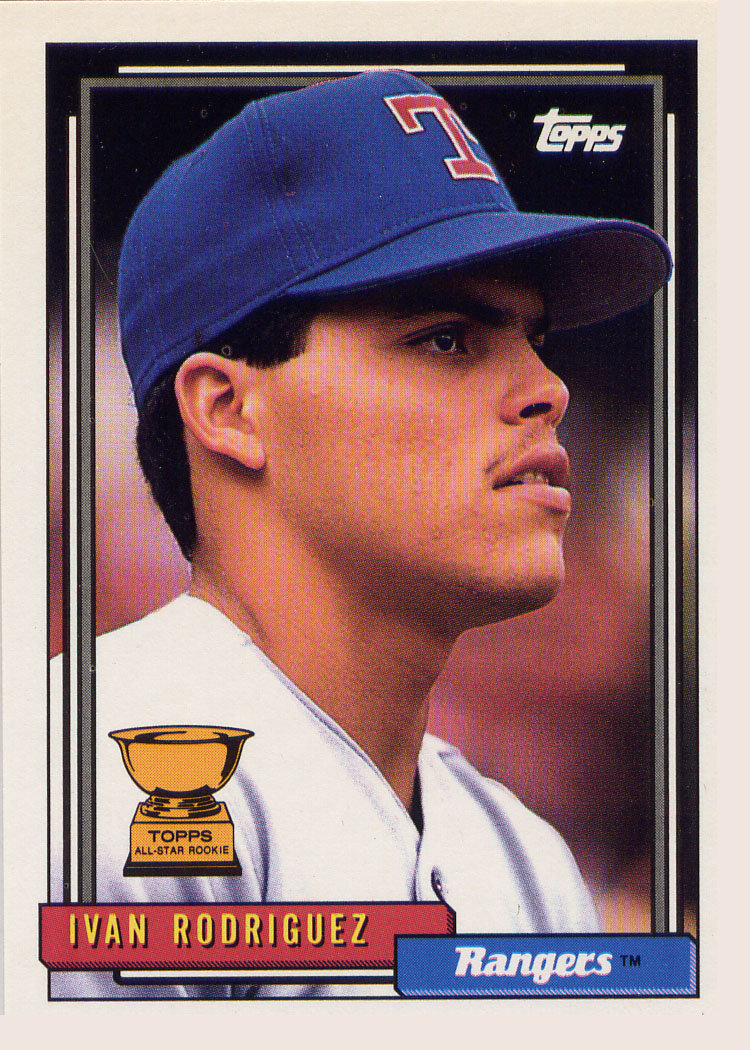
Untitled Facing Guerrier in the 12th, Rodriguez took the first pitch for a ball, then crushed the next one over the 408 sign in dead center to give the Yankees their fourth and final lead of the game. Ivan Rodriguez followed with a double, and Xavier Nady, who drove in four of the Yankees’ nine runs on the night, topped things off with another homer into the vampire seats off Guerrier.

With Rivera having blown his first save of the year, Edwar Ramirez earned his first save of the season with a 1-2-3 bottom of the twelfth to nail down the much-needed 9-5 Yankee win.

Alex Rodriguez got the key hit, but Nady, Mussina, and the combination of Veras and Ramirez, who pitched three perfect innings, deserve at least as much credit. Now the Yankees have a chance to pull out a series win against Kevin Slowey this afternoon to salvage a 4-6 record on the road trip.

Sweet Sixteen?

The Yankees’ last victory was Mike Mussina’s 15th of the season. Now, after a four-game losing streak, Mikey Moose is back to try to make it sweet sixteen and save the sad sack Yanks from slipping into the cellar (or shake them from their slumber, so to speak). To break this bummer, he’ll have to beat Nick Blackburn who takes the ball for the bad guys.

The Yanks have faced Blackburn twice this year, once they beat him badly, touching him up for six runs on seven hits (including an Alex Rodriguez homer) in just 1 2/3 innings. The other time, they just broke his nose. Blackburn has a 2.25 ERA in three starts since last facing the Yanks, and I can’t imagine he’s thrilled to see them again, no matter how poorly they’ve been playing.

Speaking of which, what’s the deal with Robinson Cano? Over the past week or so I’ve noticed a number of ground balls to both his left and right scoot past him when I was convinced he was at least going to knock them down. As recently as a month or so ago, Cano was one of the best defensive second baseman in the game, and it’s quite possible that his fine play has created unrealistic expectations on my part (certainly most if not all of the grounders of which I speak would have required above average to great plays to turn them into outs, but it seems Cano had been making those plays until recently), but what appeared to be one or two well-placed hits “past a lunging Cano” (note: he’s not diving) a week or so ago now seem to be regular occurrences. Perhaps not coincidentally, Cano has hit just .222/.276/.352 since the Yankees’ eight-game winning streak was snapped in Boston. This team has a lot of problems right now, and that has allowed what seems to be a lackluster effort on Cano’s part to go largely unnoticed, but it’s worth keeping and eye on and, if real, needs to be addressed by Joe Girardi and his coaching staff.

Johnny Damon is back in the lineup and in center field tonight. Jason Giambi is back in the lineup and at DH. Wilson Betemit plays first base. Melky Cabrera rides pine. As always, Jose Molina catches Mussina.

Untitled Meanwhile, the Red Sox picked up Paul Byrd from the Indians for a player to be named later. The roughly league-average, contact-pitching Byrd will replace struggling rookie Clay Buchholz (0-5, 7.42 ERA in six starts since being recalled in early July) in the rotation. Over that same stretch, Byrd, who is a free agent after the season, has gone 4-0 with a 1.80 ERA in five starts, but the Yankees didn’t bother to put a waiver claim on him, allowing him to slip through to the Red Sox. Bri-Bri, you got some splain’ to do.

Minnesota Twins III: Back Where We Started Edition

UntitledThree weeks ago, the Twins arrived in the Bronx holding a two-game lead over the Yankees for second place in the Wild Card race. The Yanks swept past Minnesota in that week’s three game series, but have since fallen back into the back. As a result, the Yankees head into Minneapolis tonight once again trailing the Twins by two games for second place in the Wild Card race.

While the Yankees have been struggling to remain relevant to the Wild Card picture, the Twins have had bigger fish to fry. Three days after leaving New York, the Twins hosted the AL Central-leading White Sox and took three of four games to close the gap atop the central to a half a game. Since then, the Twins have twice slipped past the Pale Hose, only to slip back behind them the next day. They enter tonight’s action trailing the Chisox by just a half game and the two teams have been within 1.5 games of one another for the past week.

The Twins have been hanging tight in the Central all year, and a week ago they finally brought rehabilitated lefty ace Francisco Liriano up to replace aged innings eater Livan Hernandez in the rotation. The Yankees are fortunate not to have to face Liriano (2-0, 2.31 since being recalled) this week, but given the Twins’ spectacular record at home (.650 winning percentage), and the fact that Minnesota actually has something to fight for, they’ve got their work cut out for them anyway.

The Yanks split a four-game series in the Homer Dome as May turned into June, and will kick this week’s three-game set off tonight by sending Sidney Ponson to the mound against Glen Perkins. Ponson has faced the Twins thrice already this year. He pitched 5 2/3 innings in the opening game of the Yankees’ July sweep and picked up a win thanks to 12 runs of support. His first start of the season saw him pitch 5 1/3 innings against the Twins in Texas, give up four unearned runs, and take a no-decision. His one start at the Metrodome, however, was one to dream on, a 110-pitch complete game in which Sir Sidney allowed just one run on six hits and a walk while the Rangers cruised to a 10-1 victory. Perkins, meanwhile, has faced the Yankees twice, once in each location, both times coughing up five runs, which is exactly what he did against the Mariners in his last start as well.

The lefty Perkins won’t have to deal with Jason Giambi or the hot-hitting Johnny Damon tonight, as Richie Sexson gets the start at first base and Justin Christian starts over Damon in left field with Xavier Nady DHing. Damon DHed in both weekend games after slamming his sore left shoulder into the wall on Friday night in pursuit of a rocket hit off Ian Kennedy, so it seems likely that Joe Girardi is simply using the opposting lefty as an excuse to give Damon a needed day off. Still, starting both Christian and Melky Cabrera over Damon hurts, as Damon has had two singles in each of the last five games, is hitting .370 over his active 11-game hitting streak, has hit .333/.413/.420 with five steals in as many tries since being activated from the DL after nursing that same sore shoulder back to relative health, and, if you hadn’t noticed, is actually leading the league in batting average. Similarly, while Sexson has quietly hit .292/.400/.458 as a part-timer since joining the Yankees, the clean-shaven Giambi is hitting .313/.500/.875 with three home runs on the current road trip.

(more…)

Lost Weekend

Alex had it right with his Ray Milland pic on Saturday. The Yankees went on one heck of a bender in La La Land this past weekend, getting swept by the Angels and losing in just about every way possible. On Friday night, Ian Kennedy couldn’t get an out in the third inning. Darrell Rasner and the Yankee bats tried valiantly to climb out of the hole Kennedy had dug, but just as they neared the top, they fell back in. On Saturday, Dan Giese was great for six innings, but Jose Veras, Edwar Ramirez, and David Robertson coughed up ten runs in the final two innings to put the game far out of reach.

Yesterday, Andy Pettitte and Joe Saunders matched each other pitch-for-pitch for seven innings, handing their bullpens a 3-3 tie. Jose Arredondo and Damaso Marte matched zeros in the eighth, sending the tie into the ninth. Home team manager Mike Scioscia went straight to his closer, Francisco Rodriguez, who struck out the side in the ninth. Visiting manager Joe Girardi, having used Rasner for 4 1/3 innings on Friday and having watched each all four of his remaining set-up men stink up the joint over the previous two games (Brian Bruney put Friday’s game out of reach for good after relieving Rasner in the eighth), tried to get another inning out of Marte.

After retiring all three men he faced in the eighth, Marte gave up a single to the leadoff man in the ninth; that hitter being second baseman Howie Kendrick, who entered the game hitting .480 in his young career against the Yankees, but had gone hitless in his three at-bats against Pettitte. Marte rallied to strike out Gary Matthews Jr., but fell behind ninth-place hitter Mike Napoli 2-0 before walking him on a full count to push Kendrick in to scoring position. Having watched Marte blow a game by alternating walks and outs during the previous series in Texas, Girardi broke down and called on his closer, Mariano Rivera. Rivera threw one pitch to Chone Figgins. It caught a bit too much of the plate, and Figgins pulled a perfectly place bounder through the first-base hole to score Kendrick and complete the Angels sweep.

Long-time readers will know that I’ve often argued that a manager should use his closer in a tie game on the road once the game enters sudden death for the home team. Unlike his predecessor, Joe Girardi has done a decent job of employing Rivera that way, but even before Figgins’ game-winning single, opposing hitters were hitting .361/.410/.583 against Rivera this year when the game is tied. In all other situations, they are hitting less than .190 against him. Sometimes you just can’t win.

(more…)

Denial Ain’t Just A River In Egypt

Last night, Ian Kennedy’s third stint in the Yankee rotation this year started off much like the previous two. Unable to record an out in the third inning, Kennedy was pulled after allowing five runs on nine hits and a walk and getting just six outs. Kennedy only walked one man and did a decent job of throwing first-pitch strikes (doing so to 12 of 16 batters, including all five men he faced in his scoreless second inning), but he simply wasn’t getting people out. Ten of the 16 men he faced reached base safely. What’s more, he wasn’t fooling anyone. Three of his 12 first-pitch strikes were put in play as hits. In total, the Angels swung at 22 of Kennedy’s 61 pitches. Only three swings failed to make contact, while 14 of them put the ball in play.

The first four batters Kennedy faced in the first inning hit ground balls, two of which got through for singles, and a third would have had it not hit the mound and ricocheted to Robinson Cano for a fielder’s choice at second. With men on first and second, Kennedy grooved an 86-mile-per-hour fastball right down Broadway to Torii Hunter, who crushed it to the 387-foot sign in the left-center-field gap. Johnny Damon and Melky Cabrera converged on the ball, with Melky appearing to call for it, but Damon lept in front of Cabrera, slamming his already tender left shoulder into the wall and missing the ball, which fell for a two-RBI double (Damon’s fine and Melky didn’t really appear to have a play).

Kennedy then got Garret Anderson to pop out on a full count to end the inning, but Howie Kendrick led off the second with another booming double to the same spot on a hanging curve. Juan Rivera flied out to the wall in dead center to move Kendrick to third, and Kennedy responded by walking the Angels’ ninth-place hitter, Jeff Mathis, but then managed to strand both runners by striking out Chone Figgins swinging on a perfectly placed cutter just under the hands (Kennedy’s only K of the game) and getting Erick Aybar to ground out.

That was the only positive sequence in Kennedy’s brief outing. In the third, he was again greeted by a double, this one a hard shot down the right field line off the bat of Mark Teixeira. Four singles followed, the first a well-placed grounder through the first-base hole by Vlad Guerrero, the next a slow hopper to shortstop that Derek Jeter booted, and the last two flares that dropped in just fair behind first and third base. Still, Kennedy had given up his share of hard-hit balls before that sequence, wasn’t fooling anyone, and was five batters and three runs deep in the inning and still hadn’t gotten an out.

Darrell Rasner came on and got two outs on three pitches without another run scoring, then struck out Figgins to end the inning. Rasner allowed just one run over the next three innings, and the Yankees snuck back into the game with two runs in the sixth on an Xavier Nady solo homer and a Robinson Cano triple that was cashed in by a Melky Cabrera groundout to first base.

That brought the Yankees within one run of the Angels, but Rasner couldn’t hold it any longer. Torii Hunter, who was 4 for 5 on the night with 4 RBIs and a great first-inning catch on a dead run toward the wall in center, led off the seventh with a home run. After a groundout, a Howie Kendrick single drove Rasner from the game in favor of Brian Bruney, who proceeded to allow Hendrick and two of his teammates to score, inflating the Angels’ lead to 10-5, which is how it ended.

After the game, Kennedy seemed disturbingly undisturbed by his poor outing. Flashing his “What Me Worry?” grin, this is what he had to say for himself:

“It’s the first bad outing I’ve had in a long time. I’m not going to look much into it. I felt like I made some good pitches. Yeah, I got the leadoff hitter on quite a bit [twice in three innings], but got out of it in the second inning. I’m not too upset about it. . . . Even on their singles, like, what, ground balls? [shrugs] So, that’s not a big deal. Gave up a couple doubles [three], but I felt like I made some good pitches and competed, which is all that really matters. . . What was it? A bunch of singles and three doubles, or so. I’m just not real upset about it. I’m just gonna move on. I’ve already done that.” [big grin]

All that really matters, aye, Ike? I was high on Kennedy coming into this season, but he’s had three chances this year and nothing has changed. After watching him grin his way through his post-game comments, I’m not sure he thinks anything needs to, which could be his biggest problem.

Asked what he’d been doing right in triple-A over the last month that differentiated his success there from his poor outing last night, Kennedy replied, “Honestly, it’s quite a bit the same. I just got ahead of guys. I felt like I made good pitches when I tried to get them out. I jammed some guys, got some bloop hits at the end. That second inning, which I told you earlier, I got that leadoff double, and he didn’t score. I’ve been working on throwing that cutter inside and it got me out of that jam. . . . I don’t know, I felt like I got ahead of guys fine.”

It’s one thing to be able to put a bad outing out of your head and accentuate the positive. It’s another to be in total denial. Joe Girardi’s evaluation of Kennedy’s performance was that he got in bad counts with runners on base, forcing him to throw gimme strikes, and that he was leaving his pitches up in the zone. Said Girardi, “You have to make quality pitches on a consistent basis if you want to pitch deep into games and win ballgames,” implying that Kennedy did not do that last night. In the YES booth, Ken Singleton and David Cone commented on Kennedy’s failure to mix up location or make much of any use of his curveball. Apparently, Kennedy’s not going to worry about any of that, though.

So, is Phil Hughes ready yet?

Los Angeles Angels of Anaheim Instant Redux: Just Like Starting Over Edition

The Yankees are 5-7 since opening the second half with an eight-game winning streak and have lost the first two games of each of their last three series, including last weekend’s four-game set against the Angels at the Stadium. Then again, they rallied to earn four-game splits in their last two series, and given the Angels’ .644 winning percentage on the road, splitting four against them in the Bronx was perfectly acceptable.

Facing a three-game set in Anaheim this weekend, the Yankees don’t have the option of a split. For all of the Angels’ success on the road, the Halos still have a .600 winning percentage at home and are 11-3 in Anaheim since July 1. The Yankees righted their ship against the Angels last weekend by dropping a six-spot on Jered Weaver, who starts again tonight, but Weaver’s home ERA is more than a run lower than his road mark and his home run and walk rates are way down in his home park.

This series will be a real test for the Yankees, but the biggest test will be for tonight’s starter, Ian Kennedy. Kennedy’s already been tested quite a bit this season, by his manager, who challenged the young righty to throw strikes during his early season struggles, by the organization, which farmed him out to triple-A in early May when he failed to meet Girardi’s challenge (7.61 BB/9 in his first six games), and by the team doctors after he left his third start following his recall with what proved to be an oblique strain.

Kennedy returned to action at the end of June with a pair of dominant rehab outings in the low minors and has since made seven appearances (six starts) for triple-A Scranton, posting a 2.60 ERA and walking just 3.08 men per nine innings, an exact match of his minor league walk rate last year. In his last four starts for Scranton he has compiled this line: 27 IP, 14 H, 4 R, 5 BB, 20 K, 3-0, 1.33 ERA, 0.70 WHIP.

Given his struggles in the majors at the start of the year and his 0-3 record on the season, it’s easy to forget that Kennedy did turn in two quality starts in his seven opportunities, both games the Yankees went on to win after his departure. Still, the gap between Kennedy’s minor league dominance (career: 17-5, 1.90 ERA, 214 K in 203 1/3 IP) and his pitching in the majors earlier this year was wide and more than a little bothersome.

After straining his oblique at the end of May, Kennedy was replaced in the rotation by Joba Chamberlain. With Chamberlain on the DL due to rotator cuff tendonitis, Kennedy is being given his third chance to establish himself in the Yankee rotation. Beating Weaver and the Angels tonight while keeping his walks down would be a huge victory, not only for the team, but for Kennedy, who needs to stand atop major league mounds with the same confidence and command he’s shown throughout his brief minor league career.

(more…)

Mikey Likes It

Apparently the recipe for a pitchers duel is to have Mike Mussina face Scott Feldman. Feldman beat Moose 2-1 in the Bronx at the end of June. Last night, Mussina returned the favor, tossing seven shutout innings as the Yankees pulled out a 3-0 win and a series split in Arlington. It was the first time the Rangers had been shutout at home all year. The last game at the Ballpark in Arlington to end with three or fewer runs scored was a May Day duel between Sidney Ponson and Zack Greinke, which the Rangers won 2-1. The only game since that was close saw Feldman beat Greg Smith and the A’s 4-0 on May 9.

Derek Jeter gave Mussina all the runs he’d need with a solo homer in the first of Feldman. Johnny Damon singled home Wilson Betemit in the fifth to double the Yankee lead, and Jeter singled Betemit home in the ninth to set the final score. Both times Betemit scored after replacing Robinson Cano on base via a fielder’s choice on a comebacker to the mound.

Betemit’s trip around the bases in the ninth was particularly interesting. Cano doubled off Jamey Wright to start the inning. Betemit then grounded back to Wright, who caught Cano off second and got him in a rundown as Betemit reached first safely on the fielder’s choice. Jose Molina then hit a sinking liner to second base. Betemit thought the ball was going to be caught, so he retreated to first, but Ian Kinsler took a step back and let the ball drop before fielding and flipping to rookie first baseman Chris Davis. Davis instinctualy stepped on the bag only to be surprised to see Betemit already standing there. Unfortunately for the Rangers, by stepping on the bag, Davis retired Molina and removed the force on Betemit, who was then called safe when Davis attempted to tag him out. Singles by Damon and Jeter then plated Betemit with the final Yankee run.

Said Mussina after the game, “You get some breaks sometimes. I’ve never seen a ground ball that the guy doesn’t run from first and he’s safe, stays there and is safe, and then we end up getting two hits and scoring a run. I’ve never seen that.”

Mussina also got a break in the sixth when Marlon Byrd, who had doubled with one out, strayed too far off second on a comebacker to the mound. Mussina whirled and ran right at Byrd forcing him toward Alex Rodriguez, who took the throw from Mussina and caught Byrd retreating for the second out. Brandon Boggs, who had hit the comebacker, likely expected a longer rundown and was on his way to second as Byrd was tagged out. Rodriguez then flipped to Cano, who tagged Boggs for the final out of the inning (making it all the more surprising that Cano was similarly caught off second base on that ninth-inning comebacker).

Untitled By his own admission, Mussina didn’t have his best stuff, but he got the outs he needed to keep the Rangers from scoring. The sixth was one of three innings that ended in a double play as Mussina scattered eight hits and walked one. In fact, each of Mussina’s first six innings ended in either a double play or a strikeout with a runner in scoring position. His only 1-2-3 inning was his last. After Byrd and Boggs were doubled up in the sixth, however, the Rangers didn’t get another men on base, as the Yankee bullpen was perfect in relief of Mussina, with Brian Bruney and Damaso Marte splitting the eighth inning, and Mariano Rivera picking up his 28th save in as many chances.

The win was the 265th of Mussina’s career and the 15th of his season, marking the eleventh season in his 18-year career that he’s reached that total, and the fifth time in his eight seasons with the Yankees. If he stays healthy, Mussina will make nine more starts this year.

Splitsville

Of the seven four-game series the Yankees have completed this year, six have been splits (the other was a 1-3 loss to the Rays in May). With a win tonight, the Yankees will make it seven of eight. The good news is that there’s just one four-game series left on their schedule.

Untitled The Yankees have the right man on the mound for the job tonight, as Mike Mussina looks to pick up his 15th win of the season. Moose won 15 or more games in nine of the 12 seasons from 1992 to 2003, but has won 15 just once since then. If he stays healthy, he’ll have nine more starts after tonight to see just how high he can get his win total this year.

Opposing Mussina is Scott Feldman, who beat Mussina in the Rangers’ 2-1 victory at the Stadium on June 30. The only Yankee run of that game came on an Alex Rodriguez solo homer off Feldman in the fourth inning. Fortunately, runs have been more plentiful in the Texas heat (the average score in this series thus far has been 6.7-5.3 Rangers). Even better, the Yankees are averaging 6.2 runs per game in the second half to go with their .632 winning percentage since the break. All of that syncs up nicely with the fact that Feldman isn’t that good (6.67 ERA and 11 Ks against 16 walks in his five starts since facing the Yankees).

Untitled With Ivan Rodriguez nursing the knee he bruised in last night’s home plate collision with David Murphy, Jose Molina’s turn as Mussina’s personal catcher is well timed. He’s joined in the lineup by Wilson Betemit, who will give Derek Jeter a half-day off by manning shortstop while the Captain DHes. With the DH spot again used in that manner, Johnny Damon will start in center for the second day in a row while Melky Cabrera rides pine for the fourth straight game. Rodriguez hopes to be back in the linup tomorrow.

As for Murphy, he’s on the DL with a strained posterior cruciate ligament (PCL) in his right knee. Brandon Boggs will likely replace him in left field, as he did last night. Jason Ellison, a marginal righty-hitting outfielder who spent time with the Mariners last year, replaces Murphy on the roster. Also, for those who missed it, displaced Rangers closer C.J. Wilson was placed on the DL after Tuesday night’s game due to bone spurs in his pitching elbow. He was replaced by Joaquin Benoit, who was activated off the DL and pitched in last night’s game. Eddie Guardado, who picked up the save on Tuesday night, appears to be the team’s new closer.

Stiffed

A lot happened in last night’s game between the Yankees and Rangers in Arlington, but the most significant came in the fifth inning. Joba Chamberlain entered the fifth with a 4-2 lead having thrown 67 pitches, struck out four, and walked just one. The two runs he allowed came in the previous inning, when David Murphy homered on a hanging slider following a walk to Marlon Byrd. The home run was one of six in the game, all of which went to right field or right-center on a hot Texas night on which the wind was blowing in over left field and out over right. Murphy’s home run was also the first Chamberlain had allowed in four starts, and just the second he’d allowed in ten turns.

Rangers third baseman Ramon Vazquez singled on Chamberlain’s first pitch of the fifth inning. Ian Kinsler then worked the count full. Chamberlain’s 3-2 pitch was a slider low and away. Kinsler checked his swing and drilled the pitch straight down into the dirt in front of home plate. The ball bounced once, then rolled forward just enough to enter fair territory. Ivan Rodriguez pounced on the ball and fired it to second base, where Robinson Cano turned an apparent double play.

Kinsler didn’t run the ball out, but he had a good reason. On it’s once bounce, the ball had hit him in the left thigh while he still had part of his left foot in the batters box. Thus, instead of a double play, the ball was ruled foul. Chamberlain’s next pitch was a fastball in the dirt that walked Kinsler and, after Gerald Laird lined out into the wind in left, Michael Young hit a three-run homer to right give the Rangers a 5-4 lead and make them the first major league team ever to score more than three runs off Joba Chamberlain in a single game, and the first team ever to hit multiple home runs off Chamberlain in his major league career.

That wasn’t the most significant event of the fifth inning, however. Rather, after a subsequent strikeout of Josh Hamilton and a single by Marlon Byrd, Chamberlain was removed from the game with what has thus far only been identified as a stiff right shoulder.

The sight of the Yankees’ young ace rubbing his shoulder during a mound conference with his manager and team trainer Steve Donahue likely sent many Yankee fans into a panic. Thus far all we know is what Chamberlain and Girardi said after the game.

(more…)

Texas Rangers Redux: The Kids Stay Out Of The Picture Edition

Coming out of the All-Star break, it wasn’t really clear where the Yankees stood in the American League’s big picture. After they reeled off eight-straight wins, passing the A’s and Twins and closing in on Boston in the Wild Card standings, it became clear; the Yankees were in the playoff hunt, something confirmed by Brian Cashman’s acquisition of reinforcements for the outfield, bullpen, and catcher positions.

That winning streak was snapped in the final game of the Yankees’ series in Boston and was followed by a 1-2 series loss at home against the Orioles, a let down that one could see coming a mile away. However, when the Yankees’ record on that homestand fell to 1-4 after they dropped their next two games to the Angels, one began to wonder just how much fight this team had in it after all. The answer was a lot.

Given the fact that the Angels have the best record in baseball and are much better on the road than they are at home, the fact that the Yankees were able to pull out a split against them says a lot. Even more encouraging is the fact that they achieved that split with the help of a late-game comeback in the series finale that was keyed by one of Cashman’s reinforcements, Xavier Nady, who hit a two-RBI double in the sixth with the Yanks trailing 5-1 and a three run homer in the seventh with the Yanks trailing 5-4. Nady has since been named AL co-player of the week (with Kansas City’s Mike Aviles).

Tossing out that let-down series against the O’s, the Yankees are 10-2 since the All-Star break against two division leaders (the Angels and Twins) the Wild Card leader (Boston), and a fourth team that was ahead of them in the standings entering their series (Oakland).

Now things get hard. Tonight in Texas, where temperatures are in the triple-digits, the Yankees begin a ten-game road trip against those same two division leaders and the Rangers, who trail the Yankees by four games in the Wild Card standings. The length of this series in Texas? Four games.

At the end of June, the Rangers arrived in the Bronx with the majors’ best offense and worst pitching and won the first two games of a three-game set by a total score of 5-3. We’re unlikely to see those sorts of low-scoring affairs this week. The Rangers, who still have the best offense and worst pitching in the majors, score more than a run per game more at home than on the road and allow more than a half a run more in the Texas heat than elsewhere. The average score of a game at the Ballpark In Arlington this year has been 6.25-6.23 Rangers.

This should be an interesting test for tonight’s starter Joba Chamberlain, who has never allowed more than three runs in any of his 50 major league appearances as a starter or reliever. Joba’s worst start since shedding his artificial pitch limits came against the Rangers on July 1 at the Stadium. In that game, Joba lasted just four innings, threw 91 pitches, and walked four (though he also struck out six and only allowed two runs).

That was the game that Ian Kinsler won in the ninth inning by leading off that frame with a double off Mariano Rivera with the score tied 2-2, stealing third, and scoring on a subsequent single. The return of injured catcher Gerald Laird (.314/.367/.467) and the emergence of first baseman Chris Davis (.295/.333/.656 with 11 homers in 33 games) have made the Rangers’ offense more dangerous since then, but a recent quad strain has put Milton Bradley on the bench and could force him to the DL for the first time this season, thus undermining those gains.

The Rangers’ pitching staff is only dangerous to the Rangers. Sidney Ponson still has the best ERA of any pitcher to make nine or more starts for the Rangers this year, even with his Yankee stats included. Of the 13 pitchers to start for the Rangers this year, six are currently on the DL, and that doesn’t include Brandon McCarthy or John Rheinecker, both of whom started for the team last year but haven’t thrown a regular season pitch in 2008. Given all of that, it’s the faintest of praise to call Vicente Padilla, who opposes Chamberlain tonight, the Rangers’ ace, but that’s what he’s been this year. His one DL stint (for a sore neck) coincided with the All-Star break. He leads the team in starts, innings, strikeouts, wins, starters ERA (non-Ponson division), and is the only Rangers starter to have thrown a shutout this year. Still, he has a below-average 4.52 ERA and an ugly 1.44 WHIP to go with a similarly unattractive 1.71 K/BB and 1.34 HR/9. Padilla pitched a good game against the Yankees the last time he faced them, but that was back in May 2006.

Robinson Cano, who has been nursing a sore left hand, returns to the lineup tonight, though there’s been no definitive word on the availability of Mariano Rivera, who experienced some back spasms up around his shoulder blades. Yesterday’s hero, Nady, switches spots in the lineup with Cano. Justin Christian, who also had a big impact in yesterday’s comeback win, starts in center over Melky Cabrera (.250/.273/.313 since the break and .201/.255/.274 since June 8); Christian is 6 for 20 (.300) with a pair of doubles and a pair of walks in his six previous major league starts. Also, Jason Giambi, having hit .182/.329/.273 since July 3, has shaved off his mustache. Given the temperature in Arlington, I’d say that’s good timing.

(more…)

One Beats None

Coming off a brutal start in Boston, Sidney Ponson didn’t allow a hit until the fifth inning of last night’s tilt against the Angels. In fact, the only baserunner he allowed in the first four frames came on a rare walk to Howie Kendrick, who never got past first base.

Garret Anderson got the Halos’ first safety with a leadoff single up the middle to lead off the fifth. After Kendrick flied out to right, Ponson loaded the bases with walks to Juan Rivera and Jeff Mathis, but got out of the inning by getting Chone Figgins to pop out and Maicer Izturis to fly out to Johnny Damon in left. That was the only threat the Angels mounted in Ponson’s seven innings of work. Mark Teixeira led off the sixth with the Angels’ second single of the game, but Ponson got Vlad Guerrero to hit into a double play and retired the next four men in order.

With Ponson at 96 pitches, Joe Girardi decided to count his blessings and call on his bullpen. Though he had only allowed two hits, Ponson had walked four, thrown just half of his pitches for strikes, struck out just one, and been helped considerably by a variety of nice defensive plays, including a leaping stab of a screaming line drive over his head by first baseman Wilson Betemit, a couple of nice jump catches at the wall by Bobby Abreu (yes, really), and a fantastic running catch heading back toward dead center by Melky Cabrera.

No runs on two hits through seven innings is good no matter how one gets there, but as well as Ponson pitched, Angels starter Ervin Santana was better. Allowing just five singles through eight shutout innings (there were no extra base hits in the entire game), Santana struck out eight Yankees and walked just two.

Damaso Marte matched Santana’s eighth inning in relief of Ponson with a dominant frame in which he threw ten of 15 pitches for strikes and struck out two of the three men he faced, all of them hitting right-handed. That passed the game on to Mariano Rivera in the ninth inning.

Much has been made of Rivera’s “struggles” in non-save situations this season, but that’s only in relation to his total dominance in pursuit of saves. Entering last night’s game, Rivera had a 2.70 ERA and a 0.90 WHIP with 24 Ks against 2 walks in 20 innings in non-save situations, which is about as good as you could expect even the Great Rivera to be no matter the situation. That said, Mo couldn’t keep things going last night. Rivera started the ninth by walking Mark Teixeira on five pitches. Vlad Guerrero then went with a pitch low and away, flicking it into right field to move pinch-runner Reggie Willits to third base. Rivera then got ahead of Torii Hunter 1-2, but after ball two, Hunter singled past an attempted kick save by Rivera to plate the first run of the game and give the Angels a 1-0 lead. Without having gotten an out, Rivera had blown the game, and he still had runners on first and second.

Mo then struck out Garret Anderson and got Howie Kendrick to ground into a double play to give the Yankees some hope of getting to Francisco Rodriguez in the bottom of the ninth, but it wasn’t to be. Facing Alex Rodriguez to start the frame, the Angels’ closer got strike one with a wicked slider that Alex swung over. He then came down and in with a couple of fastballs for balls, and Alex spat on another slider for ball three. The 3-1 pitch came right down the pike, drawing a hearty swing from Alex, only to dive into the dirt at the last second, a wicked slider reminiscent of Joba Chamberlain’s best. Then, on 3-2, Frankie threw Alex a changeup. Thinking it was another slider, Alex took it, but the ball didn’t break. Instead it nicked the outside corner for ball three. Alex had no chance. Jason Giambi followed by just getting under Francisco’s worst pitch of the night and skying out to center. Rodriguez then got Robinson Cano to fly out on a 2-1 pitch to end the game, 1-0.

Great baseball game. Awful loss.

Slip Slidin’ Away

Don’t look now, but as a result of last night’s action, the Twins have slipped past the Yankees for second place in the Wild Card chase, and they still haven’t called up rehabbing lefty ace Francisco Liriano, who’s been dominating triple-A for a while now. Having lost four of their last five, the Yankees really need to get back on the ball. Sure, they scored six runs last night, but four of them came after the game was out of reach, and three came in the ninth inning which was pitched by Darrens Oliver and O’Day rather than Francisco Rodriguez.

Tonight, the Yankees will have to do better to compensate for their starting pitcher, Sidney Ponson. The Yankees are 4-1 in Ponson’s starts, but only one of those wins came in a game in which the Bombers scored less than nine runs. Sir Sidney’s ERA since joining the team is 6.08, and he’s walked as many as he’s struck out (12 of each in 26 2/3 innings). A bad outing today could force the Yankees contemplate their alternatives.

Phil Hughes was just activated off the DL and optioned down to low-A Charleston. He’ll pitch his way back up the system without the rehab clock ticking. Alfredo Aceves allowed four runs in five innings in his last start for triple-A Scranton and is still stretching himself out following a groin injury which coincided with his promotion from double-A. That leaves Ian Kennedy, who continues to pitch well for Scranton. In his last three starts, Kennedy has posted this line: 20 IP, 8 H, 2 ER, 4 BB, 14 K. Joe Girardi said that Kennedy would have to pitch his way back up after coming off the DL. I’d say he’s done that.

Getting back to tonight’s game, having scored just three runs off the Angels’ fifth starter last night, the Yankees now have to contend with Ervin Santana. Santana emerged as a young starter with a lot of potential in 2005 at the age of 22. He started to deliver on that potential in 2006, but last year was a lost year for him. Sporting a 6.22 ERA and a 5-11 record in July 17, Santana was farmed out for reeducation. After returning, he was much improved (4.50 ERA, 39 K in 40 IP, 3 HR), but still inconsistent. This year, he seemed to be putting it all together at age 25, boasting a 3.01 ERA and an 8-2 Record on June 8, but in eight starts since then he’s been back to his old inconsistent ways: 4.53 ERA and a team record of 4-4 in his games. He’s striking out more than a man an inning, but that’s the only thing that he does reliably.

Santana last faced the Yankees during the lost portion of his 2007 season, and was accordingly lit up (3 IP, 9 R), so there’s no real history to go on here (his two starts against them in 2006 are both ancient history and were middling performances that resulted in wins). One thing’s for sure, the Yankees need a win, and they need to light up the scoreboard for that to happen with Ponson on the hill.

Unfortunately, Xavier Nady is out of the lineup with a sore right quad. That puts Johnny Damon in left, Jason Giambi at DH and, with the groundballing Ponson on the mound and a righty going for the Angels, Wilson Betemit at first base.

Having thrown 3 2/3 innings last night Chris Britton is headed back to Scranton (surprise!) and Brian Bruney, as initially expected, is up to fill the final bullpen spot. In seven rehab appearances for Scranton, Bruney posted a 3.29 ERA. He struck out 15 in 13 2/3 innings and allowed no home runs but also walked 11.

Yankees by the Numbers

Updated Sept. 27, 2007 and Sept. 18, 2009

This is a rainy day post I’ve wanted to do for years. Thanks to the tremendous YankeeNumbers.com, and in the spirit of Jon Weisman’s recent All-Time Dodger Alphabet Team, I’m pleased to present the Yankees by the Numbers. It’s pretty self-explanatory.

A quick bit of history before I begin: though often credited as such, the Yankees were not the first major league team to wear numbers. The Indians wore numbers on their left sleeves for several weeks in 1916, but abandoned the practice after another brief period of use in 1917. The 1923 Cardinals were the next to try, the numbers again appearing on the players’ left sleeves, but quickly removed them because the players were “embarrassed.” Both the Indians and the Yankees were set to begin the 1929 season with numbers on their backs, but a rainout in the Bronx gave the Indians the precedent. Still, the 1929 Yankees were, along with the Indians, the first team to wear numbers for a full season. Here’s where the legend synchs back up with reality. Those 1929 Yankees wore numbers that corresponded with what was likely their opening day line-up, thus the original single digits were:

1 – Earl Combs (CF)
2 – Mark Koenig (3B)
3 – Babe Ruth (RF)
4 – Lou Gehrig (1B)
5 – Bob Meusel (LF)
6 – Tony Lazzeri (2B)
7 – Leo Durocher (SS)
8 – Johnny Grabowski (C)

Catchers Benny Bengough and rookie Bill Dickey wore numbers 9 and 10 (Dickey won the starting job that year and took Grabowski’s #8 in 1930). Top pitchers Herb Pennock, Waite Hoyt and George Pipgras wore numbers 11, 12 and 14 (the Yankees skipped #13 for the usual reasons).

Enjoy . . .

(more…)

feed Share on Facebook Share on Twitter Share via email
"This ain't football. We do this every day."
--Earl Weaver