Our boys cross town have put an end to the Johan Santana saga. Mr. Santana won’t be pitching for the Yanks or the Red Sox (thank goodness) but for the Mets. Here is the breaking story.

Thursday
March 5, 2026
Since 2002


Category: Bronx Banter
C’MMMMMOONNNNN (That’s a Terrible Call)

The Pat Jordan pick of the week is a profile he did on the ol’ red-headed Deadhead for the New York Times Magazine back in 2001. Here’s Bill Walton’s Inside Game:
Back at the house, Walton goes to practice his piano while his sons go outside to play one of their fierce two-on-two basketball games. Nate and Bruk Vandeweghe, who has lived with the family for 20 years, team up against Chris and a friend. Luke, limping from an ankle sprain he suffered in one of the boys’ recent games, sits in a chair and mimics his father broadcasting the game that is filled with rough play and profanity.
Nate fakes under the basket and tosses in a hook shot. “Nice utilization of the body,” Luke intones. Chris immediately hits a long jumper. “But Chris will not go away,” Luke says.
Chris drives toward the basket and tosses a pass behind his back that goes out of bounds. “A good look,” Luke says, “but a little too fancy.”
Nate and Chris dive for a loose ball and bang heads. Chris screams a profanity at Nate, and Nate curses back. As play resumes, Walton hobbles out on his crutches to watch. “What are you doing here?” Nate says. The boys’ game is deflated. They continue to play, but without their previous fury; no more curses, just a lot of uncontested jump shots until the game expires.
After the game, Vandeweghe sits by the pool and talks about his life with the Waltons. He acts as their unofficial manservant, serving drinks, giving the boys massages on the living-room table and running errands. “This house is in a time warp,” he says. “Like a monastery. Still, there’s a lot going on here you don’t know.” He smiles. “Bill wants everyone to have a good time. At his parties, there are three girls to every guy. Bill lets you do anything with girls as long as you don’t talk about it in front of Lori. She’s subservient, like a geisha. She serves her purpose for Bill. She’s thrilled to be with a star.” He says that the Waltons’ divorce was hard on Susie. “She was like my second mom. She can’t lie. Bill can’t talk about her because he knows she’s right.”
At that moment, Nate, furious, comes out of the house toward Vandeweghe. “Same old garbage!” he snaps. “I told Bill I was gonna see Mom, and he says he wants to talk to me for five minutes, and it goes on and on, nowhere.”
Not everybody loved Jordan’s story. Here is a letter the Times published on November 25, 2001:
In the 20 years since I wrote about the Portland Trail Blazers in an earlier book, Bill Walton and I have become good friends, and I have spent a good deal of time with him and with his sons (Pat Jordan, Oct. 28). The relationship between father and sons has always struck me as loving, supportive and mutually generous; I think it is not unimportant that in a home where the father let all of his sons follow their own stars, all four wanted to play basketball. More important, what Pat Jordan missed was the story right in front of him: the rarest kind of courage and exuberance on the part of an athlete, once gifted, whose ability to maximize the uses of his body is so critical to his psyche but is now so seriously jeopardized by the cruelest kind of injuries to both feet.
David Halberstam
New York
Clearly, Pat never read How to Wins Friends and Influence People.
[Photo Credit: L.A. Times]
Yankee Panky # 40: The Dead Zone
LAS VEGAS – Greetings from The Strip, where it’s only slightly warmer than New York and baseball is only a figment of people’s imaginations.
Because of a certain football game being overhyped Glendale, Arizona, diamond news rides in the backseat this week. This is a difficult time for the baseball beat men to manage; Super Bowl week signifies the countdown to a six-week stay in Florida or Arizona, and usually, a lull in news.
That will likely not be the case this year, as Robinson Cano’s contract news came through late last week, and Chien-Ming Wang will not be too far behind.
The writers are lurking, culling information on the whereabouts of Johan Santana, who could still be moved, and of course, the steroid hearings in front of Congress on Feb. 13, which may take some of the luster off of teams’ arrivals to camp.
As for us, we’ll be watching it all, doing our think like usual.
In the meantime, enjoy New York vs. Boston, and if you’re into wagering, take the points.
Until next week …
Cone Do
My apologies for the radio silence. I was away for a few days. Be back in the swing of things shortly. Meanwhile, I’m behind on all the news….
Hey, looks like Robbie Cano will be in pinstripes for some time to come, huh? That’s cool. It also appears as if David Cone is set to join the YES broadcast booth. I thought Coney would have jumped directly from his uniform to the booth but it’s taken a few years (the Boss wasn’t too wild about Cone playing for the Mets again either). Be interesting to see how he does.
Observations From Cooperstown–What Do The Yankees Need?
If I never hear the name Johan Santana between now and Opening Day, I will be a satisfied baseball fan. The endless rumors surrounding the premier left-hander have basically ruined this Hot Stove League season, holding several other potential blockbuster trades hostage. It’s almost enough to get me to kick the rumor habit—but not quite. The Santana rumors have so dominated Yankee hot stove headlines over the last two months that some members of the media have forgotten that this team has other concerns. Be it first base, the bench, the bullpen, or the back end of the starting rotation, there are plenty of questions to be answered by the time that the Bombers open up their final season at Yankee Stadium.
Yes, Brian Cashman has done well in playing defense this winter, bringing back critical free agents like Jorge Posada, Alex Rodriguez, and Mariano Rivera, re-signing an important complementary piece in Bobby Abreu, and holding on to all of his prized pitching prospects. (Did you know that the Yankees have 25 pitchers on their 40-man roster? That must be some sort of record.) On the other hand, he has done virtually nothing to augment the face of the team’s roster—a roster that produced another first-round exit in the postseason. Outside of LaTroy Hawkins (who will definitely make the team) and Jonathan Albaladejo and Jason Lane (who might not), the Yankees are counting exclusively on internal improvements to address the problems of pitching, first base, and right-handed power (or the lack thereof). Is that the right approach? Conservative baseball thinkers who prefer the reliance on one’s own farm system will likely say yes, while the wheelers and dealers among us will put forth a wholly different response.
With that debate providing a backdrop, let’s take a look at each positional need and what might be done between now and spring training, or at the very least, what needs to happen for the Yankees to avoid the first-half disaster that nearly drowned the team, along with the playoff performance that actually did sink the season.
First base
As he did last winter, Cashman has taken a lackadaisical approach to upgrading the Yankees’ weakest position. Resisting the temptation to trade for a big-time hitter like a Nick Swisher, Cashman seems content to shop at the discount aisle. He cut ties with noodle bats Andy Phillips and Doug Mientkiewicz only to import the Swiss cheese swing of Jason Lane. Frankly, the Yankees would have been better off with Nathan Lane, who can, at the very least, sing and dance. Jason Lane has been simply awful the past two seasons, after slugging .499 for the Astros in 2005. He’s not that young either, a 31-year-old veteran who is well on his way to a journeyman entry in Total Baseball. The signing of Lane tells me that the Yankees are worried that Shelley "Slam" Duncan might not be completely ready for spring training after suffering shoulder blood clots in November. They’re also legitimately concerned about the lack of outfield depth, what with only four real outfielders on the 40-man roster. Lane can play all three outfield positions, will learn first base in the spring, and has the kind of right-handed pop, when his swing is right, that the Yankees crave.
If Lane makes the team as the 13th and final position player, he might platoon with Wilson Betemit. While I’m no great fan of Lane, I’m a huge supporter of Betemit. If the Yankees let him play first base against all right-handers, he’ll hit 20 home runs, reach base 35 per cent of the time, and play the position with range and finesse. That kind of a package would represent a huge improvement over the 2007 trio of Phillips, Mientkiewicz, and Miguel Cairo. Then again, the Yankees might do something stupid and delude themselves into believing that Jason Giambi can play first base every day. Not a good idea. Giambi is the worst defensive first baseman I’ve ever seen; that illustrious group of stone hands includes Richie Sexson, Mo Vaughn, Don Baylor, Jack Clark, and Dave Kingman. (Keep in mind that I never saw Dick "Dr. Strangeglove" Stuart or Zeke Bonura play, but they could both be thrown into this barrel, too.) Giambi is a huge defensive liability the Yankees simply cannot afford to carry, especially with the presence of ground ball pitchers like Chien-Ming Wang and Andy Pettitte.
One other possibility is Brad Wilkerson, a free agent who has received some inquiries from the Yankees. He’s a left-handed version of Lane—he can play the three outfield spots and first base—but has loads more talent and a better pedigree. Even in an off year, Wilkerson hit 20 home runs. He has a history of drawing walks, having drawn 106 free passes in 2004, a trait that has been noted by the Red Sox, as well. (At last report, the Red Sox have offered Wilkerson a one-year deal worth $2 million.)
The Bench
This area already received an upgrade during the second half of 2007 with the call-up of Duncan and the acquisitions of Betemit and Jose Molina. Betemit can fill two roles—platoon first baseman and utility infielder—which is extremely valuable in an era when so many roster spots are soaked up by marginal pitchers. There’s simply no good reason that Betemit can’t fill both roles, backing up Robinson Cano, Derek Jeter, and A-Rod on days when he isn’t needed to play first base. Frankly, this is a method that teams like the Yankees need to embrace in order to become more creative, so that they can cover more positions with fewer bench players. As for the backup catcher, Molina probably won’t hit .318 again, but he’s light years better than Wil Nieves defensively. If Giambi is reduced to a reserve role, the bench becomes even stronger. The biggest question is the lack of right-handed sock, which would be abetted by a healthy Duncan but becomes problematic if Lane makes the club and continues to flail at the plate. Given Lane’s recent history, the lack of legitimate outfield depth behind the front four remains a concern, too.
Along those lines, recent trade rumors involve the outfield. There has been talk of Hideki Matsui being traded to the Padres for prospects, with those prospects then being forwarded to the Twins as part of a package for Santana. If that were to happen, the Yankees would be left with three fulltime outfielders and no legitimate backup. Ultimately, the Yankees would have to acquire another outfielder, be it Wilkerson, Corey Patterson, or some other flychaser to be named later.
Starting Rotation
At one point, I thought the Yankees might pursue a veteran innings eater like Noah Lowry (via trade) or Jon Lieber (free agency), but Cashman seems willing to roll the dice on the three prized right-handers (Chamberlain, Hughes, and Kennedy). Lieber has already signed with the Cubs, while the trade talks involving Lowry cooled off quickly in late December. Realistically, the Yankees need one of the big three to emerge if they expect to contend with the Red Sox, and at least two of the three to thrive if they want to overtake the Sox. Mike Mussina projects as a sometime starter and long reliever, and that’s the kind of secondary role he should play at this late stage of his career. But I have doubts about him successfully becoming the Ramiro Mendoza/Dick Tidrow of the 2008 staff. "Mr. Inflexible" needs 96 hours notice to start, doesn’t like the idea of relieving, and hates anything that breaks his routine. Those aren’t exactly the character traits of someone who can capably fill the swingman role. If not Mussina, the Yankees will likely have to rely on another kid, someone like Alan Horne or Ross Ohlendorf.
The Bullpen
Raise your hand if you’re confident that Kyle Farnsworth can handle the eighth inning. With no hands visible, Joe Girardi seems to be the last man on Earth who believes in Farnsworth. Let’s hope that Girardi can convince Farnsworth to throw a sinking fastball for strikes; if not, the Yankees are in trouble. Hawkins is no more than a sixth or seventh-inning setup option; the smaller his role the better. Ohlendorf and Jose Veras each looked good in September, but their resumes remain questionable. The best hope might be the massive Albaladejo, who’s built like Tim Stoddard and throws like Brian Fisher. He’s the kind of guy that Joe Torre used to ignore but might be receive a longer look from Girardi. From the left side, the options are less appealing. Sean Henn and Kei Igawa were both horrid in 2007, a fact that leaves the Yankees searching yet again for a lefty specialist. In terms of in-house answers, the best solution might be non-roster invite Heath Phillips, who has posted good minor league numbers and has an effective assortment of breaking pitches. There’s been talk of bringing back Ron Villone for a third go-round, but he’s not the answer. Damaso Marte remains available via trade, assuming that Cashman will relent on giving up one B-level prospect in return.
Clearly, the Yankees are crossing their fingers that they can find some gems amidst the rockpile. Realistically, they need one of the unproven right-handers to step up and fill a key late-inning role, and will likely have to find a lefty reliever from the trade market or the scrap heap.
So where does all of this leave the Yankees? The nucleus of the team is set, for better or worse, with a strong reliance on aging hitters to carry the offense and on young pitchers to fill out the starting rotation. But there is still some fine-tuning to be done, especially with regard to the bench and the bullpen. Those areas will need to be closely monitored—and ultimately addressed—during the six-week marathon that is spring training.
***
Finally, I’d like to extend get-well wishes to Yankee blogger Steven Goldman, who is recovering from recent thyroid surgery. While I don’t always agree with Goldman, I find his writing style entertaining and his knowledge of history impressive. The talented Goldman’s writing makes www.yesnetwork.com a good stopping point for Yankee fans.
Bruce Markusen, the author of seven books on baseball, writes "Cooperstown Confidential" for MLB.com.
Plant A Tree
Entering the new year, the Yankees had four arbitration-eligible players on their 40-man roster. Of the four, the two who will see the largest increase in salary this year are second baseman Robinson Cano and starter Chien-Ming Wang. Even if they are awarded the salaries they requested ($4.55 million and $4.6 million, respectively) Cano and Wang will continue to be bargains considering their contributions on the field.
Reliever Brian Bruney requested just $845,000 while the Yankees offered $640,000, a $205,000 difference that, in the big picture of the Yankees’ team payroll, is little more than petty cash. The Yankees should be thinking seriously about signing Cano and Wang to long-term contracts to control their salaries over the ensuing two years of arbitration and to delay their arrival on the free agent market (reportedly both players are interested in making long-term commitments to the team). Bruney, however, is dangerously close to pricing himself off the team, not because he’s so terribly expensive, but because his primary value over the past two seasons was that he was a player earning the league minimum who was obtained at no cost to the team. Bruney has pitched well for the Yankees at times, but entering his age-26 season, and with the team essentially holding open auditions for what will now be less expensive relievers, he’ll have to step up his game this year or the very thing that made him valuable in the first place–the fungibility of relief performance and the ability of teams to obtain solid relief contributions from replacement-level acquisitions–will make him expendable, possibly even before the year is out.
The Yankees most compelling arbitration case, however, is that of infielder Wilson Betemit. Betemit and the Yankees have already settled their case, with Betemit signing a one-year deal for $1.165 million, but what makes Betemit’s case so interesting is that unlike the team’s other three arb-eligible players, Betemit’s future is much more difficult to discern. Cano and Wang are already stars and are headed for eight-figure paydays be they in the Bronx or elsewhere. Bruney is a marginal reliever who will either establish himself as a go-to journeyman or fade from the major league scene. Betemit, however, is a former top prospect locked into a reserve role, but who still retains some promise of emerging as a starter. The problem is that Cano, Wang, and Bruney could all fulfill their potential in pinstripes, but Betemit can’t.
Betemit is blocked at third base, his natural position, by the largest contract in baseball history, at his original position, shortstop, by the immovable icon that is Derek Jeter (whose lifespan at short is a whole other issue, but one that seems unlikely to be addressed by the team in time to help Betemit), and at the keystone by fellow arbitration case Cano. He’ll get his chances this year at first base, but limiting a player like Betemit who can play all around the infield to first base is a considerable misallocation of resources, as it both reduces the player’s value while simultaneously increasing the offensive standard against which his value is measured.
The irony is that if Betemit were to serve as little more than a utility infielder this year, he’d be hard pressed to get much more of a raise when arbitration rolls around again a year from now and thus would still be a good value given his price, power bat, and versatility. However, if he fulfills the Yankees’ best hopes for him this year by earning a share of the starts at first base while experiencing a spike in production because he’s properly used as a lefty-hitting platoon player (a switch-hitter his career marks are .268/.347/.464 batting left and .232/.281/.353 batting right), when arbitration comes around next year he could price himself off the team, particularly if the Yankees block him at first base by signing Mark Teixeira or Adam Dunn, as they should.
What’s strange is that the latter scenario, in which Betemit plays his way off the team by proving too valuable to keep, would be the best for Betemit, who at age 26 still has time to establish himself as starting third baseman in the major leagues (though one gets the sense that he’s likely to be the sort of player who would start for a second-division team but ride pine for a contender), but it would likely send the Yanks back to the good-field/no-hit barrel, where their current best hope for a 2009 replacement for Betemit is former Diamondback prospect Alberto Gonzalez, a career .278/.329/.383 hitter in the minor leagues. It’s something of a lose-lose situation for the Yankees, which is an odd way to look at the best reserve infielder they’ve had in recent memory.
A Piercing Eye on the Hawk
As frustrating as it might be to have my life overtaken every winter by Baseball Prospectus annual (I just edited what will be the largest and should be the earliest edition ever), I can’t say I was terribly upset to be otherwise occupied while Johan Santana trade rumors and Mitchell Report fallout were repeated and rehashed ad nauseam by media large and small. As far as I’m concerned, the only significant Yankee news I missed over the past month and a half was the LaTroy Hawkins signing, the departure of a few enduring (and fewer endearing) Quad-A staples, the announcement of a roster’s worth of non-roster invitees (whom I’ll address in my annual Yankee campers post when pitchers and catchers report in just over three weeks), and the early stages of the team’s arbitration negotiations. Here’s my take on the first of those:
The Hawkins singing seems rather pointless, but also relatively harmless. One could argue that the Yankees should have re-signed Luis Vizcaino instead, but with Kyle Farnsworth in the final year of his deal, there’s something reassuring about the fact that the Yankees refused to make a multi-year commitment to the overworked Viz, instead affecting what amounted to a cost-cutting trade that saw Vizcaino sign a two-year deal with the Rockies for $7.5 million with a club option for 2010, and ex-Rocky Hawkins sign with the Yanks for a single year at $3.75 million. Given that exchange, here’s a full list of Yankee pitchers who are under contract for 2009:
Mariano Rivera (2009-2010: $30 million)
Kei Igawa (2009-2011: $12 million)
Andrew Brackman (2009-2010: ~$3 million)
That’s it. Carl Pavano’s 2009 option will be bought out for $1.95 million. Andy Pettitte, Mike Mussina, Kyle Farnsworth, and LaTroy Hawkins will be free agents at the end of the season. Everyone else remains under team control with only Chien-Ming Wang and Brian Bruney (if he lasts that long) having reached arbitration. Looking at things that way, the Hawkins deal allows the Yankees to build an entirely new pitching staff for 2009 around the young starters and relievers who are expected to emerge this season.
Knock ‘Em out the Box (Something to Think About)
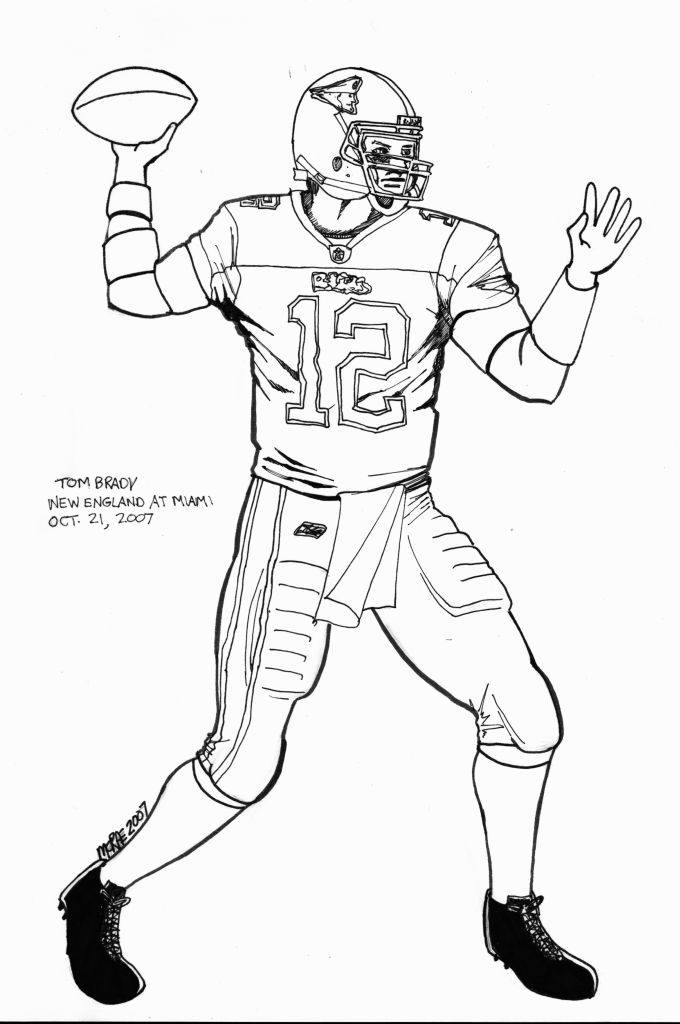
I think that the Patriots will wipe the floor with the Giants in the Super Bowl in spite of the fact that New York has a shot to make it a real contest. But it would sure be something if the Giants ended the Patriots’ epic season, wouldn’t it? And I’m not a Giants fan, just a New Yorker. I mean, dag, even the Celtics are more than just a fluke.
Truth is, I never disliked the Pats or Celtics as a kid, even though I’ve always loathed the Red Sox. (Same fans pretty much, just different time of year. Makes a lot of sense, huh?) Morgan, Grogan,James, Tippett (the “other” 56)–all favorites. The 80s Celtics too. Liked ’em better than Showtime. Nate Archibald was my first favorite player (mostly because I was short and his name was Tiny). Bird, McHale, the Big Chief. And now, I find it difficult to hate Tom Brady or Kevin Garnett, who has always been terrific, one of the very best things about the NBA.
Speaking of the Celts, have you ever read Bill Russell’s memoir “Second Wind: Memoirs of an Opinonated Man,” written with the historian Taylor Branch? Russell grew up in West Oakland, and I came across this book when I was writing Stepping Up, a biography of Curt Flood–who, incidentally, would have turned 70 last week. Rusell was four years older than Flood but played high school basketball with Frank Robinson. Anyhow, it is a good read, emotionally direct and tender–worth snatching up if you ever find it in a used bookshop.
One of my favorite stories is about Russell’s grandfather and his mule, Kate. Russell’s family was from Monroe, Louisiana and he actually lived down there until he was about ten. He called his father’s father, The Old Man. When Russell was four or five (1938-9), he followed his grandfather and Kate around one day:
I could tell that Kate and the Old Man understood each other. One day I was walking along with them when Kate decided to go off and stand in a ditch. Being an honest mule, she had a stubborn, mulish personality, and she stood there with this determined look on her face. It was as if Kate were saying, Okay, I got you now. We’re going to do this my way.” The Old Man did everything he could to get Kate back up on the road. I watched him talk to her, and push, pull, shove and kick—a tough job, because there must have been nine hundred pounds of mule there. The Old Man would get Kate’s front up on the raod and be cooing into her ear, but when he walked around to pull up her taile end, the front would sidle back into the ditch again—so he’d take a deep breath and start over. I was taking all this in, and I couldn’t believe that the Old Man didn’t lose his temper.
After a long ordeal, Kate finally wound up back on the road. The Old Man looked exhausted, and the mule must have taken some satisfaction from all the effort she’d cost him. She looked fresh and relaxed, standing there as warm and lazy as the country air. The Old Man leaned on Kate and rested there for a minute or two; then out of nowhere he hauled off and punched her with his bare fist. Wack, just once, right on the side of the neck. The thud was so loud that I must have jumped a foot. The mule gently swayed back and forth groggily; then her front legs buckled and she collapsed to her knees. Then the hindquarters slowly buckled and settled down too. Kate looked all bent and contorted, like a squatting camel, as she sat there with a vacant stare in her eyes. I was dumbstruck. Right in front of my eyes the Old Man had knocked out a mule with one punch.
He never said a word to me or to the mule. He just let Kate sit there for a minute, and then he grabbed her by the head and picked her up. “Okay, let’s go,” he said quietly, and we started off again as if nothing had happened.
That sight stuck in my mind so vividly that I learned a practical lesson from it. I got into very few fights when I played for the Celtics, but every single one of them was in the last quarter, after the game was decided. You have to choose when to fight, and that is the time. The Old Man knew he’d have been in big trouble if he’d knocked that mule down in the ditch, so he waited until it didn’t cost him anything. Then he relieved his frustration and gave Kate something to think about.
Eat your heart out, Mongo.
Yankee Panky #39: Decline Press
Before getting into this week’s blog topic, the Yankees made a wise signing this past week, inking Wilson Betemit to a one-year deal to be this year’s version of the perennially-ready utility infielder. He will have to do better than a .333 OPS and a .229 batting average to make the signing worthwhile.
Also, Robinson Cano and Chien-Ming Wang are both seeking raises that would increase their respective salaries to more than $4.5 million from $490,800 and $489,500, respectively. The requests are more than 40 percent higher than what the Yankees are offering. The arbitration situations of Cano and Wang remind me of the 2003-04 offseason, when Alfonso Soriano was arbitration-eligible and asked for a mid-seven-figure deal after a 30-30 season but a vanishing act in the playoffs. The Yankees were down on his attitude and lack of plate discipline, and did not want to agree to pay him upwards of $5 million, when they had just paid him $800,000. The rift and the lack of interest in going to arbitration led to Soriano’s inclusion in the A-Rod trade. Upon his arrival in Texas, Soriano received the raise he sought, getting a salary bump $5.4 million.
The Yankees are higher on Cano and Wang than they were on Soriano, and it can certainly be said that those two players have been more responsible for the Yankees’ success the last two years than Soriano was at any point during his time in NY. If the Yankees are serious about committing to the future and building from within, they’ll make an effort to compromise with both players.
Who else wants to hear, see and read more about that development than jokes about Roger Clemens’ butt?
(Raising hand)
* * * * *
This winter, more than any other in recent memory, has been all about the personal downfall and the media’s hastiness to find a soapbox and claim moral superiority. It’s not just relegated to baseball, but for the purposes of this blog and keeping the focus on the diamond, I’d like to focus on two former Yankees and the ways their foibles (one alleged and one actual) are being portrayed.
Since the Mitchell Report was released the press is staking out certain players, most notably Roger Clemens, ready to pounce on his character and discredit him when the opportunity arises. His former trainer, Brian McNamee, may be credible, based on a NY Daily News story printed in Sunday’s editions. Various reports have sought to discredit McNamee over the past month, also, but the focus has largely been on Clemens, McNamee and which of the two telling the truth. Clemens, Chuck Knoblauch and others will tell their versions – because let’s be honest, no one knows the whole truth – in front of Congress on Feb. 13, shortly before pitchers and catchers are set to report to camp. To date, as has been pointed out in this space, Clemens has been treated with a “guilty until proven innocent” line. His statements to date have not been tantamount to contrition.
Contrast that with the story of Jim Leyritz, who has gone from World Series hero to criminal. He faces a Jan. 30 arraignment on two counts of DUI-related vehicular manslaughter. If convicted, he could be jailed for 15 years or more.
The reporting that’s surfaced in Leyritz’s case is investigative journalism intended not only to unearth facts of the case, but to reveal details of the real Jim Leyritz. Records obtained by the Daily News a couple of weeks ago presented what’s become the archetypal fall of the professional athlete: financial problems due to bad advice, excessive partying, drinking and reveling in their status.
I met Leyritz several times in my years covering the team, and in one of those meetings, at Spring Training, we got to talking for a bit, just off the cuff. I asked how he was doing, if he was enjoying retirement and his work with MLB.com. He mentioned how he was living in Florida and volunteered that he was going through a vicious divorce and custody battle; all he wanted to do was take care of his children. While I thought it awkward that he’d volunteer that information to a stranger, I found it respectable that he was working so hard to be a role model for his kids. I don’t believe I misjudged Jim when I met him. He was a likeable, engaging guy. But I instantly flashed back to that meeting in the clubhouse in Tampa when he recounted the story of driving down to pick up his kids and thinking, “What changed?” Not for a second did I think that Leyritz being “Too Much Information Guy” could have been a signal for some deeper issues.
I recall this story and note the differences in coverage between Clemens and Leyritz because there are two different philosophies based on the player’s status both in the game, and to the fans. Clemens has been a love-him-or-hate-him type player for 25 years. Because he hasn’t done anything to endear himself, the media, for the most part, are jumping at the chance to convict him in the court of public opinion. There’s no need for the media to facilitate judgment or influence opinion in this case. Each fact as it is being introduced is mounting evidence against Leyritz, making his conviction almost certain.
ODDS AND ENDS
There has been a lot of talk in the New York area, as well as some buzz on RealGM.com, about the Mets’ interest in authoring a trade for Johan Santana. When the best you can say is that you’ve severed ties with Lastings Milledge, signed Jose Valentin and avoided arbitration with Aaron Heilman, you need to do something. Until something is done, I’m not ruling out the Yankees.
Until next week …
The Young and the Reckless
Will Carroll pinch-hits over at Lo-Hud. Check it out.
The Frozen Tundra of…
While the saga of Roger ‘n’ Andy continues, there is football to be had today. It’s b-r-i-c-k in New York and gunna be even colder in Green Bay and New England. I’m not much of a football fan these days, but I’m looking forward to the second game, which looks like a good match-up. The first game isn’t as appealing because I just don’t see how the Chargers can even hang with the Pats. To be honest, I figure everyone is playing for second place anyhow, with how dominant New England is. Still, it’d be cool to see Brett Favre back in the big game, and it’d even be nice to see Eli Manning make it.
Here’s to staying warm, enjoying some good food, and hopefully, a couple of good games today.
Porkalicious
When it comes down to it, if I ever had to chose, I’d give up chocolate way before I ever gave up pork. And I like chocolate just fine (hard not to when you are born into a Belgian family that brings bars of Cote D’Or each time they come to the States to visit). But a life without prosciutto or pancetta or bacon? Nah, man, just wouldn’t be the same.
One of my favorite dishes–something I make a couple of times a month—is pasta all’amatriciana. The dish is from Amatrice, which is just outside of Rome. The dish is very simple and very delicious–olive oil, onion, pork (in this country, pancetta or bacon), red pepper and tomatoes. You don’t cook it long, the sauce can be prepared in the time it takes to boil the water and cook your pasta.
In Rome, the dish is most often served with bucatini, the spaghetti with the hole in the middle, and with pecorino cheese. And though Italians are usually very strict about their recipes, this one has variations, of course. Some people use vegetable oil and butter instead of olive oil (like Marcella Hazen), some add garlic, others add white wine.
In Amatrice, they don’t use onions or oil. Just cured pork, tomatoes, and cheese. The one thing that all Italians agree on is the kind of pork that should be used: guanciale — cured, unsmoked pig jowl. I bought a pound of guanciale last summer. When my wife, Emily, saw me slicing this lusciously fatty piece of pork she almost had a heart attack. She made me promise I wouldn’t eat all of it. I promised, but silently cursed myself for letting her see what I was doing. No matter. I rendered the fat from the stuff I wasn’t going to use and saved it for later use (without telling her, of course). Anyhow, the guanciale did give the sauce a different, more intense, flavor.
I’ve tried the the amatriciana sauce every which way, and you know what? It’s all good. The Times ran an excellent piece on the dish earlier this week. Worth checking out. And for those of you that enjoy cooking, it’s worth trying guanciale just once. Little pork fat never hurt nobody, now did she?
Card Corner–Jose Cardenal

Under his highly acclaimed statistical system, noted writer and Sabermetrician Bill James fails to give out win shares to coaches. That’s perfectly understandable—after all, what tangible impact do most coaches really have?—but if James somehow managed to include the manager’s trusted lieutenants, he’d have to give at least a half-share to former Yankee first base coach Jose Cardenal for a brilliant piece of advice he provided during the 1996 World Series.
With the Yankees holding onto a 1-0 lead in the ninth inning of Game Five, the Atlanta Braves threatened to tie the score—and possibly win the game. As Chipper Jones led off third base and Ryan Klesko took his lead at first base, Luis Polonia stepped into the batter’s box against Yankee closer John Wetteland. Moments before the at-bat, Cardenal noticed that Paul O’Neill was out of position in right field. From his perch in the dugout, Cardenal waved frantically at O’Neill, motioning him to move several steps toward right-center field. Surely enough, Polonia then swatted a Wetteland delivery toward the right-field alley, high and far, but short of home run distance. Racing toward the wall, O’Neill finally caught up with the drive, barely snaring it in the webbing of his glove before slapping his hands against the padded wall at Fulton County Stadium.
If Cardenal had not moved O’Neill several feet toward the gap, Polonia’s drive would have eluded him. At the very least, Jones would have scored, tying the game. Although it’s not a certainty, Klesko very possibly would have scored from first, giving the Braves a dramatic come-from-back victory. And who knows how the Yankees would have reacted in Game Six, now down three games to two and emotionally devastated by a ninth-inning loss on the road. So who knows if the Yankees even win the 1996 World Series without the strategic re-positioning performed by Cardenal.
So that’s how most Yankee fans will remember Cardenal. Still, his days as one of Joe Torre’s lieutenants tells only a fraction of his fascinating journeys throughout baseball. It’s been a wild ride, aided and abetted in part by some of Jose’s unusual personality quirks.
A journeyman outfielder who broke into the big leagues in the 1960s, Cardenal came up through the San Francisco Giants’ system as a coveted prospect with five-tool talents. Scouts loved Cardenal’s speed, arm strength, and developing power. Sadly, the Giants did a poor job in evaluating their young players and prospects and didn’t always handle their Latino players fairly at the time; along those lines, they traded Cardenal to the Angels for fringe back-up catcher Jack Hiatt. The trade to the American League gave Cardenal a chance to play games head-to-head against his cousin, Kansas City A’s shortstop Bert "Campy" Campaneris. (In a rather remarkable coincidence, Cardenal became the first batter to step in against his cousin when Campy moved to the mound as part of Charlie Finley’s nine-positions-in-a-day stunt in 1965.) Showing promise in his first two seasons with the Angels, Cardenal then flopped in his third year, prompting a trade to the Cleveland Indians for utilityman Chuck Hinton. Cardenal played two seasons by the lake before packing his bags again; this time, the Indians traded him back to the National League, more specifically to the St. Louis Cardinals.
Inside Man: A Bronx Tale (Part Four)
Soul Survivor

It is a cold, gray December morning. Ray Negron pulls up in front of Yankee Stadium in a white GMC, a leased car he uses when he’s in New York. He is fifteen minutes late. The car is messy—Reggie Jackson would not approve.
With him is Aris Sakellaridis, a stocky, square-jawed retired corrections officer in his mid-forties. He is originally from Washington Heights. “I’m a ghetto Greek,” he says with a laugh. Aris is wearing a gold Georgia Tech baseball cap and a white jump suit with a thick navy blue strip with gold trim down the side. Around his waist is a black fanny pack. Sakellaridis lives on a pension; he wrote Retired Yankee Numbers, a glossy picture book illustrated by the caricaturist, John Pennisi. Sakellaridis hands me his card, which features an illustration of himself by Pennisi. Sakellaridis is smiling broadly wearing a baseball uniform with the number 69.
Negron is on his way to speak at a community center and has agreed to make a slight detour to show me his old neighborhood in Hunt’s Point but he’s not sure exactly how to get there. “Outside of Yankee Stadium I don’t know shit about the Bronx,” he says. Negron tells me that a niece that he’s never met—the daughter of one of his estranged half-brothers—had recently contacted him through the Internet. He talks about future book projects and how he approaches his work with humility and sincerity, and he is annoyed that there is a perception that his intentions aren’t always genuine.
“You know what worries me honestly,” says Aris cocking his head to the side. “Steinbrenner, he ain’t in as good a health today from what you read. What happens when he goes? They going to get rid of Ray? But hey, Ray lives, man,” Aris continues. “He’ll be alright. Ha-ha-ha.”
Inside Man: A Bronx Tale (Part Three)
Real Life

When Reggie Jackson left New York, Ray Negron’s glory days came to an end. Now, he had to adjust to a more mundane reality, and a greater challenge—how to advocate for himself. Negron had defined himself by what he could provide to other, more famous men.
"Growing up is hard," says Negron. "In baseball, you are a kid forever. When I left the Yankees, I didn’t have the players to protect me anymore." Negron married his longtime girlfriend Barbara Wood in 1981; they got an apartment in Far Rockaway, had a son four years later, and were divorced before the end of the decade. "It was hard to give my heart and soul to a situation when I didn’t really want to be there," he says.
While he was with the Yankees, Negron gradually lost touch with his half-brothers who were caught up in the street life, junkies while they were still teenagers. "It wasn’t until the eighties that we got back together again," says Negron. "To them, I was wealthy. When they reached out it would be out of desperation or need. Then my brothers started having kids all over the place, and I couldn’t handle it, I couldn’t handle it." Negron is shy when talking about them because he doesn’t want to embarrass them. "They think that I think that I’m bigger than them. I mean, it becomes very tough because they are still your blood, you understand?"
Negron’s two cousins who had been with him the day he first met Steinbrenner, Edwin and Christopher Perez, died within a year of each other during the mid-eighties; Edwin, in what Negron calls "a gang-related incident," and Christopher, from AIDS, which he got through a dirty syringe. Negron was with Christopher the night Edwin was murdered in Brooklyn. They drove to the Perez home in Brooklyn and were greeted outside of the house by Christopher’s father, and a group of cousins and neighborhood friends.
"My uncle had a cardboard box in his arms filled with guns. He said, ‘Take one, let’s go.’ That wasn’t my style, so I stayed at the house with my aunt. ‘She’s going to need somebody to be with her,’ I said. I wasn’t going to get caught up in that. That wasn’t me. I loved Billy the Kid," he says remembering Martin, "but I wasn’t that Billy the Kid."
Inside Man: A Bronx Tale (Part Two)
Prince of the City

Ray Negron was only supposed to work a couple of games to re-pay his debt, but then one of the regular bat boys got sick, and in no time, Negron had himself a steady job. He moved on the field with the languid movements of a professional, his uniform fitting tightly, his stirrups pulled up just so. At 145 lbs, Negron was too skinny to be confused with a big leaguer though the players occasionally tried to pass him off as one of them when he was on the road with them, to get him laid. "You said it, not me," Negron squeals with delight, remembering today.
When the Yankees took batting practice, Negron was busy with the daily clubhouse chores, but he would sneak in a couple of swings in the batting cage or hang around at shortstop and take ground balls while the visiting team came to hit. One day, the Texas Rangers were in town and Negron was playing short against live bp when he made a couple of good fielding plays. Billy Martin, the Rangers manager, a man rarely without a fungo bat in his hand, was standing on the third base side of home plate. He turned his attention to the boy, motioned with his hand and then tossed a ball up and cracked a hard groundball at him.
"Billy noticed that I could play," Negron recalls. "Later, he introduced me to two of his middle infielders, Lenny Randle and Davey Nelson. Every time Texas came to town, I would ball boy down the right field line so I could hang with them. They taught me and to this day, I can honestly say that I’m still friends with both of them."
"I was impressed by his etiquette and his manners," recalls Lenny Randle today. "A lot of kids are annoying at that age, they just want stuff from you. But Ray wasn’t pushy, he was honest and had an innocence and genuine enthusiasm about him. He was the kind of little brother you wanted to have. Hey, when he was a teenager he was booking us to speak at the Y, at local Little Leagues for a couple of hundred bucks here and there. He had moxie."
Inside Man: A Bronx Tale
A Four-Part Bronx Banter Exclusive
[Author’s Note: This story was written last summer. It covers Ray Negron’s life from the spring of 2006 through the spring of ’07. Some of the basic facts stated in the piece have changed: Joe Torre is no longer the manager of the Yankees; Hank and Hal Steinbrenner have taken control of the team; Negron has just completed his seventh children’s book for Harper Collins. But, despite these events, the essence of Ray’s story remains true. I hope you enjoy.]

Part One
“Let me show you the Boss’s suite,” says Ray Negron. It is a cool evening in early May, 2006, and Negron’s boss, George Steinbrenner, the principal owner of the New York Yankees, is out of town. Several hours before game time, Negron, 51, is walking down the outer corridor of the loge section at Yankee Stadium, his head cocked like an upper classman with the run of the school. He exudes an insouciant confidence, the kind of man who is used to keeping his cool in hot situations. Negron has short black hair and skin the color of café au lait. His large, liquid brown eyes and long eyelashes are almost feminine; his cheeks sag–the sign of a thin man growing older—and lend a sense of gravity to an otherwise boyish countenance. As usual, Negron looks crisp. He is wearing a gray, patterned suit and slim brown shoes. On his right ring finger is a massive gold World Series ring from the 1996 Yankees.
“I can’t wait for the new Stadium,” Negron says. “Maybe I’ll get an office.”
“The ubiquitous Ray Negron,” a veteran New York sportswriter calls him. Negron is a gypsy, constantly on the move, from the executive suites through the press box down to the locker room. He does not even have his own desk; instead, he totes everything he needs in a leather-bound book with a Spaulding logo embossed on the cover: Negron serves as a director of community relations for the sporting goods company, one of his many jobs. The book is filled with notes scribbled in different colored inks–reminders, phone numbers and addresses.
Negron knows everybody and stops to say hello to security guards and executives, retired sportswriters, scouts, and current players. Negron works for the Yankees as a special advisor to Steinbrenner and is primarily employed as an all-purpose utility man. He represents the club at the Kip’s Bay Boys and Girls club, the Hackensack University Medical Center, and grass roots community centers in the Bronx. Like a greeter in a casino, he escorts business men and their children through the corridors of the Stadium, giving his own private tour, and he schmoozes with celebrity visitors, like Patti Labelle, Regis Philbin and Richard Gere, making sure they are comfortable in their seats. Negron, of Puerto Rican and Cuban ancestry, is an avuncular figure to the team’s young Latin players like Robinson Cano and Melky Cabrera. This summer, Negron will enlist the two, along with other Yankee players, to visit classrooms, hospitals and boys and girls clubs around the tristate area, as he promotes his first children’s book, The Boy of Steel, a story about a young boy with cancer who becomes bat boy for the Yankees for a day.
Few people know Yankee Stadium as well as Negron and few people have been around Steinbrenner’s Yankees longer. And it all happened by chance. In 1973, Steinbrenner’s first year as team owner, the Boss caught Negron, a skinny kid with an afro, spray painting an “NY” logo on the outside of Yankee Stadium. But instead of handing him over to the police, Steinbrenner made Negron a bat boy, issuing the kind of punishment that is the stuff of a boy’s wildest fantasies. So began a career in baseball that has lasted more than thirty years. Negron has done everything from shine the players’ shoes and collect their dirty jockstraps, to bring them food from their favorite restaurants and park their cars. He has been an agent, an actor, an advisor, and a liaison; a confidant, a sounding board and a whipping boy to some of the biggest egos in the game. He is whatever he needs to be.
Negron has founded a career off his serendipitous meeting with Steinbrenner and everything that has happened next—from Billy and Reggie to Doc and Darryl. “The Boss essentially saved my life and I’ll never forget that,” says Negron, touching my arm. He likes physical contact, and occasionally touches his listener in a jocular, reassuring way to make sure you’re listening. He speaks in a measured, cautious manner, his raspy voice tinged with an unmistakable Brooklyn accent. Ray speaks so often in public that in private his conversation sometimes feels rehearsed, like he’s an actor repeating the same lines over and over in a play. Yet he is so sincere that it feels as if he’s telling you something for the first time, even if it’s a variation of something he’s said countless times before.
Negron pauses and then adds, “Not saved, really, he gave me a life.”
360
It’s funny the way things work sometimes. On this date last year my father died. January 15th also happens to be my brother Ben’s birthday. He turns 34 today, which also happens to be the day that his wife, Erin, is going to deliver their second child. Talk about the life cycle. They couldn’t have planned it to work out like this. I’m so happy for my brother, and I’m thinking about my pop. So, here’s raising a toast to the birth of my niece, and while I’m at it, I’ll spill a little iced coffee on the floor for the old man.
Yankee Panky #38: Roger Radar
I typically don’t like to use this space as a ranting pad, but I’ve been observing a lot of things in the past 10 days that have bothered me, and I need to get them off my chest. First, though, allow me to rewind to my last post. I appreciate all the compliments, critiques, criticisms and suggestions for this year’s installments of the Banter. I apologize up front for the sporadic nature of the posts. Starting this week, I’m resolving to make Mondays the regular Yankee Panky day, barring a crowded schedule on my part, or my esteemed colleagues Alex and Cliff pre-empting the column for Breaking News alerts.
As for this week’s post, though I’m a bit hopped up about the media finding little else to talk about except “Days of our Lidocaines,” starring Roger Clemens and Brian McNamee, I’ll be sure to keep it brief and free of vitriol.
On to the blog …
Goose Gossage finally received his due last week, having been elected to the Hall of Fame with 85.8 percent of the vote. I was a big Goose fan; he was the first true “stopper.” His legacy is that future managers sought pitchers like him for their teams to ensure victories both in the regular season and the postseason. That impact on the game makes him a Hall of Famer, in my opinion.
But Gossage’s induction stunk of something right away. It was as if the voting members of the Baseball Writers of Association of America cut him a break to continue their crusade to “uphold the game’s integrity” by not voting for alleged performance-enhancing drug users. I’m happy Gossage is in, but I’m sure there’s a faction of writers who got into Goose’s Flying V this year, conveniently forgetting that he should have gone in jointly with Bruce Sutter two years ago. As for Jim Rice, I actually agree with the vote and consider him to be equal to Don Mattingly; great career, not long enough of a period of dominance. Hall of Very Good, not Hall of Fame. That’s what’s great about this game, though, is that you can debate this stuff until you get laryngitis. The BBWAA does exactly what we do, except they can mark a ballot that leads to a player receiving a plaque and on it, looking like Han Solo frozen in carbonite.
Many of you wrote me asking about minor league bits and team news. It occurred to me that I’d like to see some of that from the beat writers right about now, since pitchers and catchers report in four weeks. The occasional “Yankees still eyeing Santana” headline was sprinkled in, but the baseball universe wants to see this Roger Clemens situation resolved. Like the run to Super Tuesday, this may be a daily grind until the Rocket appears before Congress.
The “60 Minutes” appearance was laughable. Mike Wallace went from esteemed reporter emeritus to giddy baseball fan in 60 seconds. Edge of Sports’s Dave Zirin has a solid recap of the interview here. Wally Matthews took some jabs at Clemens also. Say what you want about Matthews, but in last Thursday’s column I think he accurately stated what most of us believe.
There’s a duality of stupid going on. On “Real Time with Bill Maher” Friday night, Rolling Stone reporter Matt Taibbi, who’s on the campaign trail, was asked about the media’s role in creating the candidates’ perceptions. His response, “You can send any s— up a flagpole and these people (the media) will f—ing salute.” He’s right. It’s a matter of media members presenting information without full facts. And we’re never going to know the full and complete truth, because there’s too much up for interpretation. The media are buying their subject’s garbage, and the majority of the public, it seems, fall in line like we live in some twisted version of Hamlin.
Reports have surfaced saying that other trainers disliked McNamee and didn’t consider him to be one of “their own.” Do we believe that? Should we? Brian McNamee knows exactly what went on between him and Clemens. So does the 354-game winner. When Clemens said, “Somebody’s got to tell the truth,” he was right. An erroneous report is released in the LA Times a year ago and we’re expected to exonerate Clemens. A tape of a vague, angry phone conversation between Clemens and McNamee is played and we’re supposed to choose sides.
Clemens hasn’t done anything to improve his standing in this case, or to sway public opinion to prove his innocence. The one thing the media has done well here is to allow the public to draw its own conclusions based on the reporting.
The only conclusion I’ve come to is that I want to read about baseball, not put Roger Clemens’ career into historical context because of the allegations against him.
Welcome to the 2008 season.
The Gambler’s Son
Not so long ago, a good friend of mine encouraged me to feel comfortable promoting myself. While it doesn’t come naturally for me, I figured, what the hell, I can talk about Pat Jordan’s writing all day long. The Best Sports Writing of Pat Jordan is coming out just before Opening Day. Each week until then, I’m going to pick one of Pat’s stories that can be found on-line and feature it in a post. Leading off is a fun piece he did a few years ago for the New York Times magazine on Daniel Negreanu, the all-star poker player (the story was featured in The Best American Sports Writing 2006, edited by Michael Lewis).
Card Stud (Originally published, May, 2005.)
Negreanu claims not to have much interest in money, except as a means of keeping score. After he won that $1.8 million at the Bellagio, he bought six videos and put the rest of the money in poker chips in a lockbox at the casino as if it were a bus-station locker. The chips are still there. The $1.1 million Negreanu won in Atlantic City was converted into $300,000 in cash and an $800,000 check. Back home in Las Vegas, he discovered that he left the check in his hotel room; the maid threw it out, and Negreanu had to fly back for another check. “I don’t believe much in banks,” he says. “Although I do have one bank account with not much in it, just a couple hundred thousand.” He also doesn’t believe in credit cards, or buying anything he can’t afford to pay cash for, which is why he always travels with a wad of $100 bills held together with an elastic band.
Negreanu has two basic rules for playing poker. First, maximize your best hand and minimize a mediocre hand. Too many novices play too many mediocre hands when not bluffing, which increases their chances of losing. Great players only play hands when they have “the nuts,” or unbeatable cards; otherwise they fold hand after hand. Second, play hours, not results. Negreanu sets a time limit for his play and sticks to it, whether he’s winning or losing. If he goes beyond his time limit, he risks playing “tired hands” when he is not sharp. (Before a tournament, Negreanu gives up alcohol and caffeine. “I do nothing, to numb my brain,” he says, “except watch poker film — just like an N.F.L. team before the Super Bowl.”)
Negreanu says that most great players are geniuses, then lists the kinds of genius they must have: 1) a thorough knowledge of poker; 2) a mathematical understanding of the probabilities of a card being dealt, given the cards visible; 3) a psychological understanding of an opponent; 4) an understanding of an opponent’s betting patterns — that is, how he bets with the nuts and how he bets when bluffing; and 5) the ability to read “tells,” or a player’s physical reactions to the cards he is dealt. Negreanu is a master at reading tells, although he claims it is an overrated gift, since only mediocre players have obvious tells. The best players, of course, have poker faces.
Negreanu says he can break down opponents’ hands into a range of 20 possibilities after two cards are dealt. After the next three cards are dealt, he says, he can narrow the possible hands to five, and after the last two cards are dealt, to two. “It’s not an exact science,” he admits, “but I can reduce the possibilities based on the cards showing, his betting pattern, tells, his personality and my pure instinct.”
Shulman, Card Player’s co-publisher, connects Negreanu’s success to his personality: “Daniel controls a table by getting everyone to talk and forget they’re playing for millions,” he told me. “He makes every game seem like a home game — you know, guys drinking beer and eating chips. They forget what’s happening. Plus, Daniel is the best at reading an opponent’s hands, as if their cards were transparent. He gets guys to play against him when he has a winning hand and gets them to fold when he has nothing. He’s the King of Bluffing. You know some guys can beat bad players and not good players, and some vice versa. Daniel does both.”
Beyond Negreanu’s knowledge and considerable intelligence, what makes him truly great is his aggressiveness in a game — his ruthlessness, some might say. He once bluffed his own girlfriend, also a professional poker player, out of a large pot at a tournament. “I bet with nothing,” he says, “and she folded. To rub it in, I showed her my hand. She was furious. She stormed into the bathroom, and we could hear her kicking the door, screaming, smashing stuff. When she came out she kicked me in the shin and said, ‘Take your own cab home.'” She is no longer his girlfriend.




"This ain't football. We do this every day."
--Earl Weaver
--Earl Weaver