"A New York Treasure" --Village Voice
Category: Sportswriting

The Gambler’s Son

Not so long ago, a good friend of mine encouraged me to feel comfortable promoting myself. While it doesn’t come naturally for me, I figured, what the hell, I can talk about Pat Jordan’s writing all day long. The Best Sports Writing of Pat Jordan is coming out just before Opening Day. Each week until then, I’m going to pick one of Pat’s stories that can be found on-line and feature it in a post. Leading off is a fun piece he did a few years ago for the New York Times magazine on Daniel Negreanu, the all-star poker player (the story was featured in The Best American Sports Writing 2006, edited by Michael Lewis).

Card Stud (Originally published, May, 2005.)

Negreanu claims not to have much interest in money, except as a means of keeping score. After he won that $1.8 million at the Bellagio, he bought six videos and put the rest of the money in poker chips in a lockbox at the casino as if it were a bus-station locker. The chips are still there. The $1.1 million Negreanu won in Atlantic City was converted into $300,000 in cash and an $800,000 check. Back home in Las Vegas, he discovered that he left the check in his hotel room; the maid threw it out, and Negreanu had to fly back for another check. “I don’t believe much in banks,” he says. “Although I do have one bank account with not much in it, just a couple hundred thousand.” He also doesn’t believe in credit cards, or buying anything he can’t afford to pay cash for, which is why he always travels with a wad of $100 bills held together with an elastic band.

Negreanu has two basic rules for playing poker. First, maximize your best hand and minimize a mediocre hand. Too many novices play too many mediocre hands when not bluffing, which increases their chances of losing. Great players only play hands when they have “the nuts,” or unbeatable cards; otherwise they fold hand after hand. Second, play hours, not results. Negreanu sets a time limit for his play and sticks to it, whether he’s winning or losing. If he goes beyond his time limit, he risks playing “tired hands” when he is not sharp. (Before a tournament, Negreanu gives up alcohol and caffeine. “I do nothing, to numb my brain,” he says, “except watch poker film — just like an N.F.L. team before the Super Bowl.”)

Negreanu says that most great players are geniuses, then lists the kinds of genius they must have: 1) a thorough knowledge of poker; 2) a mathematical understanding of the probabilities of a card being dealt, given the cards visible; 3) a psychological understanding of an opponent; 4) an understanding of an opponent’s betting patterns — that is, how he bets with the nuts and how he bets when bluffing; and 5) the ability to read “tells,” or a player’s physical reactions to the cards he is dealt. Negreanu is a master at reading tells, although he claims it is an overrated gift, since only mediocre players have obvious tells. The best players, of course, have poker faces.

Negreanu says he can break down opponents’ hands into a range of 20 possibilities after two cards are dealt. After the next three cards are dealt, he says, he can narrow the possible hands to five, and after the last two cards are dealt, to two. “It’s not an exact science,” he admits, “but I can reduce the possibilities based on the cards showing, his betting pattern, tells, his personality and my pure instinct.”

Shulman, Card Player’s co-publisher, connects Negreanu’s success to his personality: “Daniel controls a table by getting everyone to talk and forget they’re playing for millions,” he told me. “He makes every game seem like a home game — you know, guys drinking beer and eating chips. They forget what’s happening. Plus, Daniel is the best at reading an opponent’s hands, as if their cards were transparent. He gets guys to play against him when he has a winning hand and gets them to fold when he has nothing. He’s the King of Bluffing. You know some guys can beat bad players and not good players, and some vice versa. Daniel does both.”

Beyond Negreanu’s knowledge and considerable intelligence, what makes him truly great is his aggressiveness in a game — his ruthlessness, some might say. He once bluffed his own girlfriend, also a professional poker player, out of a large pot at a tournament. “I bet with nothing,” he says, “and she folded. To rub it in, I showed her my hand. She was furious. She stormed into the bathroom, and we could hear her kicking the door, screaming, smashing stuff. When she came out she kicked me in the shin and said, ‘Take your own cab home.'” She is no longer his girlfriend.


(more…)

Friends (How Many of us Have Them?)

The ones you can depend on.

Pat Jordan has a column on friendship, Mike Wallace, Roger Clemens, Brain McNamee, Tom Seaver, and, of course, himself, over at The Baseball Analysts today:

I had a chance to become friends with Mr. Clemens in 2001, when I interviewed him for a profile in the New York Times Sunday magazine. But, alas, our friendship did not take. Despite the fact that I, like Mr. Wallace, felt I too had been objective in my profile, Mr. Clemens did not concur. In fact, he called me up after the story appeared and berated me over the telephone. When I asked him what he didn’t like about the story, he said, “I didn’t read it.” I responded, “Then how do you know you don’t like it?” He said he was told by his “friend,” and the co-author of one of Mr. Clemens’ books, Peter Gammons, the ESPN-TV analyst, that he should hate it. In fact, Mr. Clemens hated my profile so fervently that he had me banned from the Yankees’ clubhouse during the years he remained with the team.

I would later learn that one of the many things Mr. Clemens hated about my profile of him was my description of his fawning relationship at the time with his friend Mr. McNamee, who lived in the pool house of Mr. Clemens’ Houston estate. On the first day I interviewed Mr. Clemens in Houston I had dinner with him and Mr. McNamee at the most exclusive steak house in Houston. The bill was for over $400, which I paid. Mr. Clemens said, “I’ll get you tomorrow.” The next day he bought me a taco at a Mexican Restaurant. But the point of my profile of Mr. Clemens was less about his parsimoniousness than it was his strange relationship with Mr. McNamee. During the dinner at the steakhouse Mr. Clemens asked Mr. McNamee for his permission to have a steak (McNamee nodded) and a baked potato (McNamee nodded again, but added a caveat, “Only dry.”). The same scenario played itself out at the Mexican Restaurant. Clemens pointed to an item on the menu and Mr. McNamee either nodded, or shook his head, no.

During the three days I followed Mr. Clemens around Houston, he seemed like a child beholden to the whims of the sour, suspicious, and taciturn McNamee. It seemed as if Mr. Clemens would not do anything to his body, or ingest anything into it that Mr. McNamee hadn’t approved. I found it strange that, at 38, Mr. Clemens still had to have someone dictate his diet and workout regimen down to the minutest detail at this late stage of his illustrious career. In fact, Mr. Clemens’ devotion to Mr. McNamee’s diet and workout routine seemed almost like a spiritual quest that must not be impeded. When Mr. Clemens and Mr. McNamee went on a long run one day and they came across another runner, lying on the ground, in the throes of a heart attack, they called for help. When Mr. Clemens related that story to me, he ended it by saying, “We were having a good run, too.”

I also found it strange that, at 38, Clemens had the energy of a teenager. Clemens’ workouts lasted 10 hours a day with only breaks for lunch and dinner. They began at 9 a.m. under McNamee’s watchful eyes, with light weight-lifting for an hour, then an hour run, then a trip into Clemens’ own personal gym, where he did a few hours of calisthenics, wind sprints, and throwing before going to lunch. After lunch, Clemens and McNamee went to an exclusive Houston men’s gym (Clemens told me that President Bush worked out there), where Clemens pedaled a stationary bike for an hour and then performed a heavy weight-lifting routine for another hour. Then after dinner at home, Clemens worked out again until 9 or 10 in the evening.

Just watching Clemens work out over a day exhausted me. I wondered where he found the energy to sustain such a maniacal pace when I, at a similar age 20 years before, had been unable to work out for more than a few hours a day without being drained. At the time I interviewed Clemens, I was training for an amateur body building contest and, like Clemens, I adhered to a strict diet and a strenuous weight-lifting and calisthenics routine. But nothing I did at 41 compared to the 10 hours-a-day routine McNamee put Clemens through.

Jordan’s New York Times magazine piece on Clemens, “Roger Clemens Refuses to Grow Up” is featured in The Best Sports Writing of Pat Jordan. The Mike Wallace-Clemens interview will appear tonight on “60 Minutes.”

I’m Ready for my Close Up

Been enjoying poking my nose through my baseball library and selecting some cherce quotes, so here’s another one for ya. This one if from Foul Ball: Five Years in the American League, by Alison Gordon, who covered the Blue Jays from 1979-83. Gordon describes herself as “a socialist, feminist, hedonist with roots in the sixties, a woman who had marched against the bomb, done drugs, and never, ever even wanted to date the head jock at school, had nothing in common with these children of Ozzie and Harriet, locked in a fifties timewarp.” Some combination, huh? I enjoyed her take on Mr. October:

Undeniably a star with an extraordinary sense of the moment, Jackson was one of the most fascinating, but unpleasant, characters I encountered in baseball. It’s only a fluke I feel that way. There were some reporters I respect whom he liked and who assured me that Jackson was a sensitive and intelligent man, unfairly at the mercy of the sharks that surrounded him. It could be. I wouldn’t know because he thought I had a fin on my back, too. He was a bit like Billy Martin in that way. If you encountered either one on a good day you came away thinking he was a prince. On a bad day there were jerks. I never hit a good day with either one.

Had I not been a print reporter it would have been a different matter. Jackson loved television interviewers once the camera was turned on because this was an image he could control. He was wonderful in front of the cameras, self-effacing and God-fearing, all “Hi, Mom” and five-dollar words. Out of their range, he was completely unpredictable.

Being a reporter from the boonies didn’t help either. What importance could a reporter from Toronto have in the world of baseball, for heaven’s sake? I wasn’t Peter Gammons of the Boston Globe or Tom Boswell of the Washington Post, so why bother? I didn’t cover the Yankees or the Angels when he played for those teams. I wasn’t in the inner circle.

On the fringe, I wastched as he manipulated my colleagues, who practically tugged their forelocks in deference. He sighed at what he considered dumb questions while winking at the reporters who covered him daily, exempting them from his scorn. They ate it up. Then he would turn and snarl at the offender, asking him exactly what he meant by his question. He reduced the meek to jelly and enjoyed it. It made me ashamed of my profession to be reduced to acting a role in Jackson’ drama of the moment. The man was only a ballplayer, after all, whatever inflated importance he placed on it, and not that great a ballplayer either, day in and day out.

That these men are perceived to be more important than doctors or scientists or firemen or teachers, on the evidence of what they are paid, struck me often, but the disproportion never seemed greater than when I dealt with Jackson. Here was a supreme egotist with one skill, the ability to hit a baseball out of any park in the major leagues when the game was on the line, and for that he was deified by the fans…He exemplified none of the greater virtues of sport, team play and sportsmanship, but he was a greater hero than those who did.

And yet there was another side to him. He was kind to young players, dispensing bits of himself to star-struck rookies and making them feel at home on his turf. Once, in 1979, in Toronto, he was walked by Phil Huffman. He yelled at the young pitcher all the way to first base, accusing him of not having the guts to throw him a pitch he could hit. Huffman, cocky himself, yelled right back. A week later, in New York, in the last game Huffman would pitch in the major leagues, in his eighteenth loss of the season, Huffman struck Jackson out. When the game was over and Huffman was packing up his stuff, the clubhouse attendant walked up to him at his locker and handed him a baseball. It was inscribed “To Phil—I admire your toughness. Reggie Jackson.”

I admired the gesture, which meant a lot to Huffman, but I also saw it as an extraordinarily condescending thing to do to a player who was, after all, a fellow major leaguer, not a beseeching twelve-year-old fan. But I’m sure that baseball now holds a place of pride among Huffman’s souvenirs.

(more…)

Calmer than You

This year for Christmas, my secret Santa (my step-sister’s husband) got me a 1996 World Series baseball autographed by Joe Torre. How cool is that? I don’t care much about autographs but this one I like. It’s the perfect gift to get from a secret Santa. Thoughtful.

One of the things I’m most excited about 2008 is the release of The Best Sports Writing of Pat Jordan, a book I edited, with help from Gabe Fried at Persea books and Pat himself. As I’ve mentioned on the Banter previously, Jordan played with Torre in the Braves’ minor league system in the early ’60s.

In 1996, Pat did a piece on Joe Torre for the New York Times magazine in the middle of the summer as the team was surging then slumping. It wasn’t a long profile or a particularly memorable one. By Jordan’s own admission, it is a minor piece. The story did not make the cut for our collection; in fact, it didn’t make the B-list. However, I have a couple of drafts of the story, one called “The Patience of Joe,” and another one, completely restructured, called “They Shoot Horses, Don’t They?” that have some good stuff in ’em.

Here is the begining and end of Pat’s working draft of “They Shoot Horses, Don’t They?”

Joe Torre, the New York Yankees’ manager, is sitting behind his desk in his office off the clubhouse in Yankee Stadium, talking to Rick Cerrone, the team’s director of media relations, while making out today’s line-up card.

Torre is a big, dark, sinister-looking man of 55. He has the blocky build of a professional wrestler, The Villain, recently gone on a diet. He has dark, olive-colored skin, black stubble of beard, and bushy black eyebrows that hand low over his threatening, black eyes. He does look villainous…a Mexican bandito about to pillage a town of peasants…a vengeful Saracan warrior about to sack the camp of a hated enemy.

A sportswriter barges in, unannounced. He starts haranguing Cerrone over his late-arriving press credentials which caused him to be an hour late for his interview with Torre. The sportswriter’s face is flushed with anger. Torre’s threatening eyes shift up, only the whites showing. Torre stands, a dark, threatening presence. He raises his hands, palms out, as if to fend off heat.

“Calm down,” he says, almost pleading. “Calm down. I’ll give you all the time you need. Have some coffee. Someone get him some coffee. Please!”

When Torre was a pudgy, 20-year-old catcher in the Milwaukee Braves’ minor league farm system in 1960, he looked every bit as old and dark and threatening as he does now. He always looked like an old man playing a young man’s game. At 20, Torre would waddle out to the pitcher’s mound in his catching gear to confront his baby-faced pitcher, red-faced, furious, kicking the dirt, making a spectacle of himself, embarrassing himself and his teammates because of their latest error. (Torre never embarrasses his players, he says, because, “I hit .360 one year, and .240 another, and I know I tired just as hard both years.” When Yankees’ rookie shortstop, Derek Jeter, made a crucial error that lost a game in August, Torre said, “He’s played his tail off for us and has won a lot of games. More than the error, that’s what to keep in mind.” Which is why, Wade Boggs, the Yanks’ veteran third baseman calls Torre, “A player’s manager.”)

Even at 20, Torre knew not to embarrass his teammates, and when he saw his young pitcher doing it, thrashing around the mound, he would stop ten feet from his raging pitcher, raises his hands, palms out, and say, in the same, pleading voice he uses today, “Calm down. Relax. We’ll get ’em for you. Don’t worry.”

After Torre has calmed the sportswriter, he says, “I have a temper, I just don’t vent it. (He also has stomach troubles.) Maybe it’s more healthy to show emotion. I don’t know. I’m a patient person.”

Torre always played the game with the patience of an older man. Even at 20, he had what was called “a professional attitude.” Which meant he approached the game unemotionally, diligently, doggedly, the only way possible if a player is to fashion a long career over 100-plus games a year. Each season, each game, each inning even, can be a lifetime of emotional highs and lows. Young players, furious pitchers, caught up in those emotional high and lows don’t last long in the game. Torre lasted 17 years. He finished his playing career with a lifetime .297 batting average and is the only player to be voted the National League’s Most Valuable Player, in 1971, when he led the league in both batting, .363 and runs batted in, 137, and the National League’s Manager of the Year, in 1982, when he led the Atlanta Braves to a division title. This is Torre’s 15th season as a manager (New York Mets, Atlanta, St. Louis Cardinals) and his first with the Yankees, who are leading the American League East with the third best record in baseball, and are considered one of three teams with the best chance at winning the World Series, the last of which the Yankees won in 1978.

Torre has blended a team of youthful players and grizzled veterans, born again Christians and recovering substance abusers, into arguably one of the most well-balanced teams in baseball. The present-day Yankees play an unremarkably adept game Torre calls “a National League game. We grind it out, one run at a time.” The Yankees pick away at their opponents, a single, a stolen base, a sacrifice bunt, a sacrifice fly ball, and a run, in a way that makes every player feel he’s contributing to their success.

(more…)

Destination Nerdville. Population: Me

So last weekend my wife was away, and do you know what I did with my wild and nerdy ass self? Went down the the public library on 42nd street and checked out old issues of Sport magazine and Inside Sports on microfilm. (I’m nuts, what can I say.) Sport was an amazing publication in the fifties and sixties, and even in parts of the seventies, but by the eighties, it was a shell of its former self. The roster of writing talent at Sport during it’s heyday is remarkable: Arnold Hano, Ed Linn, W.C. Heinz, Ray Robinson, Roger Kahn, Frank Graham Jr, Dave Anderson, Myron Cope, Al Hirshberg, Jim Brosnan, Dick Schaap, Jimmy Breslin, George Vecsey, Pat Jordan, Vic Ziegel, and Jerry Izenberg to name just a few. (All of the Sport compilations are out of print, but Bob Ryan edited a solid collection just a few years back that is well-worth picking up.) I’m not exactly sure when Inside Sports started. It was either at the tail-end of the seventies or the start of the eighties. Tom Boswell was their baseball guy for a long time, and they were very good, at least through the first half of the eighties. I found a lengthy and very entertaining profile on Nolan Ryan by Tony Kornheiser (yes, he had chops), and an excellent piece on Pistol Pete Maravich during Larry Bird’s rookie year with the Celtics by David Halberstam.

Anyhow, here a few random nuggets on a favorite Yankee, Willie Randolph, that I came across. First, from a profile in Sport, Octover 1976, “Hey, Say, Willie Can Play…Willie Randolph, That Is,” by Kevin McAuliffe:

Randolph is one of the American League’s top rookies of 1976, but unlike Detroit’s Big Bird, who thrives on attention, Randolph avoids it. He has never believed in stardom, for others—”As a kid, I never said, ‘Oh, there goes so and so,’ and tired to get his autograph”—or for himself. “I’m not what you call a starry-eyed fella,” he says.

Then, from Inside Sports, August 31, 1980, “Willie Randolph: The Making of a an Advance Man,” by George Vecsey.

“It’s an old cliché, but it’s true. A walk is as good as a hit,” Randolph said earlier this season, sitting in front of his locker in Yankee Stadium, a huge portable radio-cassette player—his “box”—propped on the rug. The cassesttes are mostly Isley Brothers, Roberta Flack and “a lot of jazz.”

Says Willie: “I knew I’d walk a lot. I know the manager appreciates it when you take a 3-1 pitch, when you get on base…you’d have to swing at anything close on 3-1 when you’re batting eighth,” Randolph says. “When you’re batting leadoff, you take the walk. That’s how I do it.”

…”Willie knows the most important thing is to get on base,” [Reggie] Jackson said. “He has learned to steal when it counts. He doesn’t wait until there are two strikes. He goes down early, so the hitter has a chance to bat…The only two things he has never done are hit .300 and win a Gold Glove. That’s it. Willie is a winter. He’s not a laugh-and-joke guy, which I like, because I’m not either. He’s a good family man, too. I’ll tell you what: If Willie does hit .300, you won’t notice the difference. He’ll do it the same way he hits .270.”

Willie from Brooklyn. He was a good one.

Mix Master (Cut Faster)

I’m in the process of putting the final proof-reading touches on The Best Sports Writing of Pat Jordan. (The book will be released next spring.) I am the editor of the project, which, in many ways, has been like making a literary mix tape. Jordan has long been one of my favorite writers, so it has been an utter joy to read through well over one hundred of his magazine pieces from the past 40 some oddd years and select 25 cherce cuts for this collection.

I’ll have more to say about Pat and the book as the release date approaches. In the meantime, you can check out a bunch of Pat’s New York Times work, which has recently been made available via the Times on-line archive (the only piece that is there that is also in the forthcoming book is the Roger Clemens story).

Here is an excerpt from a piece Pat wrote about clubhouse harmony in spring training, 1989, when both the Mets and Yankees were dealing with “chemistry” issues. I thought you guys would get a kick out of it:

Reporters, however, take the…disturbances seriously. They wonder, in print and on television, if dissension is ripping apart what they perceive as the delicately stitched fabric of clubhouse harmony each team must weave if it is to be successful? They see it all so clearly from their perspective, as men and women who have never been part of such clubhouses. They have always imparted to clubhouse harmony a certain romance of brotherhood they would only laugh at if someone tried to impart it, say, to the boardroom of I.B.M. They see relationships among players in a baseball clubhouse as merely an extension of the child-play relationships they remember from their youth.

In a way, this is condescending to the players, implying as it does a childishness on their part, which, as grown men, they don’t have. What reporters see, then, exists only in their mind’s eye. Which is why the players laugh. They know that clubhouse harmony or the lack of it hasn’t much to do with a team’s success on the field. Players know that good-natured camaraderie in the clubhouse, shared intimacies over a locker, plans to get together with families for a cookout on a day off, all have nothing to do with a team’s success.

…Like most men in business, baseball players compartmentalize their jobs. What goes on across the white lines is infinitely more important than what goes on behind them. A close friend who consistently strikes out with the bases loaded isn’t as much use to a ballplayer as a despised teammate who consistently strokes game-winning hits. The respect a player feels for a teammate’s personal life has nothing to do with the respect he feels for a teammate’s baseball talent. Babe Ruth, Pete Rose and Wade Boggs are three of the greatest hitters ever in the game, and yet not many teammates might envy their personal lives. Yet to a man, every player in the game would want one of those three at the plate if a World Series championship was on the line.

Check it out. There is even a “Rickey being Rickey” line about Henderson, the original Manny.

Real Dumb or Real Genius? (Is there a Difference?)

“Man, I’m just happy to do something special like that. I’m not trying to show up anybody out there. I’m just trying to go have fun. If somebody strike me out and show me up, that’s part of the game, I love it. I like that. I like to compete, and when people strike me out and show me up, it’s all good. It’s not a hard feeling. I ain’t trying to go out there and show anybody up.”

Manny Ramirez

Reggie Jackson spoke to a group of reporters in the Yankee dugout last week before Game 4 of the ALDS. Initially, he talked about Alex Rodriguez, but soon, he was talking about himself. He recalled how he used his large ego to help him succeed in the playoffs. He talked about how tough Fausto Carmona’s sinker was against the Yankees in Game 2, and then about how daunting it was facing Tom Seaver, Jerry Koosman and John Matlack in the 1973 World Series.

Eventually, someone brought up Manny Ramirez, and Jackson smiled. “Did you see that?” said Jackson referring to Ramirez’s game-winning home run in Game 2 of the Red Sox series against the Angels. Jackson mimicked Manny’s celebration at home plate and cracked everybody up.

Clearly, Reggie admires Manny. He likes the chutzpah, he likes Manny’s flakiness. (“How can you be offended by Manny?” he suggested.) Mostly, he likes the fact that nothing fazes Manny and that Manny hits bombs. How much better can it get?

Ramirez, who has been ridiculously locked-in at the plate this October, pulled his usual home run schtick the other night even though the Red Sox were losing 7-3. Mike Lowell wasn’t sold on the routine, but most of the Indians didn’t seem to mind. Nobody really cares because it’s just part of Ramirez’s make-up, because showboating is an accepted part of the game, and because, like Reggie, most players simply admire Ramiez’s talent.

Yesterday, Manny told reporters:

“We’re not going to give up,” he said. “We’re just going to go, play the game and move on. If it doesn’t happen, so who cares? It’s always next year. It’s not like the end of the world.”

Now, how do you bother somebody with that kind of attitude? Perhaps you can’t.

(more…)

Bronx Banter Interview: Joe Posnanski

I sat down with Joe Posnanski, the author of a new book on Buck O’Neil, The Soul of Baseball, recently to talk about all things Buck. (In turn, he interviewed me about all things Yankees at his new blog.) Here is our chat. Hope y’all enjoy.

BB: Buck became a celebrity after appearing in Ken Burns’ PBS series. What did he do for the previous twenty years? Was the PBS thing really life-altering for him?

Pos: There’s no doubt it changed his life. He was a scout in the ’70s and ’80s — mostly for the Cubs, but later for the Kansas City Royals — and he told most of the same stories. He carried himself in the same way. It’s just that people really didn’t listen to him much then. I’ve heard a long interview with Buck from the early 1980s, it was just the Buck people heard a decade later. You can hear all the same joy and optimism and love in his voice. It took Ken Burns to really hear that voice and bring it to America. And it was never the same for Buck after that. Suddenly, he was in demand — an overnight success at 82, he said.

As for what kept him going in those dry years — well, I would say part of it was always baseball. He loved scouting. He was involved with the Hall of Fame veteran’s committee; Buck was such a driving force in getting so many Negro Leaguers into the Hall. But there was more to it. If I had a key question in this book, it was exactly this question: “Buck, how did you keep from being bitter?” There’s no easy answer for that. Some people just have a gift for loving life.

BB: I was so moved by Buck’s reaction to not being elected into the Hall of Fame. Obviously, he was hurt by it, but he recovered–at least on the surface–faster than those around him. Then he told you, “Son, what is my life about?” It wasn’t about the glory, it was about the giving.

Pos: That’s exactly right. It was so vivid to see the way Buck responded to the Hall of Fame. So many of the other things Buck overcame in his life — not being able to attend Sarasota High School, not being given the chance to play or manage in the Major Leagues, on and on — were just concepts in my mind. But here was something I saw first hand, and I know Buck was disappointed that he did not get elected into the Hall of Fame. But he recovered, I think, on the surface and beneath. That’s what his life was all about. You move beyond bitterness and disappointment. You embrace life.

BB: You know the famous Satchel Page line about not looking back. Do you think that applied to Buck at all? Do you think he ever had reflective moments of sorrow or anger but just dismissed them and kept moving ahead?

Pos: I can’t see how he could be human and not have those reflective moments of sorrow and anger. He dealt with so much injustice in his life … the worst of America in the 20th Century. But I can tell you this, I was pretty close to him for this book. I mean, you travel a year with someone, and you see them in all sorts of moods. I never saw things back up on him. He was a very spiritual man. And he gained so much from his contact with people. Anytime he seemed to need a burst of energy, he would go up to a stranger and just start talking.

BB: Buck really did need people as much as they needed him, didn’t he? I love the story about him taking a break during a hot day, and finding a young boy to talk to, and by the end of their chat, he was revitalized.

Pos: There is absolutely no doubt in my mind that Buck’s connection to people is what kept him so alive and so hopeful about the world through 94-plus years. There is a constant theme in this book, I think. Whenever Buck felt a little tired, a little down — a little bit “old,” you could say — he would find someone to connect with. Sometimes, like in the chapter you mention, it was a child. Other times it was woman in a red dress or a man in an art gallery or a couple kissing in an airport. He never talked about these things — it wasn’t like he said, “Hey, I need to go talk to some strangers now.” He just did it. And it was always amazing to me the way he seemed reborn after connecting with someone.

(more…)

Fatherly Advice

As fate would have it, my good pal Pat Jordan has a piece in today’s Sunday Magazine on his father. It’s a good one. Check it out.

Stocking Stuffers

While the Yanks put the final touches on Kei Igawa’s contract, and continue to hunt around for a first baseman, here are a couple of few things for ya:

Murray Chass on the Yankees and gambling; Pat Jordan on Lenny Dyktra’s third career; Tim Marchman on the Yankees’ off-seaspon thus far, and Steven Goldman on Richie Sexton. Lastly, Bart Clareman conducted a Q&A with me about the nature of the Met-Yankee rivalry. Pop over and check it out if you have a minute. Otherwise, happy holidaze to you are yours.

In-Sain in the Head Game

From time to time here at Bronx Banter, we talk about what kind of impact coaches have on a team, particularly the pitching and hitting coaches. I got to thinking about what a pitching coach brings to a team after running across a nice, long quote from the legendary pitching coach Johnny Sain in a 1973 Sports Illustrated article by Pat Jordan (“A Jouster with Windmills”):

“To become a pitching coach you have to start all over again. You have to get outside of yourself. You might have done things a certain way when you pitched but that doesn’t mean it will be natural to someone else. For example, I threw a lot of sliders and off-speed pitches because I wasn’t very fast. But that’s me. I could also pitch with only two days’ rest (he once pitched nine complete games in 29 days) whereas most pitchers need three and four, although I think they shouldn’t. And I never believed much in running pitchers to keep them in shape. I’ve always felt a lot of pitching coaches made a living out of running pitchers so they wouldn’t have to spend that same time teaching them how to pitch, something they were unsure of. It would be better to have those pitchers throw on the sidelines every day, than run. Things like this I learned on my own. I picked up everything by observation, which is the best teacher. Nothing came easy to me. I had to think things over and over more than guys with natural ability did. Maybe this has made it easier for me to get my ideas across to pitchers. It isn’t that I’m so smart, because I know I’m not very smart at all. I don’t know any answers. I don’t give pitchers answers. I try to stimulate their thinking, to present alternatives and let them choose. I remind them every day of things they already know but tend to forget. I repeat things a lot, partly for them but also for my own thinking, to make sure what I’m saying makes senes…I don’t make anyone like Johnny Sain. I want them to do what’s natural for them. I adjust to their style, both as pitchers and people. I find some common ground outside of baseball that’ll make it easier for us to communicate in general. I used to talk flying with Denny McClain all the time. Once you can communicate with a pitcher it’s easier to make him listen to you about pitching. You know him better, too. You know when to lay off him, when to minimize his tensions, and also when to inspire him. That’s why you’ve got to know him. Pitching coaches don’t change pitchers, we just stimulate their thinking. We teach their subconscious mind so that when they get on the mound and a situation arises it triggers an automatic physcial reaction that they might even be aware of.”

“Pitching coaches don’t change pitchers, we just stimuate their thinking.” I’d be curious to know how Ron Guidry feels about his first year as the Yankees’ pitching coach, and how his pitchers feel about him.

Dad’s Day

Without further ado, let me wish a happy Father’s Day to all you dads out there. I hope you feel proud. I’m not a father but I recognize that it is one of the most demanding (and ultimately rewarding) jobs you could ever have. Keep up the good work, men. There aren’t a lot of great fathers or male role models out there, especially for young boys, so keep up the good work, fellas.

Pat Jordan, a writer who has never been anything less than brutally honest, particularly when writing about himself, has a piece about his old man in the New York Times magazine today. Be sure and check it out. Perhaps it will make you appreciate the relationship you have with your pop even more.

Alchemy in the Boogie Down

Bronx Banter Interview: Joel Sherman

This is a tidy year for baseball anniversaries here in New York: Thirty years ago, the Yanks returned to the playoffs for the first time since 1964; twenty years ago, the Mets enjoyed the best season in their organization’s history and won the World Serious, and ten years ago, of course, Joe Torre managed the Yankees to their first Serious victory since 1978. So it is entirely fitting that Joel Sherman’s first book, “The Birth of a Dynasty”–an insider’s account of the 1996 Yankee team–has just been released. Sherman has been a columnist for the New York Post since ’96 and his book is a must-read for both casual and die-hard Yankee fans. I consumed the book in a few days and was excited about how much I learned (I never heard of a six-tool player before, but Ruben Rivera apparently fit the profile).

Sherman took some time out this week to discuss “The Birth of a Dynasty.” Hope you enjoy our chat.

Bronx Banter: You are a veteran baseball writer–first as a beat reporter, then as a columnist. Both of those jobs require different skills, but in both positions you are still working on a deadline and have only a limited amount of space to get your point across. This is your first book. What challenges did you encounter with the new medium? What was the most difficult transition for you, and what did you learn about yourself as a writer?

Joel Sherman: This is an excellent question. My whole temperament is built to be a newspaperman. I am almost a New York stereotype. I like to work quickly and move on to the next thing. The column feeds that. At the New York Post, you work on three deadlines a day. So you are constantly working all day on the days you write and then, boom, you are done. It is in the paper for various editions and you are on to the next day. When you write a book, there is no instant gratification or negative reaction, at all. It is a long-term process and my Brooklyn mindset had a tough time with that. As for what I learned during the process was more something that was re-established in my own mind, which is how much I love to report. The 1996 Yankees were an extremely well covered team and interviewing folks to try to find new information and new avenues to tell these stories really energized me.

BB: Did you enjoy the process?

JS: Mostly no. It was a difficult time for me to take on this process. My wife and I had our first children, our twins Jake and Nick, and trying to research/write as an extra job during first a pregnancy and then the early months of the lives of my children was straining. Also, a relationship with a publishing house is like a brief, shot-gun marriage. You are forced to deal with people for a very short, intense period that you probably would not associate with at other times.

BB: How long did it take to write?

JS: The research and writing took about 18 months, but there was no continuity to it because of the pregnancy. I went long stretches of doing nothing.

BB: It sounds like it was a humbling experience for you, going from the immediate gratification of newspaper writing, to the grind of a longer project. The scope is so much larger as you mentioned. Also, book writing is often a collaborative situation, which means you don’t have as much control as you have been used to. How important were the contributions of your editor–or colleagues who looked at different versions of the manuscript–in terms of helping you compose a dramatic arc for a book as compared with a column?

JS: The publishing house provided very little guidance. But I am blessed with great, talented friends. Mike Vaccaro, a columnist at the Post, was terrific at encouragement. When he was interested or intrigued by a topic, I knew it was a topic to pursue. I wanted to have moments all over the book where even people who follow the team religiously would go, “wow, I didn’t know that.” Mike was fantastic at helping me with that. Lou Rabito, an editor at the Philadelphia Inquirer, and I went to school at NYU. Among Lou’s many skills is that he is the best line editor I have ever worked with and he is brutally honest. So he not only cleaned up the copy, but he told me frankly when items did or didn’t work. His touch is on nearly every page of the book. Also, Ken Rosenthal, now of Fox Sports, worked at the Baltimore Sun in 1996 as a columnist. He was in fact, a great columnist. The Orioles were the Yankees’ foil in 1996 and I had Ken read passages about the Orioles just to make sure I was getting them right. He was invaluable, as well. I think the key thing all three did was give me confidence. With no instant gratification, I needed people along the way to tell me, you are going right or you are going wrong. They did that.

(more…)

Boricua, Baby

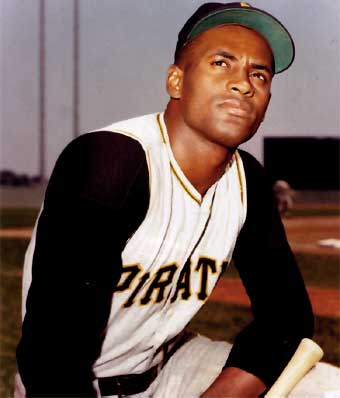
“Clemente,” the new book by pulitizer prize-winning author, David Maraniss, hits the shelves today. It is a fine appreciation of Roberto Clemente, who is undoubtedly one of the most charasmatic players of the post-War era. Although Clemente was a key member of two World Championship teams, he played in relative obscurity in Pittsburgh during the 1950s and ’60s, and was overlooked for his much of his career. Until, of course, his monumental performance in the 1971 Serious, and his untimely death in December of 1972. His legend and reputation have grown ever since.

As my pal Steve Treder put it to me in an e-mail recently:

Clemente was actually slightly underrated until the late ’60s, and especially during the 1971 World Series when he suddenly got noticed by the national media. At that point they all suddenly seemed to think he was better than he actually was, after years of being overlooked. His early tragic death soon afterward froze his image in time. Had he lived, and had a few years of decline phase at the end of his career, his reputation probably would have balanced out about right. As it is, many casual fans seem to think he was the equal of Mays/Aaron/Robinson/Mantle, when in fact he wasn’t nearly as good as any of them.

It is no insult to say that Clemente wasn’t as great as Mays, Aaron, Robinson or Mantle. They are all legends. Fortunately for Maraniss, off-the-field, Clemente was more interesting than most. And between the lines, Maraniss points out, Clemente had a terrific, inimitable style.

There was something about Clemente that surpassed statistics, then and always. Some baseball mavens love the sport precisely because of its numbers. They can take the mathematics of a box score and of a year’s worth of statistics and calculate the case for players they consider underrated or overrated and declare who has the most real value to a team. To some skilled practitioners of this science, Clemente comes out very good but not the greatest; he walks too seldom, has too few home runs, steals too few bases. Their perspective is legitimate, but to people who appreciate Clemente this is like chemists trying to explain Van Gogh by analyzing the ingredients of his paint. Clemente was art, not science. Every time he strolled slowly to the batter’s box or trotted out to right field, he seized the scene like a great actor. It was hard to take one’s eyes off him, because he could do anything on a baseball field and carried himself with such nobility. “The rest of us were just players,” Steve Blass would say. “Clemente was a prince.”

Thanks to Mr. Maraniss and the good people at Simon and Schuster, here is an excerpt from “Clemente.” This section is less about Clemente specifically and more about the conditions that Black and latin players encountered in the early 1960s. But it establishes the backdrop that is essential to understanding Clemente’s story. Enjoy!

BOOK EXCERPT: From “Clemente”

By David Maraniss

“Pride and Prejudice”

[Clemente] arrived at Pirates camp to train for the 1961 season on March 2, a day late. He and Tite Arroyo had been delayed entry from Puerto Rico to Florida until tests came back proving they did not have the bubonic plague, a few cases of which had broken out in Venezuela during the tournament.

On the day he reached Fort Myers, free from the plague, a story ran on the front page of the New York Times under the headline: NEGROES SAY CONDITIONS IN U.S. EXPLAIN NATIONALIST’S MILITANCY. One of the key figures quoted in the story was Malcolm X, the Black Muslim leader, who in the Times account was referred to as Minister Malcolm. Interviewed at a Muslim-run restaurant on Lenox Avenue in Harlem, Malcolm X said the only answer to America’s racial dilemma was for blacks to segregate themselves, by their own choice, with their own land and financial reparations due them from centuries of slavery. He dismissed the tactics of the civil rights movement as humiliating, especially the lunch-counter sit-ins that were taking place throughout the South. “To beg a white man to let you into his restaurant feeds his ego,” Minister Malcolm told the newspaper.

This was fourteen years after Jackie Robinson broke the major league color line, seven years after the U.S. Supreme Court struck down the separate-but-equal doctrine of segregated schools, five years after Rosa Parks and Martin Luther King Jr. led the bus boycott in Montgomery, four years after the Little Rock Nine desegregated Central High School in the capital of Arkansas, one year after the first lunch-counter sit-in in Greensboro. Year by year, the issue of race was becoming more urgent. The momentum was on the side of change, but the questions were how and how fast. In baseball, where once there had been no black ballplayers, now there were a hundred competing for major league jobs, and along with numbers came enormous talent, with ten past and future most valuable players among them. Yet every black player who reported to training camp in Florida that spring of 1961 still had to confront Jim Crow segregation. Even if their private emotions were sympathetic to Malcolm X’s rage at having to beg a white man to let you into his restaurant, the issue in baseball was necessarily shaped by its own history. Having moved away from the professional Negro Leagues and busted through the twentieth century’s racial barrier, black players did not view voluntary resegregation as an option, and separate and unequal off the field was no longer tolerable.

Wendell Smith, the influential black sportswriter who still had a column in the weekly Pittsburgh Courier but wrote daily now for the white-owned newspaper Chicago’s American, began a concerted campaign against training camp segregation that year. On January 23, a month before the spring camps opened, Smith wrote a seminal article that appeared on the top of the front page of Chicago’s American headlined negro ball players want rights in south. “Beneath the apparently tranquil surface of baseball there is a growing feeling of resentment among Negro major leaguers who still experience embarrassment, humiliation, and even indignities during spring training in the south,” Smith wrote. “The Negro player who is accepted as a first class citizen in the regular season is tired of being a second class citizen in spring training.” Smith added that leading black players were “moving cautiously and were anxious to avert becoming engulfed in fiery debate over civil rights,” but nonetheless were preparing to meet with club owners and league executives to talk about the problem and make it a front-burner issue for the players association.

(more…)

A Sense of Who You Are

Bob Klapisch has covered baseball in New York since the heyday of the Mets in the 1980s. He is a columnist for The Bergan Record and a contributor to ESPN. Now in his forties, he continues to play semi-pro baseball. Yesterday, he contributed a terrific post about playing ball to The Baseball Analysts. Klapisch’s article has some keen insights into the pysche of ballplayers, and it is nice to see him write something longer, and more personal. But Klap isn’t just a guy who loves to play the game, at heart he’s a pitcher, and they are a breed apart:

From Little League all the way to Cooperstown, there’s a fraternity convened by the adrenaline rush of throwing a baseball. Bret Saberhagen once told me, “Nothing matches making a hitter swing and miss. It’s the greatest feeling in the world. Guys who retire, they spend the rest of their lives looking for it, but once you stop pitching you never get it back.”

…So why do I keep pitching? Probably for the purest reason of all – it’s what I do, at least when I’m not writing or helping feed the kids. To stop now would mean tearing away layers of psychological flesh. I guess I’m afraid of what’s underneath. Middle age, maybe.

I sent the article to Pat Jordan, the veteran journalist and former pitching prospect for the Braves. He replied:

The allure of pitching is about being in control and playing God. Nothing happens without you. You control the game, good or bad. also the feeling of ball off fingertips and your ability to make it spin and do things is exhilarating. I love to throw a baseball. The feeling of artistry and power in making a ball approach the plate with the speed or curve that I dictate is unrivaled in anything else I’ve ever done, including writing. I was born to be a pitcher, but taught myself to be a writer. I was an artist on the mound, but, alas, am merely a craftsman, like a brick layer, in front of a typewriter.

Which brings me to another thought. Why do the best jock-turned-writers all seem to be pitchers? Jordan, Jim Brosnan, Jim Bouton. Glenn Stout pitched in an over-30 league for years. What gives? Michael Lewis was a pitcher when he was in high school, Rich Lederer was a pitcher back in his playing days, and Will Carroll was too. Bouton thinks that it “may be that pitchers spend a lot of time sitting around.” What do you think?

Center Stage

Book Excerpt

It wasn’t easy to select an excerpt from Howard Bryant’s new book “Juicing the Game,” because so many of them are excellent. But I think that one of the most insightful and powerful sections focuses on Barry Bonds, the greatest player and most controversial figure of his era. So for your summertime reading pleasure, please enjoy Chapter 17 from “Juicing the Game.”

By Howard Bryant

(Part One of Two)

The problem was Barry Bonds. The BALCO testimonies combined with the commotion and compromise that led to a strengthened drug policy, one baseball executive thought, provided baseball with a special opportunity. The sport could start fresh and begin a new era of enforceable drug testing while allowing the suspicion and doubt that plagued the previous decade to slowly recede into history. Bonds, however, would not allow baseball such a clean break from the steroid era.

The problem was that he was too good. To the discomfort of some baseball officials, Bonds would soar so high above anyone who ever played the game that no one would ever be allowed to forget this difficult decade, for he was no longer one of many great players, but arguably the best ever. Bonds already owned the single-season home run record and was set to break Hank Aaron’s career record in 2005 or 2006. In addition, between 2001 and 2004 he hit for four of the top twelve slugging percentages of all time, breaking Babe Ruth’s eighty-one-year-old record in 2001, and, over the same four seasons, recorded four of the top eleven on-base percentages of all-time, breaking Ted Williams’s single season record in 2002 and then demolishing his own record by becoming the first man to reach base more than 60 percent of the time over a full season in 2004.

The result was a bitter irony to that spoke to the odd and unprecedented state of baseball: Instead of celebrating the greatest player the sport had ever produced, numerous baseball officials entered 2005 lamenting the notion that they were being handcuffed by him. Bonds stood as the symbol of the tainted era, of its bitter contradictions and great consequences. Jason Giambi’s was a more open scandal, but Bonds was more emblematic of the larger complexities. If baseball suffered from the conflict of reaping the benefits of high attendance and unprecedented mass appeal while its players individually fought the taint of illegitimacy, then Bonds’ continued ascension, first past his peers and then past every iconic standard in the game’s history, served as an eternal reminder of all the sport did not do to protect its integrity when it had the opportunity. By shattering Mays, eclipsing Ruth, outdistancing Aaron, and putting the single-season home run record even further out of reach, Bonds and the era in which he played would always be present.

Thus, the enormous specter of Barry Bonds loomed, not because of his guilt or his innocence, but precisely because of the impossible question of how much of his phenomenal achievement (and by extension the feats of his peers) was real, how much was due to his use of anabolic substances, and how no one, for or against, friend or foe, could ever discuss the greatest player of his generation or the greatest records in the sport without in turn discussing the drugs that contributed to them. Not only would the decade from 1994 to 2004 be forever associated with steroids, but so, too, would the record books. There would be no escape, either for Barry Bonds or the sport that made him famous.

(more…)

The Summer of Second Chances (Part Two)

Book Excerpt

Chapter Two from “Forging Genius”

By Steven Goldman

(Part Two of Two; click here for Part One)

In 1841, the United States had three presidents. In the Bronx, 1946 was the year of three managers. McCarthy’s replacement, veteran Yankees catcher Bill Dickey, refused to finish out the season under MacPhail. The season was completed under interim manager/organization man Johnny Neun. Neun “had let it be known after about a week that he knew now what McCarthy and Dickey had been talking about and, by God, he didn’t have to take that from anybody either.” The second-division Cincinnati Reds seemed a better option, and off he went.

That September, Stanley Raymond “Bucky” Harris was hired to serve in an undefined executive capacity (MacPhail acted as his own general manager, and Weiss, the club’s farm director since 1932, was on hand to take care of anything that might escape his notice. Barrow, ostensibly a consultant to the club, was also available, though MacPhail never called) and asked to evaluate the team. Almost a quarter century earlier, Harris had been the twenty-eight-year-old “boy manager” who had guided the Washington Senators to consecutive pennants in his initial seasons at the helm. After that the going was not nearly so smooth. Harris’s initial command of the Senators lasted until 1928, at which time owner Clark Griffith terminated him, in part for not following up on his earlier success, and in part for failing to recognize the talents of second base prospect Buddy Myer.

Harris moved on to Detroit, where in five seasons he failed to produce a first-division finish. Still in demand, in 1934 he became the first manager hired by Tom Yawkey as owner of the Boston Red Sox. The team’s 76–76 record was its best since 1918, but Harris clashed with general manager Eddie Collins and was dismissed. He returned to Washington, where sentimental Senators owner Clark Griffith was never loathe to reemploy an old pal. In the following eight seasons, the club finished fourth once and otherwise could be counted on for a sixth or seventh place finish. Harris made way for another Griffith buddy, Ossie Bleuge.

Harris then briefly managed the Philadelphia Phillies under owner Bill Cox, whose own term was foreshortened by Commissioner of Baseball Judge Landis after it was revealed that Cox had bet on his own club. Cox fired Harris after ninety-two games, claiming that he had called his players “a bunch of jerks.” In fact, the players threatened to strike when informed of Harris’s termination. Said Harris, “If there is any jerk connected with this ball club, it’s the president of it.” That seemed to have been the last encore for the graying, forty-six-year-old, non-boy manager. When MacPhail hired him, Harris had been serving as the general manager of the International League’s Buffalo club. This was actually fine with Harris; after two decades on the managerial merry-go-round, he desired to become an executive—preferably with the Detroit Tigers, but if their general manager’s job wasn’t open, a job with the Yankees would have to do.

(more…)

The Summer of Second Chances

Book Excerpt

Chapter Two from “Forging Genius”

By Steven Goldman

(First of Two Parts)

“Rooting for the Yankees is like rooting for U. S. Steel.” The line is variously attributed. It might have been said by the comedian Joe E. Lewis, whose son was the general manager of the hapless Pittsburgh Pirates; the great sports columnist Red Smith; Spinoza; or Maimonedes. Whatever its provenance, it perfectly encapsulated the preferred image of the New York Yankees. New York City’s American League ball club liked to portray itself as a horsehide IBM, an organization run with the clockwork precision that generated almost constant success. While the on-field victories that fueled this image were generated by players no less earthy or hard bitten than any of their contemporaries, the Yankees, seen through the lens of that era’s sports pages, appeared to succeed through high character, superior morals, management, and discipline, all held together by the esprit de corps of an elite military unit. Though the team had ridden to incredible riches on the back of Babe Ruth’s boisterous and often-boorish exploits, the organization saw Ruth as an excess to be tolerated. It was hoped that the fans, though they loved the Babe, would prefer to identify with the quiet efficiency of Lou Gehrig, “a self-effacing star who never gave a manager a day’s trouble.”

The Yankee formula meant victories and businesslike comportment. Deviation from the formula was not long tolerated. Hence the almost palpable sense that something had gone wrong when on October 13, 1948, the New York Yankees announced that Charles Dillon “Casey” Stengel had been hired to manage the team for the next two seasons, replacing the popular incumbent, Bucky Harris. Stengel, a fifty-eight-year-old veteran of nine lackluster managerial campaigns, was widely perceived to be a clown, “A second division manager who was entirely satisfied to have a losing ball club so long as Stengel and his wit were appreciated.” The general attitude among the newspapermen who covered the team, which they then transmitted to the public, was disbelief.

There was no reason for their skepticism, and the writers knew it. At mid-century, many of the New York sportswriters had been covering baseball since the days of Cobb and Wagner. Stengel had been associated with New York baseball almost as long, having played, coached, or managed in the city for all or parts of fourteen seasons from 1912 to 1917, 1921 to 1923, and 1932 to 1936. The same writers whose mouths were agape at Stengel’s hiring had spoken with him, drunk with him, and ridden the rails with him on the long trips to baseball’s distant outposts in St. Louis and Chicago (until 1958, baseball thought the American frontier ended at the Mississippi river and that “The Lewis and Clark Expedition” referred to an evening in 1921 when Duffy Lewis and Clark Griffith stayed out all night trying to find the best speakeasy in the District of Columbia). Their coverage of him had always reflected their apprehension of his intelligence and the bonhomie of their relationship.

Stengel’s unexpected association with the Yankees changed everything. The sportswriters of 1948, as with the political journalists of today, had only a sideline in reporting the events of the day. Their primary job was to produce storylines, in the soap opera sense of the word. With over a dozen area daily newspapers, game stories were a commodity product. What sold papers were heroes and goats, complex events and personalities reduced to morality plays, fairy tales without the sophistication.

New York City had three baseball teams in those days, and each had long had an established character, unchanging, like the cardboard leading men in the boys’ adventure serials of the time; unflinching square-jawed hero in episode one, unflinching square-jawed hero in chapter twenty-five. The Dodgers were bumbling and yet lovable. The Giants were hard-bitten and driven, as exemplified by a managerial line of descent from John McGraw to Bill Terry to Leo Durocher, the momentary interruption of which by the administration of the milquetoast Mel Ott inspired Durocher to quip, “Nice guys finish last.”

(more…)

Bronx Banter Interview: Chuck Korr

PART TWO

(Click here for Part One)

Here more of my conversation with historian Chuck Korr. Enjoy.

BB: Ralph Kiner writes about the early days of the Players Association in his new book. But for the most part, did the older generation of players, who grew up during the depression and who played in the 40s and 50s genuinely believe they should be grateful for playing the game, forget about getting involved with a union?

CK: Yes, they did like both the money and the adulation that came with being a major leaguer, but few bought into the idea that they should be grateful. They knew that ownership would get rid of them when they were no longer useful. We also tend to forget that many of these players had also come through World War II and they knew the importance of fighting for themselves.

BB: When did that attitude start to change?

CK: The changes started in the early ’60s. A couple of features are responsible for that. The most important was expansion, since it made even marginal players feel more secure. The corporate entry into baseball (CBS) also showed a lot of players the business dimension of their sport/occupation. Jim Bunning made that point forcefully to me when we talked. Finally, it’s impossible to overestimate the general climate that marked the ’60s–the questioning of authority on previously accepted norms. The idea in baseball of “owner knows best” or someone will “take care of you” was both untrue and was out of step with so much of what was happening in
the country.

(more…)

Bronx Banter Interview: Chuck Korr

Part One

One of the best books that I’ve come across in my research for the Curt Flood biography for teenagers that I’m currently working on, is a history of the Players Association by Chuck Korr, “The End of Baseball As We Knew It: The Players Union, 1960–1981.” Korr is a professor and sports historian at the University of Missouri-St. Louis. His book on the union is the ideal companion to John Helmer’s “Lords of the Realm” (not to mention the “A Whole Different Ballgame,” by Marvin Miller and “Hardball,” by Bowie Kuhn). Now available in paperback, “The End of Baseball As We Knew It” won the Elysian Fields Quarterly’s Dave Moore Award as the best baseball book published in 2002 and was runner up for SABR Seymour Medal for the North American Society for Sport History’s award best sport history book of the year.

What distinguishes “The End of Baseball As We Knew It” is the fact that Korr had complete access to the Association’s papers and files. It is a remarkably well-documented work, a simply fantastic resource for anyone interested in the history of the union. But Korr wasn’t only interested in the Association’s point-of-view; his interviews with Judge Robert Cannon, who presided over the union before Miller entered the stage, as well as John Gaherin, the owners’ head negotiator during the Miller-Dick Moss years, give the book balance and depth. These two men, along with Frank Scott, who ran the Association on a part-time basis during the Fifties, are often overlooked. But they were key figures in baseball’s labor saga, and Korr makes sure to get their side of the story.

I recently had the opportunity to chat with Korr, who is a generous and engaging guy. Here is the first part of our conversation. Enjoy.

Bronx Banter: How did you manage to get access to the records at the Association and how did that help form your book?

Chuck Korr: Ted Simmons read an article I’d written that analyzed how free agency and large salaries for professional athletes in the U. S. and Britain had changed the relationship between them and the fans. He sent a copy of the article to Don Fehr, who was interested in it. Maryanne Ellison Simmons (Ted’s wife and the founder of a very important magazine for wives in baseball, The Waiting Room) and Ted thought it was important to have a historian write about the union and suggested that I should look into the idea. I contacted Fehr and Marvin Miller and when both of them said they would make the records of the union available to me, I decided to set aside the work I was doing and see if it would be possible to write a history of the union. Fehr, Gene Orza, and Mark Belanger did everything possible to assist my work–they gave me an office space when I needed it and wrote letters to everyone whom I wanted to interview. Everyone involved with the union made a commitment to have no control over the final product. In fact, no one involved with the union saw any of the manuscript until after it had gone to the press for outside peer review.

(more…)

feed Share on Facebook Share on Twitter Share via email
"This ain't football. We do this every day."
--Earl Weaver