"A New York Treasure" --Village Voice
Category: Yankees

Splitsville

Of the seven four-game series the Yankees have completed this year, six have been splits (the other was a 1-3 loss to the Rays in May). With a win tonight, the Yankees will make it seven of eight. The good news is that there’s just one four-game series left on their schedule.

Untitled The Yankees have the right man on the mound for the job tonight, as Mike Mussina looks to pick up his 15th win of the season. Moose won 15 or more games in nine of the 12 seasons from 1992 to 2003, but has won 15 just once since then. If he stays healthy, he’ll have nine more starts after tonight to see just how high he can get his win total this year.

Opposing Mussina is Scott Feldman, who beat Mussina in the Rangers’ 2-1 victory at the Stadium on June 30. The only Yankee run of that game came on an Alex Rodriguez solo homer off Feldman in the fourth inning. Fortunately, runs have been more plentiful in the Texas heat (the average score in this series thus far has been 6.7-5.3 Rangers). Even better, the Yankees are averaging 6.2 runs per game in the second half to go with their .632 winning percentage since the break. All of that syncs up nicely with the fact that Feldman isn’t that good (6.67 ERA and 11 Ks against 16 walks in his five starts since facing the Yankees).

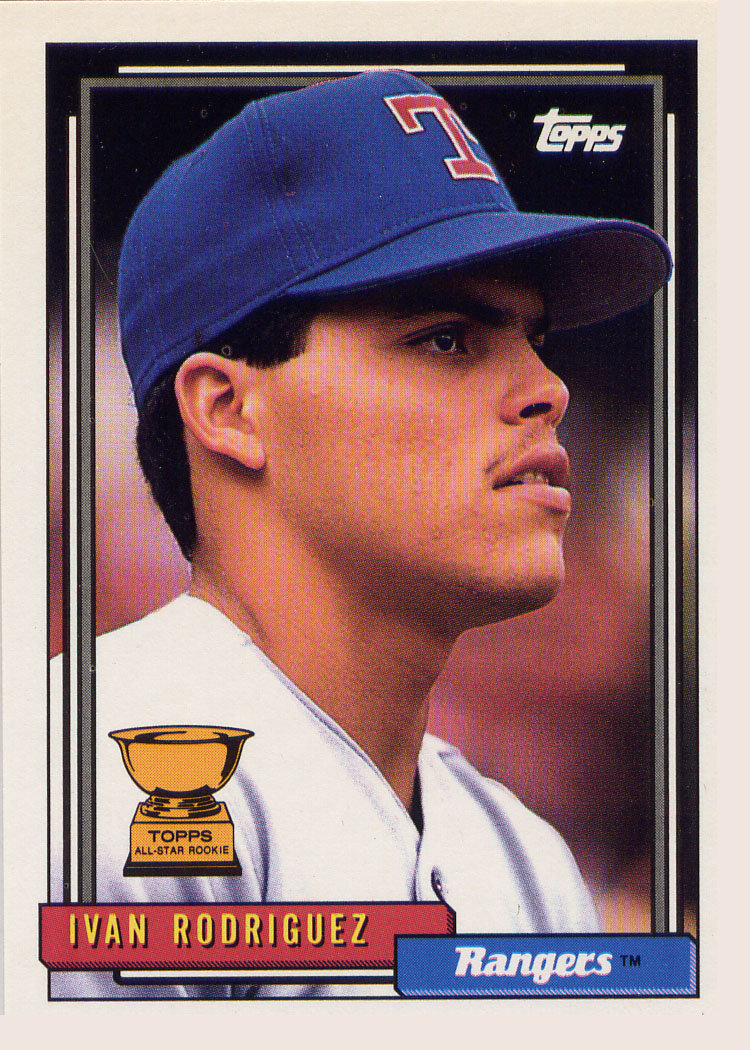
Untitled With Ivan Rodriguez nursing the knee he bruised in last night’s home plate collision with David Murphy, Jose Molina’s turn as Mussina’s personal catcher is well timed. He’s joined in the lineup by Wilson Betemit, who will give Derek Jeter a half-day off by manning shortstop while the Captain DHes. With the DH spot again used in that manner, Johnny Damon will start in center for the second day in a row while Melky Cabrera rides pine for the fourth straight game. Rodriguez hopes to be back in the linup tomorrow.

As for Murphy, he’s on the DL with a strained posterior cruciate ligament (PCL) in his right knee. Brandon Boggs will likely replace him in left field, as he did last night. Jason Ellison, a marginal righty-hitting outfielder who spent time with the Mariners last year, replaces Murphy on the roster. Also, for those who missed it, displaced Rangers closer C.J. Wilson was placed on the DL after Tuesday night’s game due to bone spurs in his pitching elbow. He was replaced by Joaquin Benoit, who was activated off the DL and pitched in last night’s game. Eddie Guardado, who picked up the save on Tuesday night, appears to be the team’s new closer.

Stiffed

A lot happened in last night’s game between the Yankees and Rangers in Arlington, but the most significant came in the fifth inning. Joba Chamberlain entered the fifth with a 4-2 lead having thrown 67 pitches, struck out four, and walked just one. The two runs he allowed came in the previous inning, when David Murphy homered on a hanging slider following a walk to Marlon Byrd. The home run was one of six in the game, all of which went to right field or right-center on a hot Texas night on which the wind was blowing in over left field and out over right. Murphy’s home run was also the first Chamberlain had allowed in four starts, and just the second he’d allowed in ten turns.

Rangers third baseman Ramon Vazquez singled on Chamberlain’s first pitch of the fifth inning. Ian Kinsler then worked the count full. Chamberlain’s 3-2 pitch was a slider low and away. Kinsler checked his swing and drilled the pitch straight down into the dirt in front of home plate. The ball bounced once, then rolled forward just enough to enter fair territory. Ivan Rodriguez pounced on the ball and fired it to second base, where Robinson Cano turned an apparent double play.

Kinsler didn’t run the ball out, but he had a good reason. On it’s once bounce, the ball had hit him in the left thigh while he still had part of his left foot in the batters box. Thus, instead of a double play, the ball was ruled foul. Chamberlain’s next pitch was a fastball in the dirt that walked Kinsler and, after Gerald Laird lined out into the wind in left, Michael Young hit a three-run homer to right give the Rangers a 5-4 lead and make them the first major league team ever to score more than three runs off Joba Chamberlain in a single game, and the first team ever to hit multiple home runs off Chamberlain in his major league career.

That wasn’t the most significant event of the fifth inning, however. Rather, after a subsequent strikeout of Josh Hamilton and a single by Marlon Byrd, Chamberlain was removed from the game with what has thus far only been identified as a stiff right shoulder.

The sight of the Yankees’ young ace rubbing his shoulder during a mound conference with his manager and team trainer Steve Donahue likely sent many Yankee fans into a panic. Thus far all we know is what Chamberlain and Girardi said after the game.

(more…)

Texas Rangers Redux: The Kids Stay Out Of The Picture Edition

Coming out of the All-Star break, it wasn’t really clear where the Yankees stood in the American League’s big picture. After they reeled off eight-straight wins, passing the A’s and Twins and closing in on Boston in the Wild Card standings, it became clear; the Yankees were in the playoff hunt, something confirmed by Brian Cashman’s acquisition of reinforcements for the outfield, bullpen, and catcher positions.

That winning streak was snapped in the final game of the Yankees’ series in Boston and was followed by a 1-2 series loss at home against the Orioles, a let down that one could see coming a mile away. However, when the Yankees’ record on that homestand fell to 1-4 after they dropped their next two games to the Angels, one began to wonder just how much fight this team had in it after all. The answer was a lot.

Given the fact that the Angels have the best record in baseball and are much better on the road than they are at home, the fact that the Yankees were able to pull out a split against them says a lot. Even more encouraging is the fact that they achieved that split with the help of a late-game comeback in the series finale that was keyed by one of Cashman’s reinforcements, Xavier Nady, who hit a two-RBI double in the sixth with the Yanks trailing 5-1 and a three run homer in the seventh with the Yanks trailing 5-4. Nady has since been named AL co-player of the week (with Kansas City’s Mike Aviles).

Tossing out that let-down series against the O’s, the Yankees are 10-2 since the All-Star break against two division leaders (the Angels and Twins) the Wild Card leader (Boston), and a fourth team that was ahead of them in the standings entering their series (Oakland).

Now things get hard. Tonight in Texas, where temperatures are in the triple-digits, the Yankees begin a ten-game road trip against those same two division leaders and the Rangers, who trail the Yankees by four games in the Wild Card standings. The length of this series in Texas? Four games.

At the end of June, the Rangers arrived in the Bronx with the majors’ best offense and worst pitching and won the first two games of a three-game set by a total score of 5-3. We’re unlikely to see those sorts of low-scoring affairs this week. The Rangers, who still have the best offense and worst pitching in the majors, score more than a run per game more at home than on the road and allow more than a half a run more in the Texas heat than elsewhere. The average score of a game at the Ballpark In Arlington this year has been 6.25-6.23 Rangers.

This should be an interesting test for tonight’s starter Joba Chamberlain, who has never allowed more than three runs in any of his 50 major league appearances as a starter or reliever. Joba’s worst start since shedding his artificial pitch limits came against the Rangers on July 1 at the Stadium. In that game, Joba lasted just four innings, threw 91 pitches, and walked four (though he also struck out six and only allowed two runs).

That was the game that Ian Kinsler won in the ninth inning by leading off that frame with a double off Mariano Rivera with the score tied 2-2, stealing third, and scoring on a subsequent single. The return of injured catcher Gerald Laird (.314/.367/.467) and the emergence of first baseman Chris Davis (.295/.333/.656 with 11 homers in 33 games) have made the Rangers’ offense more dangerous since then, but a recent quad strain has put Milton Bradley on the bench and could force him to the DL for the first time this season, thus undermining those gains.

The Rangers’ pitching staff is only dangerous to the Rangers. Sidney Ponson still has the best ERA of any pitcher to make nine or more starts for the Rangers this year, even with his Yankee stats included. Of the 13 pitchers to start for the Rangers this year, six are currently on the DL, and that doesn’t include Brandon McCarthy or John Rheinecker, both of whom started for the team last year but haven’t thrown a regular season pitch in 2008. Given all of that, it’s the faintest of praise to call Vicente Padilla, who opposes Chamberlain tonight, the Rangers’ ace, but that’s what he’s been this year. His one DL stint (for a sore neck) coincided with the All-Star break. He leads the team in starts, innings, strikeouts, wins, starters ERA (non-Ponson division), and is the only Rangers starter to have thrown a shutout this year. Still, he has a below-average 4.52 ERA and an ugly 1.44 WHIP to go with a similarly unattractive 1.71 K/BB and 1.34 HR/9. Padilla pitched a good game against the Yankees the last time he faced them, but that was back in May 2006.

Robinson Cano, who has been nursing a sore left hand, returns to the lineup tonight, though there’s been no definitive word on the availability of Mariano Rivera, who experienced some back spasms up around his shoulder blades. Yesterday’s hero, Nady, switches spots in the lineup with Cano. Justin Christian, who also had a big impact in yesterday’s comeback win, starts in center over Melky Cabrera (.250/.273/.313 since the break and .201/.255/.274 since June 8); Christian is 6 for 20 (.300) with a pair of doubles and a pair of walks in his six previous major league starts. Also, Jason Giambi, having hit .182/.329/.273 since July 3, has shaved off his mustache. Given the temperature in Arlington, I’d say that’s good timing.

(more…)

One Beats None

Coming off a brutal start in Boston, Sidney Ponson didn’t allow a hit until the fifth inning of last night’s tilt against the Angels. In fact, the only baserunner he allowed in the first four frames came on a rare walk to Howie Kendrick, who never got past first base.

Garret Anderson got the Halos’ first safety with a leadoff single up the middle to lead off the fifth. After Kendrick flied out to right, Ponson loaded the bases with walks to Juan Rivera and Jeff Mathis, but got out of the inning by getting Chone Figgins to pop out and Maicer Izturis to fly out to Johnny Damon in left. That was the only threat the Angels mounted in Ponson’s seven innings of work. Mark Teixeira led off the sixth with the Angels’ second single of the game, but Ponson got Vlad Guerrero to hit into a double play and retired the next four men in order.

With Ponson at 96 pitches, Joe Girardi decided to count his blessings and call on his bullpen. Though he had only allowed two hits, Ponson had walked four, thrown just half of his pitches for strikes, struck out just one, and been helped considerably by a variety of nice defensive plays, including a leaping stab of a screaming line drive over his head by first baseman Wilson Betemit, a couple of nice jump catches at the wall by Bobby Abreu (yes, really), and a fantastic running catch heading back toward dead center by Melky Cabrera.

No runs on two hits through seven innings is good no matter how one gets there, but as well as Ponson pitched, Angels starter Ervin Santana was better. Allowing just five singles through eight shutout innings (there were no extra base hits in the entire game), Santana struck out eight Yankees and walked just two.

Damaso Marte matched Santana’s eighth inning in relief of Ponson with a dominant frame in which he threw ten of 15 pitches for strikes and struck out two of the three men he faced, all of them hitting right-handed. That passed the game on to Mariano Rivera in the ninth inning.

Much has been made of Rivera’s “struggles” in non-save situations this season, but that’s only in relation to his total dominance in pursuit of saves. Entering last night’s game, Rivera had a 2.70 ERA and a 0.90 WHIP with 24 Ks against 2 walks in 20 innings in non-save situations, which is about as good as you could expect even the Great Rivera to be no matter the situation. That said, Mo couldn’t keep things going last night. Rivera started the ninth by walking Mark Teixeira on five pitches. Vlad Guerrero then went with a pitch low and away, flicking it into right field to move pinch-runner Reggie Willits to third base. Rivera then got ahead of Torii Hunter 1-2, but after ball two, Hunter singled past an attempted kick save by Rivera to plate the first run of the game and give the Angels a 1-0 lead. Without having gotten an out, Rivera had blown the game, and he still had runners on first and second.

Mo then struck out Garret Anderson and got Howie Kendrick to ground into a double play to give the Yankees some hope of getting to Francisco Rodriguez in the bottom of the ninth, but it wasn’t to be. Facing Alex Rodriguez to start the frame, the Angels’ closer got strike one with a wicked slider that Alex swung over. He then came down and in with a couple of fastballs for balls, and Alex spat on another slider for ball three. The 3-1 pitch came right down the pike, drawing a hearty swing from Alex, only to dive into the dirt at the last second, a wicked slider reminiscent of Joba Chamberlain’s best. Then, on 3-2, Frankie threw Alex a changeup. Thinking it was another slider, Alex took it, but the ball didn’t break. Instead it nicked the outside corner for ball three. Alex had no chance. Jason Giambi followed by just getting under Francisco’s worst pitch of the night and skying out to center. Rodriguez then got Robinson Cano to fly out on a 2-1 pitch to end the game, 1-0.

Great baseball game. Awful loss.

Slip Slidin’ Away

Don’t look now, but as a result of last night’s action, the Twins have slipped past the Yankees for second place in the Wild Card chase, and they still haven’t called up rehabbing lefty ace Francisco Liriano, who’s been dominating triple-A for a while now. Having lost four of their last five, the Yankees really need to get back on the ball. Sure, they scored six runs last night, but four of them came after the game was out of reach, and three came in the ninth inning which was pitched by Darrens Oliver and O’Day rather than Francisco Rodriguez.

Tonight, the Yankees will have to do better to compensate for their starting pitcher, Sidney Ponson. The Yankees are 4-1 in Ponson’s starts, but only one of those wins came in a game in which the Bombers scored less than nine runs. Sir Sidney’s ERA since joining the team is 6.08, and he’s walked as many as he’s struck out (12 of each in 26 2/3 innings). A bad outing today could force the Yankees contemplate their alternatives.

Phil Hughes was just activated off the DL and optioned down to low-A Charleston. He’ll pitch his way back up the system without the rehab clock ticking. Alfredo Aceves allowed four runs in five innings in his last start for triple-A Scranton and is still stretching himself out following a groin injury which coincided with his promotion from double-A. That leaves Ian Kennedy, who continues to pitch well for Scranton. In his last three starts, Kennedy has posted this line: 20 IP, 8 H, 2 ER, 4 BB, 14 K. Joe Girardi said that Kennedy would have to pitch his way back up after coming off the DL. I’d say he’s done that.

Getting back to tonight’s game, having scored just three runs off the Angels’ fifth starter last night, the Yankees now have to contend with Ervin Santana. Santana emerged as a young starter with a lot of potential in 2005 at the age of 22. He started to deliver on that potential in 2006, but last year was a lost year for him. Sporting a 6.22 ERA and a 5-11 record in July 17, Santana was farmed out for reeducation. After returning, he was much improved (4.50 ERA, 39 K in 40 IP, 3 HR), but still inconsistent. This year, he seemed to be putting it all together at age 25, boasting a 3.01 ERA and an 8-2 Record on June 8, but in eight starts since then he’s been back to his old inconsistent ways: 4.53 ERA and a team record of 4-4 in his games. He’s striking out more than a man an inning, but that’s the only thing that he does reliably.

Santana last faced the Yankees during the lost portion of his 2007 season, and was accordingly lit up (3 IP, 9 R), so there’s no real history to go on here (his two starts against them in 2006 are both ancient history and were middling performances that resulted in wins). One thing’s for sure, the Yankees need a win, and they need to light up the scoreboard for that to happen with Ponson on the hill.

Unfortunately, Xavier Nady is out of the lineup with a sore right quad. That puts Johnny Damon in left, Jason Giambi at DH and, with the groundballing Ponson on the mound and a righty going for the Angels, Wilson Betemit at first base.

Having thrown 3 2/3 innings last night Chris Britton is headed back to Scranton (surprise!) and Brian Bruney, as initially expected, is up to fill the final bullpen spot. In seven rehab appearances for Scranton, Bruney posted a 3.29 ERA. He struck out 15 in 13 2/3 innings and allowed no home runs but also walked 11.

Yankee Stadium: A First and Last Look

Perfect grace consists not in exterior ornamentation of the substance, but in the simple fitness of its form.

I Ching

All forms of great artistic expression are paradoxes at their core. Each work of art must have some sort of underlying unifying principle. To succeed, the elements of that artwork have to both connect with that underlying principle in order for the work to cohere, and at the same defy that principle in order for the work to surprise and delight. Jazz songs, for example, typically start off with a basic melody played straight, off of which the musicians will then improvise for the remainder of the song.

When I visit a new ballpark, I love to start out by finding a place where I can stand and absorb a panorama of the ballpark. What’s this park about? What’s the melody that holds this thing together? Often, this isn’t something you intellectualize–you just get an overall feeling of the place. Once, I’ve got that sense, I like to go around and photograph all the little elements of the park that surprise and delight me.

Last Sunday, I made my first and only lifetime visit to Yankee Stadium. My usual modus operandi was thrown off from the start, as I was informed by Cliff Corcoran that if I want to see Monument Park, I should go straight there as soon as the gates open, or I won’t get in to see it at all. So my first impression of Yankee Stadium was not a panorama, but a crowded throng of humanity being led by ushers with bullhorns up and down and around and through narrow, low-ceiling ramps and barricaded corridors in a 95-degree heat:

(more…)

Heating Up

Em and I are down in Fort Lolipop, Florida visiting with Pat and Susie Jordan for a few days. We arrived yesterday and I think my wife, who doesn’t do well in the heat, has already melted. It’s middle-of-July hot down here, which is what we get for coming in the off-season. On the other hand, our flight was half-full, and our hotel isn’t packed either. In all, it’s a fine way to celebrate my 37th birthday which happens to be today. And it is all started with a smile when I checked Sportscenter this morning and saw that the Yanks actually pulled out that extra-inning game last night against the Twins. Hot dog.

Final Score: Yanks 7, Twins 6.

“A few days ago, we don’t win this type of game,” Manager Joe Girardi said.

Bobby Abreu knocked in the game-winner, Ross Olendorf was huge in relief, and Mr. Rivera earned the save by getting the final three outs on ten pitches. The Bombers are now one-game over .500.

Cool.

Joba Ranks

That kid has one of the better arms in baseball,” said former Braves and Orioles pitching coach Leo Mazzone. “If you have an arm like that, he shouldn’t be a setup guy. Your setup guy doesn’t do you any good if your starting pitchers can’t get you to him.”

…”I don’t think the Yankees are risking injury by starting him,” Mazzone said of Chamberlain. “I’ve always felt that if you have a regular time to pitch and programs to get the pitcher ready in between starts, it’s easier to start than be in the bullpen.”
(Anthony McCarron, N.Y. Daily News)

Pat Jordan likes to bust my chops about the Yankees, the team he grew up rooting for. He doesn’t much like them much these days and never misses a chance to get under my skin when they are not playing well. His favorite rant this spring has been about Joba Chamberlain, about how the Yankees are wasting Chamberlain as a set-up man instead of using him as a starter. Well, that’s one gripe Pat can’t beat to death now that Chamberlain has officially begun the process of moving from the pen to the starting rotation.

In the Daily News, John Harper writes that this is a sign that, without conceeding anything yet, the Yankees are looking beyond this season to 2009. I agree. One thing that occured to me yesterday was how exciting it is going to be to watch this all unfold. To see Chamberlain pitch two, then three, four, five innings. I imagine his demeanor will change somewhat. All that fist-pumping is part of what comes with being a late-inning reliever, but I don’t expect he’ll do quite as much of as a starter–unless he gets out of a big jam in the sixth, seventh or eighth. Regardless, I’m goosed about the whole thing. Ain’t you?

Inside Man: A Bronx Tale (Part Three)

Real Life

When Reggie Jackson left New York, Ray Negron’s glory days came to an end. Now, he had to adjust to a more mundane reality, and a greater challenge—how to advocate for himself. Negron had defined himself by what he could provide to other, more famous men.

"Growing up is hard," says Negron. "In baseball, you are a kid forever. When I left the Yankees, I didn’t have the players to protect me anymore." Negron married his longtime girlfriend Barbara Wood in 1981; they got an apartment in Far Rockaway, had a son four years later, and were divorced before the end of the decade. "It was hard to give my heart and soul to a situation when I didn’t really want to be there," he says.

While he was with the Yankees, Negron gradually lost touch with his half-brothers who were caught up in the street life, junkies while they were still teenagers. "It wasn’t until the eighties that we got back together again," says Negron. "To them, I was wealthy. When they reached out it would be out of desperation or need. Then my brothers started having kids all over the place, and I couldn’t handle it, I couldn’t handle it." Negron is shy when talking about them because he doesn’t want to embarrass them. "They think that I think that I’m bigger than them. I mean, it becomes very tough because they are still your blood, you understand?"

Negron’s two cousins who had been with him the day he first met Steinbrenner, Edwin and Christopher Perez, died within a year of each other during the mid-eighties; Edwin, in what Negron calls "a gang-related incident," and Christopher, from AIDS, which he got through a dirty syringe. Negron was with Christopher the night Edwin was murdered in Brooklyn. They drove to the Perez home in Brooklyn and were greeted outside of the house by Christopher’s father, and a group of cousins and neighborhood friends.

"My uncle had a cardboard box in his arms filled with guns. He said, ‘Take one, let’s go.’ That wasn’t my style, so I stayed at the house with my aunt. ‘She’s going to need somebody to be with her,’ I said. I wasn’t going to get caught up in that. That wasn’t me. I loved Billy the Kid," he says remembering Martin, "but I wasn’t that Billy the Kid."

(more…)

Inside Man: A Bronx Tale (Part Two)

Prince of the City


Ray Negron was only supposed to work a couple of games to re-pay his debt, but then one of the regular bat boys got sick, and in no time, Negron had himself a steady job. He moved on the field with the languid movements of a professional, his uniform fitting tightly, his stirrups pulled up just so. At 145 lbs, Negron was too skinny to be confused with a big leaguer though the players occasionally tried to pass him off as one of them when he was on the road with them, to get him laid. "You said it, not me," Negron squeals with delight, remembering today.

When the Yankees took batting practice, Negron was busy with the daily clubhouse chores, but he would sneak in a couple of swings in the batting cage or hang around at shortstop and take ground balls while the visiting team came to hit. One day, the Texas Rangers were in town and Negron was playing short against live bp when he made a couple of good fielding plays. Billy Martin, the Rangers manager, a man rarely without a fungo bat in his hand, was standing on the third base side of home plate. He turned his attention to the boy, motioned with his hand and then tossed a ball up and cracked a hard groundball at him.

"Billy noticed that I could play," Negron recalls. "Later, he introduced me to two of his middle infielders, Lenny Randle and Davey Nelson. Every time Texas came to town, I would ball boy down the right field line so I could hang with them. They taught me and to this day, I can honestly say that I’m still friends with both of them."

"I was impressed by his etiquette and his manners," recalls Lenny Randle today. "A lot of kids are annoying at that age, they just want stuff from you. But Ray wasn’t pushy, he was honest and had an innocence and genuine enthusiasm about him. He was the kind of little brother you wanted to have. Hey, when he was a teenager he was booking us to speak at the Y, at local Little Leagues for a couple of hundred bucks here and there. He had moxie."

(more…)

Inside Man: A Bronx Tale

A Four-Part Bronx Banter Exclusive

[Author’s Note: This story was written last summer. It covers Ray Negron’s life from the spring of 2006 through the spring of ’07. Some of the basic facts stated in the piece have changed: Joe Torre is no longer the manager of the Yankees; Hank and Hal Steinbrenner have taken control of the team; Negron has just completed his seventh children’s book for Harper Collins. But, despite these events, the essence of Ray’s story remains true. I hope you enjoy.]

Part One

“Let me show you the Boss’s suite,” says Ray Negron. It is a cool evening in early May, 2006, and Negron’s boss, George Steinbrenner, the principal owner of the New York Yankees, is out of town. Several hours before game time, Negron, 51, is walking down the outer corridor of the loge section at Yankee Stadium, his head cocked like an upper classman with the run of the school. He exudes an insouciant confidence, the kind of man who is used to keeping his cool in hot situations. Negron has short black hair and skin the color of café au lait. His large, liquid brown eyes and long eyelashes are almost feminine; his cheeks sag–the sign of a thin man growing older—and lend a sense of gravity to an otherwise boyish countenance. As usual, Negron looks crisp. He is wearing a gray, patterned suit and slim brown shoes. On his right ring finger is a massive gold World Series ring from the 1996 Yankees.

“I can’t wait for the new Stadium,” Negron says. “Maybe I’ll get an office.”

“The ubiquitous Ray Negron,” a veteran New York sportswriter calls him. Negron is a gypsy, constantly on the move, from the executive suites through the press box down to the locker room. He does not even have his own desk; instead, he totes everything he needs in a leather-bound book with a Spaulding logo embossed on the cover: Negron serves as a director of community relations for the sporting goods company, one of his many jobs. The book is filled with notes scribbled in different colored inks–reminders, phone numbers and addresses.

Negron knows everybody and stops to say hello to security guards and executives, retired sportswriters, scouts, and current players. Negron works for the Yankees as a special advisor to Steinbrenner and is primarily employed as an all-purpose utility man. He represents the club at the Kip’s Bay Boys and Girls club, the Hackensack University Medical Center, and grass roots community centers in the Bronx. Like a greeter in a casino, he escorts business men and their children through the corridors of the Stadium, giving his own private tour, and he schmoozes with celebrity visitors, like Patti Labelle, Regis Philbin and Richard Gere, making sure they are comfortable in their seats. Negron, of Puerto Rican and Cuban ancestry, is an avuncular figure to the team’s young Latin players like Robinson Cano and Melky Cabrera. This summer, Negron will enlist the two, along with other Yankee players, to visit classrooms, hospitals and boys and girls clubs around the tristate area, as he promotes his first children’s book, The Boy of Steel, a story about a young boy with cancer who becomes bat boy for the Yankees for a day.

Few people know Yankee Stadium as well as Negron and few people have been around Steinbrenner’s Yankees longer. And it all happened by chance. In 1973, Steinbrenner’s first year as team owner, the Boss caught Negron, a skinny kid with an afro, spray painting an “NY” logo on the outside of Yankee Stadium. But instead of handing him over to the police, Steinbrenner made Negron a bat boy, issuing the kind of punishment that is the stuff of a boy’s wildest fantasies. So began a career in baseball that has lasted more than thirty years. Negron has done everything from shine the players’ shoes and collect their dirty jockstraps, to bring them food from their favorite restaurants and park their cars. He has been an agent, an actor, an advisor, and a liaison; a confidant, a sounding board and a whipping boy to some of the biggest egos in the game. He is whatever he needs to be.

Negron has founded a career off his serendipitous meeting with Steinbrenner and everything that has happened next—from Billy and Reggie to Doc and Darryl. “The Boss essentially saved my life and I’ll never forget that,” says Negron, touching my arm. He likes physical contact, and occasionally touches his listener in a jocular, reassuring way to make sure you’re listening. He speaks in a measured, cautious manner, his raspy voice tinged with an unmistakable Brooklyn accent. Ray speaks so often in public that in private his conversation sometimes feels rehearsed, like he’s an actor repeating the same lines over and over in a play. Yet he is so sincere that it feels as if he’s telling you something for the first time, even if it’s a variation of something he’s said countless times before.

Negron pauses and then adds, “Not saved, really, he gave me a life.”

(more…)

I’m Ready for my Close Up

Been enjoying poking my nose through my baseball library and selecting some cherce quotes, so here’s another one for ya. This one if from Foul Ball: Five Years in the American League, by Alison Gordon, who covered the Blue Jays from 1979-83. Gordon describes herself as “a socialist, feminist, hedonist with roots in the sixties, a woman who had marched against the bomb, done drugs, and never, ever even wanted to date the head jock at school, had nothing in common with these children of Ozzie and Harriet, locked in a fifties timewarp.” Some combination, huh? I enjoyed her take on Mr. October:

Undeniably a star with an extraordinary sense of the moment, Jackson was one of the most fascinating, but unpleasant, characters I encountered in baseball. It’s only a fluke I feel that way. There were some reporters I respect whom he liked and who assured me that Jackson was a sensitive and intelligent man, unfairly at the mercy of the sharks that surrounded him. It could be. I wouldn’t know because he thought I had a fin on my back, too. He was a bit like Billy Martin in that way. If you encountered either one on a good day you came away thinking he was a prince. On a bad day there were jerks. I never hit a good day with either one.

Had I not been a print reporter it would have been a different matter. Jackson loved television interviewers once the camera was turned on because this was an image he could control. He was wonderful in front of the cameras, self-effacing and God-fearing, all “Hi, Mom” and five-dollar words. Out of their range, he was completely unpredictable.

Being a reporter from the boonies didn’t help either. What importance could a reporter from Toronto have in the world of baseball, for heaven’s sake? I wasn’t Peter Gammons of the Boston Globe or Tom Boswell of the Washington Post, so why bother? I didn’t cover the Yankees or the Angels when he played for those teams. I wasn’t in the inner circle.

On the fringe, I wastched as he manipulated my colleagues, who practically tugged their forelocks in deference. He sighed at what he considered dumb questions while winking at the reporters who covered him daily, exempting them from his scorn. They ate it up. Then he would turn and snarl at the offender, asking him exactly what he meant by his question. He reduced the meek to jelly and enjoyed it. It made me ashamed of my profession to be reduced to acting a role in Jackson’ drama of the moment. The man was only a ballplayer, after all, whatever inflated importance he placed on it, and not that great a ballplayer either, day in and day out.

That these men are perceived to be more important than doctors or scientists or firemen or teachers, on the evidence of what they are paid, struck me often, but the disproportion never seemed greater than when I dealt with Jackson. Here was a supreme egotist with one skill, the ability to hit a baseball out of any park in the major leagues when the game was on the line, and for that he was deified by the fans…He exemplified none of the greater virtues of sport, team play and sportsmanship, but he was a greater hero than those who did.

And yet there was another side to him. He was kind to young players, dispensing bits of himself to star-struck rookies and making them feel at home on his turf. Once, in 1979, in Toronto, he was walked by Phil Huffman. He yelled at the young pitcher all the way to first base, accusing him of not having the guts to throw him a pitch he could hit. Huffman, cocky himself, yelled right back. A week later, in New York, in the last game Huffman would pitch in the major leagues, in his eighteenth loss of the season, Huffman struck Jackson out. When the game was over and Huffman was packing up his stuff, the clubhouse attendant walked up to him at his locker and handed him a baseball. It was inscribed “To Phil—I admire your toughness. Reggie Jackson.”

I admired the gesture, which meant a lot to Huffman, but I also saw it as an extraordinarily condescending thing to do to a player who was, after all, a fellow major leaguer, not a beseeching twelve-year-old fan. But I’m sure that baseball now holds a place of pride among Huffman’s souvenirs.

(more…)

Calmer than You

This year for Christmas, my secret Santa (my step-sister’s husband) got me a 1996 World Series baseball autographed by Joe Torre. How cool is that? I don’t care much about autographs but this one I like. It’s the perfect gift to get from a secret Santa. Thoughtful.

One of the things I’m most excited about 2008 is the release of The Best Sports Writing of Pat Jordan, a book I edited, with help from Gabe Fried at Persea books and Pat himself. As I’ve mentioned on the Banter previously, Jordan played with Torre in the Braves’ minor league system in the early ’60s.

In 1996, Pat did a piece on Joe Torre for the New York Times magazine in the middle of the summer as the team was surging then slumping. It wasn’t a long profile or a particularly memorable one. By Jordan’s own admission, it is a minor piece. The story did not make the cut for our collection; in fact, it didn’t make the B-list. However, I have a couple of drafts of the story, one called “The Patience of Joe,” and another one, completely restructured, called “They Shoot Horses, Don’t They?” that have some good stuff in ’em.

Here is the begining and end of Pat’s working draft of “They Shoot Horses, Don’t They?”

Joe Torre, the New York Yankees’ manager, is sitting behind his desk in his office off the clubhouse in Yankee Stadium, talking to Rick Cerrone, the team’s director of media relations, while making out today’s line-up card.

Torre is a big, dark, sinister-looking man of 55. He has the blocky build of a professional wrestler, The Villain, recently gone on a diet. He has dark, olive-colored skin, black stubble of beard, and bushy black eyebrows that hand low over his threatening, black eyes. He does look villainous…a Mexican bandito about to pillage a town of peasants…a vengeful Saracan warrior about to sack the camp of a hated enemy.

A sportswriter barges in, unannounced. He starts haranguing Cerrone over his late-arriving press credentials which caused him to be an hour late for his interview with Torre. The sportswriter’s face is flushed with anger. Torre’s threatening eyes shift up, only the whites showing. Torre stands, a dark, threatening presence. He raises his hands, palms out, as if to fend off heat.

“Calm down,” he says, almost pleading. “Calm down. I’ll give you all the time you need. Have some coffee. Someone get him some coffee. Please!”

When Torre was a pudgy, 20-year-old catcher in the Milwaukee Braves’ minor league farm system in 1960, he looked every bit as old and dark and threatening as he does now. He always looked like an old man playing a young man’s game. At 20, Torre would waddle out to the pitcher’s mound in his catching gear to confront his baby-faced pitcher, red-faced, furious, kicking the dirt, making a spectacle of himself, embarrassing himself and his teammates because of their latest error. (Torre never embarrasses his players, he says, because, “I hit .360 one year, and .240 another, and I know I tired just as hard both years.” When Yankees’ rookie shortstop, Derek Jeter, made a crucial error that lost a game in August, Torre said, “He’s played his tail off for us and has won a lot of games. More than the error, that’s what to keep in mind.” Which is why, Wade Boggs, the Yanks’ veteran third baseman calls Torre, “A player’s manager.”)

Even at 20, Torre knew not to embarrass his teammates, and when he saw his young pitcher doing it, thrashing around the mound, he would stop ten feet from his raging pitcher, raises his hands, palms out, and say, in the same, pleading voice he uses today, “Calm down. Relax. We’ll get ’em for you. Don’t worry.”

After Torre has calmed the sportswriter, he says, “I have a temper, I just don’t vent it. (He also has stomach troubles.) Maybe it’s more healthy to show emotion. I don’t know. I’m a patient person.”

Torre always played the game with the patience of an older man. Even at 20, he had what was called “a professional attitude.” Which meant he approached the game unemotionally, diligently, doggedly, the only way possible if a player is to fashion a long career over 100-plus games a year. Each season, each game, each inning even, can be a lifetime of emotional highs and lows. Young players, furious pitchers, caught up in those emotional high and lows don’t last long in the game. Torre lasted 17 years. He finished his playing career with a lifetime .297 batting average and is the only player to be voted the National League’s Most Valuable Player, in 1971, when he led the league in both batting, .363 and runs batted in, 137, and the National League’s Manager of the Year, in 1982, when he led the Atlanta Braves to a division title. This is Torre’s 15th season as a manager (New York Mets, Atlanta, St. Louis Cardinals) and his first with the Yankees, who are leading the American League East with the third best record in baseball, and are considered one of three teams with the best chance at winning the World Series, the last of which the Yankees won in 1978.

Torre has blended a team of youthful players and grizzled veterans, born again Christians and recovering substance abusers, into arguably one of the most well-balanced teams in baseball. The present-day Yankees play an unremarkably adept game Torre calls “a National League game. We grind it out, one run at a time.” The Yankees pick away at their opponents, a single, a stolen base, a sacrifice bunt, a sacrifice fly ball, and a run, in a way that makes every player feel he’s contributing to their success.

(more…)

Yankee Panky: Spring Training Edition

By Will Weiss
Bronx Banter Correspondent

Welcome, Yankee fans, to the first edition of “Yankee Panky” on Bronx Banter. First, special thanks go to BB’s Alex Belth and Cliff Corcoran, for allowing me to riff on two subjects I’ve studied my entire life: the Yankees and the media.

In this space, we’ll address on a weekly basis — and sometimes more frequently, if the situation merits — how the team is portrayed in the local and national media. Along the way, we’ll review the battle of the back pages in the Daily News, the Post and Newsday, the top storylines of the week, and examine TV and radio coverage as well.

While I will be critiquing the coverage in this space, I will not criticize specific writers or broadcasters. I spent the past five years as senior editor of YESNetwork.com and still call many of the writers and broadcasters on the Yankee beat my colleagues. I’ll leave the railing to Phil Mushnick and Bob Raissman, since that’s what they get paid to do.

This column will also be an exercise in engaging you as readers and fans to speak up. (This is a place for banter, after all, isn’t it?) If the media, from an idealistic standpoint, is supposed to be the eyes and ears of the fans, do they do a good job of serving their audience? What kind of stories do you care about: features that give a sense of humanness and personality to the players, or do you want better game analysis? Do you care more about snappy quotes and the soap opera elements that feed the tabloids, or do you prefer the more intellectual type of coverage presented by the New York Times, Baseball Prospectus and bloggers like Steven Goldman at YES?

We can get to those questions throughout the season. For now, here’s my quick recap of the spring, and the backpage count for the week:

Number of times the Yankees led: 1 (Wednesday, 3/21) On this day, the Yankees announced they would not give A-Rod a contract extension, leaving the door open for him to opt out after the season. Since the Yankees have a history of not giving contract extensions before the season, this should not have been a surprise. It should be even less of a surprise given the treatment of Mariano Rivera’s contract as he enters what could be his final year as a Yankee.

Top Story, Part 1: A-Rod. From his admission of a cooler relationship with Derek Jeter to the Mike and the Mad Dog interview to the “will he or won’t he” be here in 2008 questions, when was enough enough? Why didn’t editors sound the dead-horse alert?

On his WEPN radio show, Michael Kay called for Alex Rodriguez to “shut up” and “stop doing interviews.” On virtually every stop of the Baseball Prospectus book tour, the contributing authors were asked about A-Rod and, naturally, defended his status as a great player. I hope this year is the year he’ll be able to get out of his way both psychologically and verbally and stop caring what people think, but that’s not his makeup. The New York papers have played A-Rod to be the anti-Jeter for three years, when really the biggest difference between the two is their relationships with the media. Jeter uses the press to preserve clubhouse matters and an image similar to Nike brethren Michael Jordan and Tiger Woods, whereas A-Rod comes across as a little brother in his sibling’s shadow, using the media to pine for attention.

As someone who had to assess these situations and decide how to cover the soap opera in a workable way for YES, I can tell you honestly that not long after his game-winning home run against the Braves in late June last year, I wanted the A-Rod stuff to stop. But he has a tendency to keep bringing the stories on himself and making news through his actions. Maybe this is the year he does it in a positive way in New York.

Top Story, Part 2: Carl Pavano. A cause for contempt among Yankee fans and to some extent, teammates (remember Mike Mussina’s quote; “He’s got to prove to a lot of people he wants to pitch for us.”), the pinstriped punchline for the past 18 months has come through the spring healthy and is now being considered for the Opening Day start on April 2 against the Devil Rays at the Stadium. I don’t have a problem with the logic or facts of this report, given Chien-Ming Wang’s hamstring injury, Andy Pettitte’s back spasms and Mussina’s desire to keep to a regular schedule. Let him start Opening Day in front of 56,000 fans who can’t wait to boo him and see what happens.

Here’s my beef: To say that Pavano has redeemed himself among teammates and fans is farfetched. You don’t go from “CRASH TEST DUMMY” in September to redemption in March. Just ask A-Rod.

Top Story, Part 3: The Roger Clemens discussion. This would be going on even if Brian Cashman hadn’t lured Andy Pettitte back from Houston. Clemens was coy in his YES broadcast booth appearance two weeks ago, which is typical. He’s been vague every offseason since 2003. I’m inclined to disbelieve anything that’s written or said about Clemens’ return one way or another. Like many, I believe he will pitch, either in New York or Boston. The Post’s “>George King called it a “flop” in Sunday’s edition – leading to questions of his Major League readiness, and whether he’ll be able to handle New York.

Story we all saw coming, Part 2: Gary Sheffield popping off at the Yankee organization the first chance he had to meet with the New York media. His comments, however true or untrue they may be, fit the pattern of how he left his previous five teams.

Surprise column: Joel Sherman of the Post criticizing Jeter’s skill as a captain in the wake of the first phase of the spring’s A-Rod dilemma.

Most underreported story: Granted, he was hurt for much of the Grapefruit League season, but did anyone else notice how much leaner Jason Giambi looked? (I’m glad not too much has been made of the team’s lenience regarding Giambi’s mullet and scruff. He needs to be grubby.)

What’s your take on all this? There’s a lot here, so fire away.

Until next week…

Rites of Spring

I visited my friend Johnny Red Sox yesterday afternoon. John lives between York and East End on the upper east side, which is, in the words on my late father, “the ass-end of the world.” (When my brother lived in Brooklyn, Pop told him it was “the ass-end of the planet.” Ben said, “Don’t you mean the ass-end of New York?” And Dad replied testily, “You know what I mean.” As if there was a difference.) John I and trooped back west to Central Park. It was brisk and windy but very nice in the sun. Most of the grassy areas were roped-off, but eventually we found a spot to have our first catch of the year.

A father and son were there throwing a ball around. Shortly thereafter, two French kids–maybe ten and seven, respectively–showed up with mitts and an old ball. The older one was serious-minded. The younger kid was bored. Neither instinctively knew how to catch the ball, but the older one was trying very hard. I gave him a head-nod at one point, and you could tell he was thrilled by the gesture.

They moved around nervously as the ball came their way and dropped more than they caught. The younger kid kept catching the ball accidently with his bare hand. Nothing about the catch seemed fun for him. But the older kid was insistent. I caught glimpses of what they were doing as John and I threw the ball back-and-forth. I thought about helping them out but didn’t and got caught up in conversation with John.

When we took a break, I noticed that the two kids had put their gloves down and were now kicking a soccer ball around. Ah, the International version of having a catch. The little one was zipping around the dirt, enthused. The older one was still serious, but working on some fancy kicking moves. When he booted a ball past the little kid he issued an immediate, “Pardon” (my bad).

There was one infield that was open to the public and we saw two high school kids hitting grounders to each other. One stood at home plate with a mitt on one hand and a bat in the other. He dropped the ball from his glove, and smacked a grounder.

When he got back to John’s crib, the last inning of the Yankee game was on and we watched the highly-touted Jose Tabata hit. Did you guys catch that? It was an impressive at-bat. He looked at fastball outside for a ball, swung through a breaking pitch and then was jammed by a fastball that was in on his fists. He took the next pitch outside for a ball, and then looked at another fastball in on his hands, this time for a ball. (I don’t recall but he may have also fouled off a pitch or two.) The next pitch was a fastball on the outside part of the plate. Tabata lined it over the right field fence for a home run.

SI.com’s Bryan Smith was at the game and e-mailed me later. “Jose Tabata is going to be a star. Love the body on that kid.”

Bronx Banter Interview: Joe Posnanski

I sat down with Joe Posnanski, the author of a new book on Buck O’Neil, The Soul of Baseball, recently to talk about all things Buck. (In turn, he interviewed me about all things Yankees at his new blog.) Here is our chat. Hope y’all enjoy.

BB: Buck became a celebrity after appearing in Ken Burns’ PBS series. What did he do for the previous twenty years? Was the PBS thing really life-altering for him?

Pos: There’s no doubt it changed his life. He was a scout in the ’70s and ’80s — mostly for the Cubs, but later for the Kansas City Royals — and he told most of the same stories. He carried himself in the same way. It’s just that people really didn’t listen to him much then. I’ve heard a long interview with Buck from the early 1980s, it was just the Buck people heard a decade later. You can hear all the same joy and optimism and love in his voice. It took Ken Burns to really hear that voice and bring it to America. And it was never the same for Buck after that. Suddenly, he was in demand — an overnight success at 82, he said.

As for what kept him going in those dry years — well, I would say part of it was always baseball. He loved scouting. He was involved with the Hall of Fame veteran’s committee; Buck was such a driving force in getting so many Negro Leaguers into the Hall. But there was more to it. If I had a key question in this book, it was exactly this question: “Buck, how did you keep from being bitter?” There’s no easy answer for that. Some people just have a gift for loving life.

BB: I was so moved by Buck’s reaction to not being elected into the Hall of Fame. Obviously, he was hurt by it, but he recovered–at least on the surface–faster than those around him. Then he told you, “Son, what is my life about?” It wasn’t about the glory, it was about the giving.

Pos: That’s exactly right. It was so vivid to see the way Buck responded to the Hall of Fame. So many of the other things Buck overcame in his life — not being able to attend Sarasota High School, not being given the chance to play or manage in the Major Leagues, on and on — were just concepts in my mind. But here was something I saw first hand, and I know Buck was disappointed that he did not get elected into the Hall of Fame. But he recovered, I think, on the surface and beneath. That’s what his life was all about. You move beyond bitterness and disappointment. You embrace life.

BB: You know the famous Satchel Page line about not looking back. Do you think that applied to Buck at all? Do you think he ever had reflective moments of sorrow or anger but just dismissed them and kept moving ahead?

Pos: I can’t see how he could be human and not have those reflective moments of sorrow and anger. He dealt with so much injustice in his life … the worst of America in the 20th Century. But I can tell you this, I was pretty close to him for this book. I mean, you travel a year with someone, and you see them in all sorts of moods. I never saw things back up on him. He was a very spiritual man. And he gained so much from his contact with people. Anytime he seemed to need a burst of energy, he would go up to a stranger and just start talking.

BB: Buck really did need people as much as they needed him, didn’t he? I love the story about him taking a break during a hot day, and finding a young boy to talk to, and by the end of their chat, he was revitalized.

Pos: There is absolutely no doubt in my mind that Buck’s connection to people is what kept him so alive and so hopeful about the world through 94-plus years. There is a constant theme in this book, I think. Whenever Buck felt a little tired, a little down — a little bit “old,” you could say — he would find someone to connect with. Sometimes, like in the chapter you mention, it was a child. Other times it was woman in a red dress or a man in an art gallery or a couple kissing in an airport. He never talked about these things — it wasn’t like he said, “Hey, I need to go talk to some strangers now.” He just did it. And it was always amazing to me the way he seemed reborn after connecting with someone.

(more…)

Hello, Goodbye

Last fall, when Emily and I got a cat, a friend at work told me that she once had a cat that she loved very much. She said that once it died she never got another one. It was simply too painful for her to get a pet knowing that she would likely out-live it. I had animals around my house when I was growing up–cats and dogs–but I haven’t owned one as an adult. But in no time, I’ve grown attached to our charming little cat, Tashi. I had to board her at the vet’s late last week before I trooped up to Vermonth to meet-up with Emily at her folks’ place for the weekend. I asked to see the vet where Tashi would be staying and was shown to the basement where the boarding animals stay. Dude, I had to hold back the tears, and when I got home, I burst-out bawling like a baby.

Loss has been foremost on my mind recently. My dad had a heart attack one month ago and he died the following day. I miss him dearly.

I’ve been thinking about ol’ Bernie Williams this weekend, about how much I’m going to miss him–that is to say, if he’s really gone. It’s not so much his production, or lack thereof, that I’ll miss, but him. Of course, I don’t know him personally, but I’ve watched the majority of his big league games and have grown accustomed to his face, his swing, his mannerisms, his gestures. It isn’t the big things but the nuances, the details.

I love the continuity baseball offers. Each year, guys get too old and retire, while new guys come up and offer us something new to admire. If you’ve been a fan for a long time–as most of us have been–you see the professional life and death of many players. Sometimes, it is soothing to see a familiar face just because they are familiar, and nothing else. I thought of this last week when I read that Steve Trachsel was signed by the Orioles. I find his games almost intolerable to watch, he pitches so damn slowly. Otherwise I have no particular feelings about him. But I am used to him. Knowing that there is a chance that, months from now, in the middle of summer, he’ll be involved in one of those agonizing Yankee-Oriole, four-hour-plus slugfests, is strangely comforting.

Stocking Stuffers

While the Yanks put the final touches on Kei Igawa’s contract, and continue to hunt around for a first baseman, here are a couple of few things for ya:

Murray Chass on the Yankees and gambling; Pat Jordan on Lenny Dyktra’s third career; Tim Marchman on the Yankees’ off-seaspon thus far, and Steven Goldman on Richie Sexton. Lastly, Bart Clareman conducted a Q&A with me about the nature of the Met-Yankee rivalry. Pop over and check it out if you have a minute. Otherwise, happy holidaze to you are yours.

Happy Belated

You know, I’ve been so consumed with work over the past month that I forgot to mention that Bronx Banter turned four years old back on November 7th. Here is a look at the first post I ever wrote here. Anyhow, I feel great going into Year Five. Cliff has been a valuable addition over the past two seasons, and I’m proud of the community of readers that keep coming back (both those who use the comments section and those who don’t). The whole pernt was to build a community in the first place so I feel as if the banter has been a success. I’ve always been more interested in starting up a dialogue than I have in necessarily being any kind of expert. While I feel that I’ve grown considerably as a blogger, I also know that I’ve learned so much from you all, and for that I am grateful.

I’ve spent much of the fall working on new writing assignments, including some freelance work for Variety, not to mention my gig with SI.com. I’m also contributing a few chapters to a forthcoming Baseball Prospectus book as well as editing a compilation of Pat Jordan’s best journalism. I’ve read over a hundred of Pat’s articles and profiles over the past six weeks, material which covers almost forty years. Picking out the best 30 or so is not easy but is a tremendous amount of fun–it’s like making a literary mix tape. In addition to selecting the pieces, I’m also contributing an introductory essay, and I’ve conducted a Q&A which will appear in some way, shape or form, at the back of the book.

Yo, when I started doing lengthy interviews with baseball writers back in 2003, Pat was one of the guys I most wanted to speak with. Now, I’m responsible for proposing, pitching and selling a project devoted to his best writing. I can’t tell you how stoaked I am about this. Yup, Bronx Banter has been a great launching pad for me, and it is still rewarding to blog about living in New York and following the Yankees with you guys.

Keep comin’ back. We’ll leave the light on.

The Ice Man

No, I’m not talking about George Gervin or even Lee Marvin. I mean the Yankee captain, Derek Jeter. Dig this from Mike Lupica’s column today:

“Listen,” Jeter says, “I’m not just saying this to say this. But if you don’t win it’s a waste. It’s not enough to win your division, it’s not enough to say you made it to the League Championship Series and you battled. Or that you lost the World Series, but boy, did you battle. That’s not why I play. It shouldn’t be why anybody plays. Here’s the deal: You start working out in November, and you keep working, through spring training and into the season, and the whole time, there’s only one goal, and that’s to win the World Series. Not win the division. Win the Series. And if that’s not the way you look at things, then you shouldn’t even be here.”

Watching Jeter on the bench two nights ago, I was struck with just how blue the guy looked. I know I have a hard time taking good care of myself when I’m sick, but looking at Jeter I thought, “Man, dude looks so bummed. Just what is he going to do with himself when he can’t play ball anymore?” Jeter’s got the Michael Jordan red ass. You know, the whole Pat Riley thing–you either win it all or you are miserable. It may not make for great mental health on his part, but as a Yankee fan it’s comforting to know that the captain of the team has that kind of competitive attitude.

I’ve never felt as good about a big Yankee loss as I did back Cleveland, 1997. When they lost that series, I remember several members of the team stading around, red-faced in the dugout as the Indians celebrated. David Cone stands out. I recall thinking, “Wow, these guys are as upset than I am, maybe even more so…cool.” Jeter is still one of those guys.

feed Share on Facebook Share on Twitter Share via email
"This ain't football. We do this every day."
--Earl Weaver