"A New York Treasure" --Village Voice
Category: Arts and Culture

The Gambler’s Son

Not so long ago, a good friend of mine encouraged me to feel comfortable promoting myself. While it doesn’t come naturally for me, I figured, what the hell, I can talk about Pat Jordan’s writing all day long. The Best Sports Writing of Pat Jordan is coming out just before Opening Day. Each week until then, I’m going to pick one of Pat’s stories that can be found on-line and feature it in a post. Leading off is a fun piece he did a few years ago for the New York Times magazine on Daniel Negreanu, the all-star poker player (the story was featured in The Best American Sports Writing 2006, edited by Michael Lewis).

Card Stud (Originally published, May, 2005.)

Negreanu claims not to have much interest in money, except as a means of keeping score. After he won that $1.8 million at the Bellagio, he bought six videos and put the rest of the money in poker chips in a lockbox at the casino as if it were a bus-station locker. The chips are still there. The $1.1 million Negreanu won in Atlantic City was converted into $300,000 in cash and an $800,000 check. Back home in Las Vegas, he discovered that he left the check in his hotel room; the maid threw it out, and Negreanu had to fly back for another check. “I don’t believe much in banks,” he says. “Although I do have one bank account with not much in it, just a couple hundred thousand.” He also doesn’t believe in credit cards, or buying anything he can’t afford to pay cash for, which is why he always travels with a wad of $100 bills held together with an elastic band.

Negreanu has two basic rules for playing poker. First, maximize your best hand and minimize a mediocre hand. Too many novices play too many mediocre hands when not bluffing, which increases their chances of losing. Great players only play hands when they have “the nuts,” or unbeatable cards; otherwise they fold hand after hand. Second, play hours, not results. Negreanu sets a time limit for his play and sticks to it, whether he’s winning or losing. If he goes beyond his time limit, he risks playing “tired hands” when he is not sharp. (Before a tournament, Negreanu gives up alcohol and caffeine. “I do nothing, to numb my brain,” he says, “except watch poker film — just like an N.F.L. team before the Super Bowl.”)

Negreanu says that most great players are geniuses, then lists the kinds of genius they must have: 1) a thorough knowledge of poker; 2) a mathematical understanding of the probabilities of a card being dealt, given the cards visible; 3) a psychological understanding of an opponent; 4) an understanding of an opponent’s betting patterns — that is, how he bets with the nuts and how he bets when bluffing; and 5) the ability to read “tells,” or a player’s physical reactions to the cards he is dealt. Negreanu is a master at reading tells, although he claims it is an overrated gift, since only mediocre players have obvious tells. The best players, of course, have poker faces.

Negreanu says he can break down opponents’ hands into a range of 20 possibilities after two cards are dealt. After the next three cards are dealt, he says, he can narrow the possible hands to five, and after the last two cards are dealt, to two. “It’s not an exact science,” he admits, “but I can reduce the possibilities based on the cards showing, his betting pattern, tells, his personality and my pure instinct.”

Shulman, Card Player’s co-publisher, connects Negreanu’s success to his personality: “Daniel controls a table by getting everyone to talk and forget they’re playing for millions,” he told me. “He makes every game seem like a home game — you know, guys drinking beer and eating chips. They forget what’s happening. Plus, Daniel is the best at reading an opponent’s hands, as if their cards were transparent. He gets guys to play against him when he has a winning hand and gets them to fold when he has nothing. He’s the King of Bluffing. You know some guys can beat bad players and not good players, and some vice versa. Daniel does both.”

Beyond Negreanu’s knowledge and considerable intelligence, what makes him truly great is his aggressiveness in a game — his ruthlessness, some might say. He once bluffed his own girlfriend, also a professional poker player, out of a large pot at a tournament. “I bet with nothing,” he says, “and she folded. To rub it in, I showed her my hand. She was furious. She stormed into the bathroom, and we could hear her kicking the door, screaming, smashing stuff. When she came out she kicked me in the shin and said, ‘Take your own cab home.'” She is no longer his girlfriend.

(more…)

Nice Guys Finish First

I’m a nice guy. Ask anyone who knows me. It’s true. I’m the kind of guy who’ll hold the door of a store open for a woman with a stroller, even if I’m just passing by, with no intention of going into the place myself. It’s a reflex, not even something I think about. I’m pathological about helping tourists with directions–I have to force myself not to ask it they need any help. When I see a guy with a fat wallet in his back pocket, I discreetly mention to him that the wallet is practically an invitation for a pick-pocket.

I’ve been consumed with being nice since I was a kid, because I come from a family of nice guys. The first time I became aware of this was in high school. I thought my friend Phil Provost’s older brother, who was two years older than us, was cooler than cool. One day a friend of mine, some fink, I can’t remember who, reported back to me that Phil’s brother complained about me, “All he ever says about people is, ‘Is he nice?, Are they nice?'” I felt humiliated. As if I was so shallow, so desperate for approval, that being nice was the ultimate characteristic a person could have.

The problem I’ve had with being nice is separating my true nice guy self from the one that is put-on. What I mean by that is that from a young age, I bought into the fantasy that if I’m nice enough to people, I will get my needs met. It’s a classic passive-aggressive stance–the futile attempt to get from the outside world what you can only do for yourself. So I would be extra nice, extra good, and when it wasn’t reciprocated, I would then allow myself to fly into a rage. It didn’t matter if I directed that rage at someone or, more often, at myself. I was being nice only to treated nicely in return.

Now that I’m on my way to being grown, I’ve come to recognize the difference between my genuine niceness and the kind that is a set-up. When I’m nice because it makes me feel good, no more, no less than that, then I’m being myself. When I’m being nice to get something back, I get in trouble. When I held the door open for the woman with the stroller yesterday, I did it without thinking, just as, without thinking, I immediately focused on her response. She didn’t say “Thank you.” But instead of being angry, unappreciated, snubbed, I was just happy that I did something nice that I wanted to do.

(more…)

My Old Man

My father had a heart attack when he was 39. He continued drinking for about a half-dozen more years and finally quit when he realized that if he kept it up he would die. He still smoked for many years after that but he stopped that too when he had quadruple bypass surgery less than ten years ago. Since then, I have thought a lot about my father’s death–how he will die, when he will die, and what I will do when it happens. But I never imagined that he would go as peacefully as he did when he left this world yesterday at 4:20 p.m. surrounded by his family and friends in the CCU at St. Luke’s on Amerstam Avenue, two blocks north of the massive (and still unfinished) church, St. John the Divine.

My dad was a generous and loving man, thoughtful and considerate. He was also volatile and angry too. When he laughed, it was not softly, but forcefully and loudly; his entire body would shake, and you could see the red rising up through his face. (When Emily first saw him laugh hard she thought he was going to drop dead right then and there.) Pop led the league in righteous indignation. You want to know how corrupt the alternate side of the street parking rules are? Dad was the expert. One time, when we were walking across 79th street and West End Avenue (with the light), a car suddenly swept in front of us and pop kicked the hubcap off the back tire–while the car was still moving. Dude stops his car and gets out, and he’s got my dad beat by at least four, five inches. But after he got nose-to-nose with the old man, he realized this was not a fight he was going to win. (I remained on the sidewalk with that funny combination of fear, mortification, and pride.)

I had a hard time with my dad when I was a kid. He was a troubled guy for many years and he took out a lot of his frustrations on his family (not to mention himself). But I grew up, and so did he in a way. I mean, by the time I reached my twenties, he was no longer a hard ass in the same way he had been earlier. Just before his bypass he called me at work one day and out-of-the-blue apologized for being so tough on me for all those years. I knew he was saying it for himself, but I was still touched. More importantly, over the past few years, I have been able to forgive him. I know in my heart that he never did anything intentionally to hurt me. Like all of us, he was not perfect, and he did his best. He might not have always known how to care for his children very well, but I never had any doubts how much he loved us.

My dad was never shy about telling his kids that he loved them. In that regard, he was the person I always turned to when I needed comfort and affection (he’s one of the all-time great huggers); not advice, necessarily, but unqualified empathy. For instance, when my fiancee Emily was in the hospital a few years ago, I came home after seeing her one day and burst-out crying. My dad is the first person I called.

If you were in his family–and I include the many friends he had in this category–he would do virtually anything he could to help you out. Need a cabinet installed? Call Don. Help with your computer? Don is your man. A ride to the airport? Pop is there. In fact, I can’t imagine how most of my family is going to get to and from the airport now. He strongly believed in picking people up. It was a small gesture, but one that shows his compassion and his generosity. Former Yankee GM Gabe Paul used to say that the mark of a good general manager was being able to make a phone call at 3:00 and not piss the guy on the other end of the line off. My dad was the guy you could call at 3:00 and ask a favor, and he’d be there, no questions asked.

Pop was proud of my budding career as a writer. Not so long ago, I decided to dedicate a book that I am editing of Pat Jordan’s greatest sports writing to him. Jordan is my dad’s kind of writer, a storyteller with a direct, clear prose style. I thought it would be a nice surprise for dad to dedicate the book to him, even though the book isn’t going to be released until next winter. That’s a long time to wait for a surprise, so I just called him up and told him about it over the phone. Why wait? He was thrilled and bragged about it to his friends. I can’t tell you how happy I am that I made that call.

Dad was at home on Sunday night with my step-mother. They have had an on-again/off-again relationship for more than twenty years, but they have been on-again for the past few years and it was clear that they were together for good this time. In fact, I don’t ever remember my dad being happier than he’s been for the past year or so. He fixed his favorite pasta dish–spaghetti with shrimp–and then he and his wife settled-in to continue their “Homocide” marathon (I had given them the entire box set of the show for the holidays). Not long after, he clutched his chest and complained of tightness and then he collapsed, losing consciousness immediately.

My aunt called me at home as Pop was being rushed to the emergency room. I got in the car and picked-up my brother and my sister (who live within forty blocks of me) and we were at St. Luke’s in a half-an-hour. We stayed through most of the night and the doctor’s made it clear that the situation was grave. Dad’s heart was extremely weak and there was a lack of oxygen to his brain for an extended period of time. Even if his heart did recover, we didn’t know if his mind would. My sister and I left around 3 am and my brother stayed with our step-mom for the rest of the night. We returned the following morning, along with aunts, uncles and cousins. There was at least a dozen, maybe fifteen of us all told later in the day–some of his close friends, my mother and my step-father.

By the early afternoon, dad’s heart-rate and blood pressure continued to drop and we realized he did not have long to live. Eventually, the doctors gave him morphine, we decided to pull the plug. My father died with his family and friends all around him, touching him, talking to him, crying together. It was one of the few times that he had everyone’s undivided attention and wasn’t talking, my step-mother joked.

It was beautiful in a way. I always thought that my dad would die alone, or that his righteous indignation would finally pick the wrong target, or that he’d get killed in a car accident (I haven’t even mentioned the Upper West Side’s answer to A.J. Foyt). I never would have thought it would be surrounded by his loved ones. It was like the Woody Allen version of “Wizard of Oz” with everybody there. He was at home, back in Kansas, which, in this case, happens to be the Upper West Side. And he was peaceful. When he finally let go, he looked calm. There isn’t anything more I could have ever asked for, and I will always be grateful for how he left this world. All the love and generosity he gave out all these years, was right there with him at the end.

Goodbye, Pop. I love you very much and I know how much you loved me.

Some Bright News on a Somber Occasion

It is a bit chillier in Manhattan than it was five years ago to the day. Otherwise, it is a brilliantly sunny day, eerily reminiscent of that fateful morning that altered the city and the country forever. I rode the IRT to work this morning and there was the usual commotion, but there were also some hints of somberness too–a business woman in a black suit, a strapping Jewish kid with a black yarmulke, a gray-haired liberal with a black t-shirt that read, “What Really Happened?” Today is certainly a day to remember those who lost their lives in-and-around 9.11 as well as an opportunity to appreciate the good things we’ve got in our lives.

I sure have plenty to appreciate, that’s for sure. On Saturday, Emily and I took a ride up to Westchester to spend the afternoon with my mom and my step-father. While Em and Tom busied themselves with a project in the back yard, mom and I made a batch of madeleines, the shell-shaped cookies made famous by Proust in “Remberance of Things Past.” They are wonderful tea-time cookies, and must be eaten almost immediately. Even an hour or two after they’ve come out of the oven, they begin to change in nature, going from a light, sponge cake to a heavier, greasier cookie. It’s not even that they are my favorites, I just like the idea of them–the immediacy of it all. And you just can’t have them without a strong cup of tea for dunking.

Here they are fresh out of the oven. That’s my ma, adding some confectionate sugar, the final touch (dig, her beloved Tintin swatch).

And here is the final product, along with a simple plum tart and a strong cup of Earl Grey tea.

A small, good thing, if there ever was one.

A heppy ket.

(more…)

Tintin et Moi

Last night PBS ran a documentary on Herge, the legendary creator of the Tintin comics. He was a classic Belgian character–proper, tasteful, disciplined, droll and very Catholic. As a kid, the Tintin comics had an enormous impact on me. Though they were translated into English, Tintin never caught on in the States like he did elsewhere around the world. Herge is national treasure in Belgium; he’s very much their Walt Disney.

My mother is from Belgium, and we visited her family periodically when I was growing up. I vividly recall visiting my grandparents home–an old, stone farm house that was roughly thirty minutes outside of Brussels, and even closer to Waterloo–and reading all of the comics I could find. And there were plenty to have.

My grandparents home had amazingly steep staircases. I would stay in the attic room when I visited. It wasn’t a small room, but it was cozy, as the walls were slanted in a triangular shape. A drafting table was next to the staircase. A twin bed lay in the middle of the room, above it a moon window. A small sink was tucked into the corner, a large, old radio nearby, where I’d pick up a BBC station and listen to soap operas and crickett matches–anything to hear English! Lined on the floor next to the bed was a series of comic books (or dessins animés as they are called in French): fifty, sixty of them. They belonged to my mother and her siblings, leftover from their childhoods in the Belgian Congo. (The room was closed off from the other side of the attic space by a wall with a door–on the other side were crates and crates from my family’s days in Africa.) Jackpot.

(more…)

Dad’s Day

Without further ado, let me wish a happy Father’s Day to all you dads out there. I hope you feel proud. I’m not a father but I recognize that it is one of the most demanding (and ultimately rewarding) jobs you could ever have. Keep up the good work, men. There aren’t a lot of great fathers or male role models out there, especially for young boys, so keep up the good work, fellas.

Pat Jordan, a writer who has never been anything less than brutally honest, particularly when writing about himself, has a piece about his old man in the New York Times magazine today. Be sure and check it out. Perhaps it will make you appreciate the relationship you have with your pop even more.

Boricua, Baby

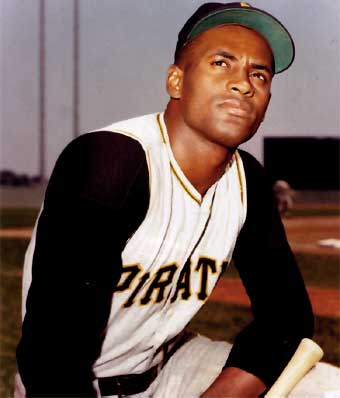
“Clemente,” the new book by pulitizer prize-winning author, David Maraniss, hits the shelves today. It is a fine appreciation of Roberto Clemente, who is undoubtedly one of the most charasmatic players of the post-War era. Although Clemente was a key member of two World Championship teams, he played in relative obscurity in Pittsburgh during the 1950s and ’60s, and was overlooked for his much of his career. Until, of course, his monumental performance in the 1971 Serious, and his untimely death in December of 1972. His legend and reputation have grown ever since.

As my pal Steve Treder put it to me in an e-mail recently:

Clemente was actually slightly underrated until the late ’60s, and especially during the 1971 World Series when he suddenly got noticed by the national media. At that point they all suddenly seemed to think he was better than he actually was, after years of being overlooked. His early tragic death soon afterward froze his image in time. Had he lived, and had a few years of decline phase at the end of his career, his reputation probably would have balanced out about right. As it is, many casual fans seem to think he was the equal of Mays/Aaron/Robinson/Mantle, when in fact he wasn’t nearly as good as any of them.

It is no insult to say that Clemente wasn’t as great as Mays, Aaron, Robinson or Mantle. They are all legends. Fortunately for Maraniss, off-the-field, Clemente was more interesting than most. And between the lines, Maraniss points out, Clemente had a terrific, inimitable style.

There was something about Clemente that surpassed statistics, then and always. Some baseball mavens love the sport precisely because of its numbers. They can take the mathematics of a box score and of a year’s worth of statistics and calculate the case for players they consider underrated or overrated and declare who has the most real value to a team. To some skilled practitioners of this science, Clemente comes out very good but not the greatest; he walks too seldom, has too few home runs, steals too few bases. Their perspective is legitimate, but to people who appreciate Clemente this is like chemists trying to explain Van Gogh by analyzing the ingredients of his paint. Clemente was art, not science. Every time he strolled slowly to the batter’s box or trotted out to right field, he seized the scene like a great actor. It was hard to take one’s eyes off him, because he could do anything on a baseball field and carried himself with such nobility. “The rest of us were just players,” Steve Blass would say. “Clemente was a prince.”

Thanks to Mr. Maraniss and the good people at Simon and Schuster, here is an excerpt from “Clemente.” This section is less about Clemente specifically and more about the conditions that Black and latin players encountered in the early 1960s. But it establishes the backdrop that is essential to understanding Clemente’s story. Enjoy!

BOOK EXCERPT: From “Clemente”

By David Maraniss

“Pride and Prejudice”

[Clemente] arrived at Pirates camp to train for the 1961 season on March 2, a day late. He and Tite Arroyo had been delayed entry from Puerto Rico to Florida until tests came back proving they did not have the bubonic plague, a few cases of which had broken out in Venezuela during the tournament.

On the day he reached Fort Myers, free from the plague, a story ran on the front page of the New York Times under the headline: NEGROES SAY CONDITIONS IN U.S. EXPLAIN NATIONALIST’S MILITANCY. One of the key figures quoted in the story was Malcolm X, the Black Muslim leader, who in the Times account was referred to as Minister Malcolm. Interviewed at a Muslim-run restaurant on Lenox Avenue in Harlem, Malcolm X said the only answer to America’s racial dilemma was for blacks to segregate themselves, by their own choice, with their own land and financial reparations due them from centuries of slavery. He dismissed the tactics of the civil rights movement as humiliating, especially the lunch-counter sit-ins that were taking place throughout the South. “To beg a white man to let you into his restaurant feeds his ego,” Minister Malcolm told the newspaper.

This was fourteen years after Jackie Robinson broke the major league color line, seven years after the U.S. Supreme Court struck down the separate-but-equal doctrine of segregated schools, five years after Rosa Parks and Martin Luther King Jr. led the bus boycott in Montgomery, four years after the Little Rock Nine desegregated Central High School in the capital of Arkansas, one year after the first lunch-counter sit-in in Greensboro. Year by year, the issue of race was becoming more urgent. The momentum was on the side of change, but the questions were how and how fast. In baseball, where once there had been no black ballplayers, now there were a hundred competing for major league jobs, and along with numbers came enormous talent, with ten past and future most valuable players among them. Yet every black player who reported to training camp in Florida that spring of 1961 still had to confront Jim Crow segregation. Even if their private emotions were sympathetic to Malcolm X’s rage at having to beg a white man to let you into his restaurant, the issue in baseball was necessarily shaped by its own history. Having moved away from the professional Negro Leagues and busted through the twentieth century’s racial barrier, black players did not view voluntary resegregation as an option, and separate and unequal off the field was no longer tolerable.

Wendell Smith, the influential black sportswriter who still had a column in the weekly Pittsburgh Courier but wrote daily now for the white-owned newspaper Chicago’s American, began a concerted campaign against training camp segregation that year. On January 23, a month before the spring camps opened, Smith wrote a seminal article that appeared on the top of the front page of Chicago’s American headlined negro ball players want rights in south. “Beneath the apparently tranquil surface of baseball there is a growing feeling of resentment among Negro major leaguers who still experience embarrassment, humiliation, and even indignities during spring training in the south,” Smith wrote. “The Negro player who is accepted as a first class citizen in the regular season is tired of being a second class citizen in spring training.” Smith added that leading black players were “moving cautiously and were anxious to avert becoming engulfed in fiery debate over civil rights,” but nonetheless were preparing to meet with club owners and league executives to talk about the problem and make it a front-burner issue for the players association.

(more…)

I Got Five on it

Nerd Alert

Taking a holiday interlude from all things baseball for a minute, I was noodling around with the idea of top Five lists and came up with a bunch to share with you, just cause, well, I like to stimulate conversation, what can I say?

Five Great Stones Songs to Crank:

1. “Monkey Man” Scorsese was so cool to use it in “Good Fellas”
2. “Midnight Rambler”
3. “Stray Cat Blues”
4. “Doo, doo (Heatbreaker)” Organ riff is stupendous.
5. “Rocks Off” “The sunshine bores the daylights outta me…” Great moment.

“Can’t You Hear Me Knocking?” is pretty damn slammin’ too. I especially like the first three minutes.

Five Fun End Title Movie Sequences:

1. “Diner” Could listen to those dicks yenta-it-up all day…
2. “Liar, Liar” Carey is hilarious but Swoozie Kurtz gets the biggest laugh. To his credit, Carey is a good sport about it too.
3. “Cannonball Run” Classic, Burt and Dom schtick.
4. “Grumpy Old Men” Burgess Meredith steals the show with his “blue” material.
5. “Married to the Mob” At the very tail of the credits is a small scene, an epilogue of sorts, between Mathew Modine and Michelle Pfieffer. They dance together along the steps of a courthouse or a museum to a latin tune. She slowly moves backwards and he inches closer. Just as he gets to her, she backs into the handrailing, and quickly tumbles backwards. He lurches forward to grab her and just as he grabs her, she’s far back enough to smack her head and…freeze. They freeze the frame. And you’re just like, damn, no way that fall wasn’t going to hurt. But Pfieffer totally gave herself to the scene. Got to give her credit. Onions!

Five Great New York Movies (’70s, ’80s Edition)

1. “Dog Day Afternoon” Is Brooklyn in the house?
2. “Taking of Pelham 1, 2, 3” Every pastrami-on-rye-character actor in New York is in this movie. With Mathau in the lead, how can you go wrong?
3. “Tootsie” Not really thought of a New Yorkk movie but was in every way. Murray is a monster in the supporting role. It’s my favorite Dustin Hoffman performance.
4. “Annie Hall” Classic Woody, filmed all over the city.
5. “Moscow on the Hudson” One of Robin Williams’ best, from uptown to the lower east side, this is an over-looked New York flick.

Five Great Baseball References in non-Baseball Movies

1. “The Odd Couple” Oscar misses a triple play because Felix gets him on the phone asking some old wifey questions.
2. “One Flew Over the Cuckoo’s Nest” Nicholson narrating Koufax pitching against the Yanks in the 1963 World Serious.
3. “Woman of the Year” Tracy takes Hepburn to a baseball game. Her interactiion with the fan sitting behind her is the highlight of the sequence.
4. “The Cameraman” Buster Keaton’s first movie for MGM. Keaton plays a cameraman who goes to Yankee Stadium one afternoon only to find that the team is out of town. So Keaton plays and imaginary game of baseball–pitcher to the hitter–and ends up swinging and circling the bases. It must have been filmed in 1927, and the footage looks great.
5. “In the Bedroom” I haven’t seen the whole movie, but I did see a sequence toward the end of the film where the father of the dead boy captures the boy’s killer, and is driving him in a car to a place where he plans to kill him. And as they drive there is a Red Sox game playign on the radio. They let the radio call go on and it adds a good deal of subtle–even comic–distraction to tension at hand.

Honorable Mention:

“Ferris Bueller” The classic chant. I was never really down with that chant, but it caught most everybody’s imagination for a minute there.

“Mystic River” Opening scene, dudes talking about Tiant and the Sox.

“The Bad Lieutenant” New York city sports radio talk show legend Chris Mad Dog Russo is the voice over during the opening credits and sports gambling–during a fictitious Mets season—plays a part throughout the movie. The Russo rant at the begining is a classic.

Five Great Jeff Bridges Movies

1. “The Last American Hero” The Junior Johnson story.
2. “Thunderbolt and Lightfoot” Clint Eastwood buddy picture.
3. “Tucker” Failed Coppola epic.
4. “Cutter’s Way” Cult California art house movie, early 80s.
5. “American Heart” Gritty, disturbing drama with Edward Furlong.

Five Best Movies I Last Saw in the Theater

1. “The Squid and the Whale”
2. “Syriana”
3. “Good night, and Good Luck.”
4. “A History of Violence”
5. “Batman Begins”

I don’t know that any of them were great necessarily, but it just so happens that the last five movies that I’ve seen in the theater have all been worth the price of admission to me. They all had something going for them, enough for me to say they were worth the dough. And what more can you say?

Center Stage

Book Excerpt

It wasn’t easy to select an excerpt from Howard Bryant’s new book “Juicing the Game,” because so many of them are excellent. But I think that one of the most insightful and powerful sections focuses on Barry Bonds, the greatest player and most controversial figure of his era. So for your summertime reading pleasure, please enjoy Chapter 17 from “Juicing the Game.”

By Howard Bryant

(Part One of Two)

The problem was Barry Bonds. The BALCO testimonies combined with the commotion and compromise that led to a strengthened drug policy, one baseball executive thought, provided baseball with a special opportunity. The sport could start fresh and begin a new era of enforceable drug testing while allowing the suspicion and doubt that plagued the previous decade to slowly recede into history. Bonds, however, would not allow baseball such a clean break from the steroid era.

The problem was that he was too good. To the discomfort of some baseball officials, Bonds would soar so high above anyone who ever played the game that no one would ever be allowed to forget this difficult decade, for he was no longer one of many great players, but arguably the best ever. Bonds already owned the single-season home run record and was set to break Hank Aaron’s career record in 2005 or 2006. In addition, between 2001 and 2004 he hit for four of the top twelve slugging percentages of all time, breaking Babe Ruth’s eighty-one-year-old record in 2001, and, over the same four seasons, recorded four of the top eleven on-base percentages of all-time, breaking Ted Williams’s single season record in 2002 and then demolishing his own record by becoming the first man to reach base more than 60 percent of the time over a full season in 2004.

The result was a bitter irony to that spoke to the odd and unprecedented state of baseball: Instead of celebrating the greatest player the sport had ever produced, numerous baseball officials entered 2005 lamenting the notion that they were being handcuffed by him. Bonds stood as the symbol of the tainted era, of its bitter contradictions and great consequences. Jason Giambi’s was a more open scandal, but Bonds was more emblematic of the larger complexities. If baseball suffered from the conflict of reaping the benefits of high attendance and unprecedented mass appeal while its players individually fought the taint of illegitimacy, then Bonds’ continued ascension, first past his peers and then past every iconic standard in the game’s history, served as an eternal reminder of all the sport did not do to protect its integrity when it had the opportunity. By shattering Mays, eclipsing Ruth, outdistancing Aaron, and putting the single-season home run record even further out of reach, Bonds and the era in which he played would always be present.

Thus, the enormous specter of Barry Bonds loomed, not because of his guilt or his innocence, but precisely because of the impossible question of how much of his phenomenal achievement (and by extension the feats of his peers) was real, how much was due to his use of anabolic substances, and how no one, for or against, friend or foe, could ever discuss the greatest player of his generation or the greatest records in the sport without in turn discussing the drugs that contributed to them. Not only would the decade from 1994 to 2004 be forever associated with steroids, but so, too, would the record books. There would be no escape, either for Barry Bonds or the sport that made him famous.

(more…)

Strikes and Gutters: Part Seven

As Good as it Gets

Every time I ride out to Brooklyn to visit my old barber I get this feeling that once I get there, he won’t be around anymore. It is not only because he’s getting older but because the Carroll Gardens-Cobble Hill neighborhood has become so gentrified that the older shops along Smith street are regularly replaced by chic boutiques, hip bars and trendy new restaurants. I lived in Brooklyn for five years (1995-2000) and loved my barber, Efrain Torres, a soft-spoken Puerto Rican man who lost the lease on his barber shop four years ago. Since then, he has a chair in another shop on Smith street, and still happily works six days a week.

It may seem like a long way to schlepp for a haircut. After all, I live in the Bronx now. But Efrain approaches his work with great care and respect for his craft. The barbers around my way are a good bunch of guys, but they cut hair like they are late for dinner. And not only do they rush, but their movements are coarse and violent. Their work is often sloppy. I’ve got a hard cut to screw up–a conservative fade (1 1/2 on the side and 2 on the top with a straight razor to clean up the lines). But I usually come home with small nicks from the razor with random little hairs sticking up from the top of my head.

Emily, who loves my hair short, will inspect their work and usually has some cherce words for their craftsmanship. “You should go back down there and have them get it right.”

“Ahh, sweetie, it just doesn’t work like that. It’s fine, whatever.”

I know I’m getting a second-rate cut but it’s depressing trying to find a new shop. I always know that I’ve got Efrain, who I visited last Friday afternoon. (I’m not the only one who will travel a ways to see him either. He has regulars that come in from Long Island and Weschester as well.) A father and son–also Puerto Rican–own the shop and cut heads too. They will be silent for long periods of time and then suddenly come to life with tall tales of fighting and “How to be a man.” They speak a mixture of Spanish and English, usually depending on who is in the shop. A heavy-set Spanish woman has a corner area where she cuts women’s hair. A glass statuette of a dolphin sits on top of a can of hairspray next to her. I’ve rarely seen her with any clients. She spends most of her time rummaging through her bag or through the drawers of her table looking for make-up. You’d think her bag was a clown’s prop. She’s in there forever. Then she applies more lipstick, eye-shadow. She is comically vain. When she’s left with nothing else to do, she will take a hot-iron and touch up her big, orange hair.

Efrain speaks with a heavy Spanish accent, but has a gentle voice and is unhurried in virtually all of his movements. It is always comforting to see him. He works in a predictable, almost robotic manner. Always the same routine. It’s one that I’ve come to forget. I used to get impatient waiting for him to finish, but now, I appreciate the pace. His hands are soft. When he wipes away small hairs that have fallen in my face with a brush, he does it as if he touching somebody who is asleep, afraid to wake them.

He’ll tell me stories that have no punchlines. He’ll stop what he’s doing at one point for the payoff. I sit there with a frozen smile on my face waiting for the kicker which never comes. So I keep smiling and offer a laugh which prompts him to laugh back, pleased that I’ve enjoyed his story.

When he’s finished with the straight razor and everything is done, he’ll take a pair of sissors and snip behind my ears or on the top of my head. As he was doing this last Friday he stopped and told me, “I’m sorry it takes so long, but you have to pay attention to the details. It’s the small details that make the difference.”

Ain’t it the truth. The telling detail. It’s hard to find people who take their craft seriously, but when you do find them, they are worth their weight in gold. Am I right? No matter what they do. If they drive a bus, or cut heads or write for a living. Pat Jordan is a throwback baseball writer. He is a journalist who writes “straight” stories in a style that pre-dates New Journalism or Gonzo writing, though he came of age in the era of Tom Wolfe and Hunter Thompson. His best pieces are long profiles, but he doesn’t get to do much of them anymore. His most recent baseball piece for The New York Times Magazine wasn’t longer than 2,000 words. He used to write 6,000 word articles regularly.

It’s hard for a writer like Jordan to thrive in the today’s magazine culture, which is a shame for someone who takes his craft seriously. He writes clearly, and has a keen eye for observation, not to mention human behavior. He respects the language and doesn’t let cute language or gimmicks get in the way of the story. But even if he doesn’t get the opportunity to pen longer pieces anymore, he is now offering a look at some of his best unpublished work. Jordan recently launched a website which posts a new story every month. They are no baseball pieces yet, but a sampling of all kinds of work: a piece about a healer, an expose on the porno industry. Jordan is charging up to four bucks per story. The shorter stories are only one or two dollars.

Anyhow, they are worth the money if you appreciate honest and unpretentious craftsmanship. Jordan writes like Efrain Torres cuts heads: with sensitivity and discipline. His work also suggests that he is doing exactly what he was meant to do on this earth. He cares about his craft which makes the visit well-worth the trip. Tell him I sent you.

Dirty Four-Letter Word

Work

As Mark McClusky noted earlier this spring, writing about how difficult it is to play baseball is a tired cliche. Still, as trite as it may sound, baseball-as-hard-work is a metaphor that suits me to a tee. More to the point, I am inspired by how much hard work it takes to play the game. When Derek Jeter can struggle as mightily as he has this season, I know it’s not because of a lack of effort on his part. He’s just got to eat humble pie like the rest of us. Actually, I feel good knowing how much work he puts into improving his game because it helps me push myself.

Sound corny? Maybe it is, but it works for me. One of the reasons is because of my own relationship to work. It’s not that I’m a poor worker–far from it–but I’m often a resentful worker. My sense of entitlement and grandiosity have a nasty habit of getting in my way: I’m too smart, charming and talented to have to work so hard, man. Aren’t I above this? Instead of looking at work as the key to eventual success and happiness I look at it as a form of punishment, an affront to my greatness. Plus, I get so wrapped up in what I want the results to be that I am unable to appreciate the process.

I struggle with this daily. It hasn’t kept me from busting my tail at my 9-5, or spending most of my free time writing a book. Yet I’m often so pissed off about having to do the work, that I exhaust myself, and find that I don’t have the energy I need to get everything done.

Writing is a lot like playing baseball in that it is simply very difficult to do well. There is some inspiration involved of course, but I find that writing is mostly a process of rewriting and editing and rewriting again. There is nothing glamourous about it, though it is extremely rewarding. My grandfather was a writer. He worked for the Brooklyn Eagle in the 1920s and later as a publicist for the ADL. When I was a kid he wrote a book about the history of anti-semitism in American called “A Promise to Keep.”

Recently, my father shared his enduring memory of watching grandpa write. “I don’t remember him at the typewriter, but I do have a clear image of him reviewing what he had written, sitting at the dinning room table. He made corrections by hand, and…he struggled. None of it came easily. It was very difficult for him.”

My grandfather wrote in a clean, succint style out of the E.B. White school. I was thankful to my dad for sharing that story because I’ve found that writing the Curt Flood book has been extremely hard. I felt comforted in realizing that for most people, writing is tough stuff. It ain’t supposed to be easy. Duh.

All of this started floating around in my head last night after I watched Joe Torre’s manager report on the Yankee pre-game. He was speaking about Bernie Williams and Torre mentioned that unlike Jeter, Bernie was not an instinctive player. Anyone who has watched Williams over the course of time knows this, but Torre meant that because he doesn’t have a natural feel for the game, it is that much harder for him to break out of a slump. Torre mentioned just how hard playing baseball is for Williams, and quite frankly, that’s why I Bernie’s been one of my favorites. I know how hard it is for him. That’s what has made his career so rewarding to follow. He had to bust his ass, and seriously apply himself, to get succeed.

I’m not ready to give up on Bernie yet, but even if he is close to the end, I’ll always look back on his career and be amazed by what he has accomplished, not by what he hasn’t done. And knowing that it’s such a grind for him helps me take it easy on myself when I find myself struggling, and fighting the process too.

CRUEL TO BE KIND

My former employers, Joel and Ethan Coen, have a new movie out today. The New York papers gave “Intolerable Cruelty,” a screwball comedy featuring George Clooney and Cathering Zeta-Jones, glowing notices. I’ve seen the ads for the movies, and it hasn’t really looked too great from what I can tell. They sure aren’t billing it as a Coen Brother film, just like Woody Allen’s latest wasn’t marketed as a Woody Allen movie. But looks can be deceiving, as Times film critic Elvis Mitchell confirmed in his review:

Between a lethargic trailer propped up by “Gimme Some Lovin’ ” and the mainstream-sentimentalist producer Brian (“A Beautiful Mind”) Grazer’s name on the credits, there’s plenty of reason for an involuntary recoil toward the Coen Brothers’ fearsomely titled new movie, “Intolerable Cruelty.” But the film is not shudder-worthy. Instead, it’s something not seen in movie theaters for a long time: an intelligent, modern screwball comedy, a minor classic on the order of competent, fast-talking curve balls about deception and greed like Mitchell Leisen’s “Easy Living” and Billy Wilder’s “Major and the Minor.”

The last time the boys tried to make a commerical film—“The Hudsucker Proxy”—it bombed. Ethan used to say that maybe 1,000 people actually paid to see it in the theater. So what did they do next? They were going to make “The Big Lebowski”—the movie I eventually worked on–but John Goodman was unavailable at the time. So they went ahead and made a low-budget crime caper about sad sack criminals in North Dakata.

I remember one of their old friends telling me that he emplored the guys not to make “Fargo.” “You guys just had a major flop and now you are going to make a movie that exactly twelve people are going to want to see.” Of course, “Fargo” turned out to be a fluke smash, and since then, I think Joel and Ethan make whatever movie they can get financed (they usually have at least a half a dozen scripts which they’ve penned, to choose from).

I hope the new one is good. The boys are currently in L.A. filming a remake of the Alec Guiness comedy “The Ladykillers,” which stars Tom Hanks.

DUKE OF HIS DOMAIN

Pat Jordan was a bonus baby for the Braves in the late ’50s and early ’60s. He threw gas, but never made it to the majors; eventually, he became an accomplished journalist. His first memoir, “A False Spring” is considered a baseball classic. I think that the sequel, “A Nice Tuesday,” is a better book, even if it is more about Jordan’s personal life than it is about baseball.

Jordan still writes for The New York Times magazine, and it is always a treat to read his work, especially if it is about a pitcher. Before “A False Spring” was released in 1974, Jordan published a collection of stories he had written for Sports Illustrated called, “The Suitors of Spring.” All of the articles in this collection are about pitchers, including the likes of Tom Seaver, Bo Belinksky, Bruce Kison, Steve Dalkowski and Sudden Sam McDowell.

I buried myelf in the book last night after suffering through the Yankees game, hoping to take my mind off the pain of the here-and-now. Jordan describes McDowell and Dalkowski as young men who were possessed by their talented; Seaver, on the other hand, was a late-bloomer with less natural talent. Of course, Seaver became on the great pitchers of all time. Dalkowski never made it passed triple A and McDowell never became the great pitcher he was expected to become.

Here is a healthy excerpt from the article on Sudden Sam, “A Talent for Refusing Greatness:”

Like many extremely talented people, Sam McDowell does not judge his accomplishments by conventional standards. His challenges, and their eventual resolution, are very private affairs independent of either the approval or disapproval of anyone else.

…”The only thing I get satisfaction from,” he says, “is accomplishing something I’m not supposed to be able to do. I live for challenges, and once I overcome them I have to go on to something new.”

…It is obvious that McDowell takes great delight in watching his pitches behave even when he’s only warming up. And he admits to often concentrating so much on his individual pitches and their perfection that he loses sight of everything else. His individual pitches then become his goal rather than simply the means of attaining some larger goal–a victory, for instance.

“I try and break things down to their simplest element,” he says, “and sometimes I guess I do it to an extreme. For instance, a game to me is just a series of individual challenges–Me against Reggie Jackson or Me againt Don Mincher. If I find I can get a guy out with a fastball it takes all the challenge away, so next time I throw him all curveballs. If I don’t have a challenge I create one. It makes the game interesting.”

…”No, I wouldn’t say Sudden is the toughest pitcher I ever faced,” says Reggie Jackson. “Now, don’t get me wrong. I like Sudden and I think he’s got the greatest fastball, curveball, slider and change-up of any pitcher I ever saw. I call him ‘Instant Heat.’ But still, I don’t mind facing him. That’s not because I hit him so easy, either, because I don’t. It’s just that Sudden simplifies things out there. He makes it like it used to be when we were kids. You know he’s going to challenge you, his strength against yours, and either you beat him or he beats you. And if you do beat him with a home run or something, hell, it don’t bother him that much. He’s not greedy. He lets you have a little, too. And he won’t throw at you, either, because he’s too nice a guy. He knows that with his fastball he could kill you if he ever hit you. You see, baseball’s still a game to Sudden, the way it should be to all of us. Hell, I’d pay to see him pitch because I know he enjoys himself so much. Do you know he’s got 12 differenet moves to first base? That’s a fact! When he was going for his 1500th strikeout he was trying so hard he fell down on a pitch to me. I took it for a third strike. I loved that, though. That’s why I look forward to facing him even if I don’t hit him a helluva lot. But someday I will. Me and Sudden will be around for a long time, and one of these days I’m going to connect with one of his sudden pitches and watch out! But still, I have to say that Sam McDowell isn’t the toughest pitcher I ever faced. As a matter of fact, I think he’d be tougher if he had less ability. Sounds crazy, huh? But it’s true. Sudden’s just go too much stuff.”

I don’t think that Jeff Weaver is nearly as gifted as McDowell was, and perhaps he isn’t even as interesting a person. But I thought about Weaver after reading this article last night, because he’s a pitcher with great stuff who hasn’t been able to put it together. Of course, you can replace Jeff Weaver with your favorite talent who hasn’t lived up to expectations. The point is, all the talent in the world doesn’t mean spit if you don’t thrive as a competitor.

Anyhow, there isn’t a baseball writer I enjoy more than Pat Jordan. Next time you happen upon one of his books, pick it up and give him a try.

STRONG MEN ALSO CRY, SIR

STRONG MEN ALSO CRY, SIR

When I first went to work for the Coen brothers in the fall of 1996, they had already cast Jeff Bridges as “The Dude” for their next movie, “The Big Lebowski.” For the first couple of weeks I was with them, they agonized over who would play “Lebowski.” The trouble was, most of the actors on their wish list were dead: Fredy Gywnne, Raymond Burr, Orson Welles. Ultimately, it came down to two actors, one of whom was British. I thought the Brit was the better choice, but for Joel and Ethan it was important that the actor was American, preferably of the midwest variety.

Thinking back on it, George Steinbrenner would have been an ideal choice. I was reminded of this after reading that Boss George got all choked up in front of a group of stunned reporters after yesterday’s exciting win over the Red Sox. As Lebowski would say, “Strong men also cry.” Veteran New York reporters Bill Madden and Joel Sherman were genuinely surprised at Steinbrenner’s reaction. That is saying something. Jack Curry reports in the Times:

The tears were visible beneath his sunglasses soon after Pride delivered for the second straight game. Steinbrenner depicts himself as a tough guy and a tough owner, a man who has avoided tears after winning some World Series titles. But on this emotional day in an emotional rivalry, when two of his best players wound up at a hospital for X-rays, Steinbrenner turned softer than pudding.

“I’m just proud of the way Mussina pitched,” Steinbrenner said. “You know, I’m getting older. As you get older, you do this more.”

According to Madden:

With a security guard behind him looking on in astonishment, Steinbrenner briefly excused himself from the group of reporters that had surrounded him in the press box as the Yankees were loading the bases against the new Red Sox closer, Byung Hyun Kim, with none out in the ninth. Moments later, as jubilation reigned from the 55,000 fans exiting the Stadium and Sinatra was kicking into “New York, New York,” Steinbrenner came back, still teary-eyed, only this time with a tone of defiance to his voice.

“Did you think Martinez was deliberately throwing at your guys?” he was asked.

“I have no idea what’s going on in his head,” Steinbrenner said, “except that it didn’t look too good to me. Two hitters? One of whom, Soriano, is on his way to the All-Star Game. … If he did deliver a message, he delivered the wrong — message!”

The postgame interviews featured relatively tame he-said/she-said accounts of Martinez’s drillings.

Naturally, the Sox left town vexed that they couldn’t win the series. Bob Ryan has a terrific summary of the game in the Globe this morning:

…Of course the Yankees found a way to win by a 2-1 score, and when it was over Niagara Falls took up residence on Steinbrenner’s face. The Boss bawled some serious tears of joy. Seriously. He was really crying. When it comes to this rivalry, there is never any need to make things up. Fact has been kicking Fiction’s butt now for nigh onto nine decades.

Ryan points out how the Red Sox wasted a great opportunity to take the series with Martinez pitching and the Yankees fielding their B (or C?) team.

The journalistic temptation is to get melodramatic when discussing the ceaseless Red Sox fan frustration against the Yankees, but how can you not when you see games like this? Losing this game, and falling back to the same situation the team was in when it arrived here in the wee smalls Friday (i.e. four games behind), on a day when they were playing the junior varsity and your team was suiting up the full varsity is, what? Galling? Humiliating? Exasperating? Oh, God forbid, and worst of all, predictable? Was there a seasoned Red Sox fan out there who didn’t know with 1 trillion percent certainty in his or her heart of hearts that as soon as Giambi’s single tied the game off Martinez that this game was a lost cause and more than likely would end in some messy fashion?

What did we have in the ninth? We had two singles on two-strike pitches, a hit batsman to load the bases with none out, and a botched grounder that had inning-ending 4-2-3 written all over it.

And then we had George opening up the facial faucet.

When the subject matter is the Red Sox and their ongoing battle to slay the big, bad dragon from the Bronx, no mere sportswriter is equal to the task. But Homer is dead, and we are all you’ve got.

Weep on, George. History remains on your side.

Bronx Banter Interview: Ethan Coen

The Fan Who Wasn’t There

I worked for Joel and Ethan Coen from the late summer of 1996 through the fall of 1997. I had been working as an apprentice film editor in New York when I went to work for them, first as their personal assistant and later as an editing room assistant on their movie, The Big Lebowski.  We were in Manhattan, at their office for the first six weeks; in November we went out to Los Angeles, where Lebowski was shot on location. After the film was in the can, Joel and Ethan returned to New York to cut the film.

In October of 1996, when the Yankees won their first title since 1978, we were still in New York, so the Coen brothers are tied up in my baseball memories. Joel had no interest in the game at all, but Ethan seemed vaguely aware of what was happening. His wife Tricia, who was the co-editor of Lebowski, as well as the script supervisor, was the sports nut. We stood on line outside of the Yankee clubhouse on 5th avenue to try and get World Serious tickets to no avail.

Ethan Coen’s favorite player on the Yankees was Kenny Rogers. “The Gambler” was like some half-wit out of one of their movies: well meaning, but hapless. The worse Rogers performed for the Yankees, the more shit he got from the fans and the media, the more Ethan liked him. We used to call him “Kenny Everyman” cause Kenny kinda looked like he could be just about anybody. A schmuck.

Nowadays, Tricia is in a fantasy league and Ethan likes to play the guitar. (He yodels too; in fact, one of the best parts of hanging out with Eth and Trish was that they turned me onto Jimmie Rogers, Hank Williams, Webb Pierce and George Jones.) I’ve spoken with Trish several times recently about her league, and she’s taken to it like a bee to honey. Ethan and Joel were been busy mixing the sound to their latest movie this spring, a big-budget studio comedy—a romantic comedy—fittingly titled Intolerable Cruelty. (George Clooney and Catherine Zeta Jones star, and the film will be released in October.)

I finally caught up with Ethan on the phone last week. But first, Tricia and talked some baseball. She was indignant that Torre had been starting Jason Giambi at the DH when he hits better when he plays in the field. Ethan was picking a guitar in the background, noodling around.

“It’s bullshit, man. He’s messing up my fantasy league team,” Tricia told me.

I tried to reason with her but she wasn’t having it, so she passed the phone to her husband, who momentarily stopped playing his axe. Ethan can be a man of few words. It’s not that he doesn’t like talking; it’s just that sometimes he’d rather not be bothered (especially when he’s dicking around on the guitar). Although both Joel and Ethan are definitely Jewish, and definitely New Yorkers, they are definitely not Jewish New Yorkers. There are a lot of meaningful silences; a lot of pregnant pauses that I assume has something to do with growing up in the middle of the country.

Here is an excerpt of our conversation:

Eth: Al?

BB: Eth.

Eth: How are ya?

BB: I’m good. Nu?

Eth: I’m good. You know, I don’t have any thoughts on baseball, though. I quit following it.

(Starts playing the guitar again.)

BB: You quit?

Eth: Ya.

BB: Completely?

Eth: Ya.

(Guitar playing stops.)

BB: Wow. That’s no good. Where did it all go wrong? I mean didn’t you play as a kid?

Eth: No.

(More guitar.)

BB: Did you want to play as a kid?

Eth: I went to games as a kid.

BB: Zolio Versalles.

Eth: Yeah, Zolio. You know. Harmon Killebrew. Rod Carew was with the Twins then. Tony Oliva.

BB: Oliva was good.

Eth: Yeah.

BB: Did you like baseball movies as a kid?

Eth: No.

BB: Do you like them now?

Eth: No.

BB: Has there ever been a good baseball movie?

(Long pause.)

Eth: No.

BB: Really?

Eth: Is there? I don’t think so.

BB: Bad News Bears?

Eth: Bad News Bears: Excellent picture! Yeah, yeah. You’re right. But just that one.

(More guitar.)

BB: Most of them bite. Field of Dreams was painful. The Natural was wack.

Eth: Yeah.

BB: You guys would make a good baseball movie.

Eth: I don’t think so. No, you know, Bad News Bears: you’re right. It’s a really good movie.

BB: Well, that was a great interview man.

Eth: You know what you can put down? You can say that I quit being a baseball fan when the Yankees traded Mickey Rivers.

BB: What the hell kind of thing is that to say? What about your boy, Kenny Rogers?

Eth: Is he still playing?

BB: Yeah, he’s still playing. He plays on your hometown godamn team for crying out loud. He’s on the Twins.

Eth: Shit. (Laughs) “Kenny Everyman.”

BB: Mr. Square Jaw himself. Kenny Everyman is as good as he ever was, and he’s even funnier now cause he’s older, and more mulish than ever.

Eth: Yeah, I should see the Twins the days that he pitches.

BB: The best thing that guy ever did on the Yankees was when they had the World Series parade, and after stinking up the joint all year long, he was up on top of the float hooping and hollering louder than anyone.

Eth: Yeah, he was waving a flag. Pleased as punch. with pride. (Laughs) That’s really funny. That’s good.

BB: Mick the Quick, huh?

Eth: Yeah, I quit being a fan when the Yankees traded him.

Well, there you have it: Ethan Coen is not a baseball fan. But that doesn’t prevent him from making good movies, or giving one hell of an interview.

Hope everyone has a great Memorial Day Holiday.

P.S. Joel and Ethan left for Los Angeles last week to begin their next show–a remake of the old Alec Guiness comedy The Lady Killers. It’ll star Tom Hanks, and according to Joel, “you know, well, a whole lot of other people.”

THE PLUMBING OF PITCHING When

THE PLUMBING OF PITCHING

When I was growing up, my uncle Fred taught me how to draw, paint and most importantly: How to look. He also taught me how to be a Yankee fan. Fred married into the family when I was about three years old, and he made a huge impression on my creative development, as well as my sporting identity. A painter who makes a living as an animator—he’s done spots for “Seasame Street” for years—Fred went to Cooper Union during the height of the Abstract Expressionist movement, in the mid to late 50s.

Fred would take me to the Metropolitan Museum of Art when I was a kid, and excitedly, expertly guide me through various galleries to specific paintings. He always had a lesson plan. The way he navigated his way around the MET made me feel like I was getting a private tour from an expert, which in fact, was exactly what I was getting. Whether we looked at Vermeers, or Carravaggios or Edward Hoppers or later on, Franz Klines or DeKoonings, Fred deconstructed paintings like he was a plumber. Straight, no chaser, no muss, no fuss, you know what I mean?

We looked at how painters work with spacial relationships, with composition, and tension, and color in their work. Essentially, Fred stripped away all subject matter, and was able to show me how painters paint, and how they made the viewers look, regardless if the picture was abstract or representational.

“Every great painter has a drawing or a painting of a sink,” he used to tell me. And he’s not far off the mark. Put your favorite artist to the test when you get a chance. A sink, after all, is not a glamourous subject, but it is a blunt, and simple one which requires basic discipline and concentration. A sink also stripes away all pretention. What is it? A lousy ol’ sink, you say. But, it’s a great subject for any artist, young or old. The beauty is in the simplicity, because it’s such a throwaway, everyday object.

I’ve carried this notion of plumbing to other areas of interest as well—writing, music, moviemaking. I love dissecting the creative process, discovering the bare bones of a craft.

Of course, baseball offers both the art of pitching and hitting for us to dig our forks into.

This past weekend, there were several articles on the nuts and bolts of pitching mechanics, preparation and philosophy. So, let’s take a break from all the other nonsense for moment and look at the plumbing of pitching…

I saw Tim Kurkjian file a report from Yankee Camp over the weekend, and he said that Jose Contreras looked impressive in his bullpen sessions for the Yankees. According to scouting reports, Contreras apparently uses his slider and his forkball/splitter early in the count to set up his fastball. Curious.

The Post filed a story on the Cuban pitcher this past weekend, detailing his training methods:


“Since I left the [Cuban national] team in Mexico [in October], I took one week of vacation. Since then I have been working out and throwing,” Contreras said at his Legends Field locker. “I have pretty much been throwing for three months. I would say that’s the reason I might look a little bit ahead of the other guys.”

Yesterday was the second bullpen session for Contreras since camp opened and it was impressive. The fastball had life and the splitter danced. And his location, usually off for pitchers at this stage, was razor sharp.

“I am ready right now to start pitching in games,” said Contreras, who signed a four-year deal worth $32 million.

“He is very businesslike, very compact and he seems very sure of himself,” Torre said of Contreras, who uses multiple arm angles ala Orlando Hernandez when releasing the ball. “There is a lot there and you get a little anxious to see him but it’s still not going to be until you see the games that we are going to take note of all the equipment he has.”

Two pieces of equipment Contreras uses aren’t conventional to most pitches. Prior to throwing in the bullpen, Contreras plays catch with a 12-ounce baseball (a regular baseball is between 5 and 51/4 ounces) and a softball.

“The [baseball] builds strength and the softball helps with the grip, especially the splitter,” said Contreras, who was 117-50 during the past seven seasons in Cuban league play.

John Harper, who is as unassuming as he is outstanding, had a terrific feature on Tom Glavine’s approach to pitching last Sunday:


Glavine’s cutter moves in harder and later on righthanders than I would have guessed. It doesn’t have the speed of Mariano Rivera’s cutter, or the violent down-and-in action of Al Leiter’s, but if it’s thrown in the right location, Glavine’s cutter has enough on it to tie up righthanded hitters.

“Yeah,” he says, “but it’s easy to throw that pitch when I don’t have to worry about making a mistake with it. It’s harder to trust it with a hitter in there. That’s what makes pitching away so much easier. If I make a mistake out there, it’s usually only a single.

“I’ve been stubborn over the years about pitching away, but even though hitters know I’m going to work them away, I find that most hitters are not going to allow themselves to hit singles to right field all day. They want to hit home runs and extra-base hits. In the back of their mind they’re always waiting for you to hang that one pitch they can smoke, and when you throw the ball down and away where you want to, you get your nice little ground ball or popup.”

Glavine then motions for me to slide out farther, so that the middle of my chest is in line with the outside corner. He tells me later he’ll ask Mike Piazza to set up the same way on either side of the plate because he uses the catcher’s body, not the glove, as his target.

“I can’t throw to the glove,” he says. “I want the catcher’s body splitting the corner. I’m looking at your chest and I want the glove right there in your chest.”

…”I don’t have a complicated game plan,” he says. “I might shake off 10 to 15 pitches a game, but everybody knows what I like to throw. Mainly I want my catchers to get out there a couple of inches off the plate so I can hit that spot and they don’t have to move the glove to catch it.”

Meanwhile, the Times had a good story on Chris Hammond, who is slated to replace Mike Stanton as the lefty set-up man in Joe Torre’s bullpen. (Evidentally, Hammond had a relationship with none other than the Great Joe D himself. On a side note, one of DiMaggio’s lawyers has just published an anti-Joe D book. Looks as if that trends here to stay.)


Hammond has a killer changeup.

Hammond has thrown the pitch since he was 10. It got him to the majors with Cincinnati in 1990, and brought him back a decade later.

“Very few pitchers really want to throw the changeup,” Hammond said. “I was talking to John Rocker a few years ago about it: `If I were you, I would sit down and that’s all I’d do in the off-season, work on my changeup.’ And he goes, `I can’t. If I’m going to get beat, I don’t want to get beat on my changeup.’ “
Hammond was incredulous at that logic. For him, the changeup is a devastating weapon, evaluated at a score of 80 – the highest possible – by the Yankee scouts.

“It has different action on it,” Newman said. “He has great arm speed and command of it. The funny term people use for it is the `Bugs Bunny change,’ because it’s like it stops in midair. It’s so good he throws it to left-handers and right-handers.”

Hammond held right-handers to a .206 average last year, and left-handers were more helpless, batting .174. He delivers his changeup awkwardly, stomping hard on the mound with his right foot and then releasing it. The harder he stomps, the more he is concentrating.

…”It looks funny,” Newman said, “but more importantly, hitters think it looks funny.”

The Yankees’ bullpen is stuffed with hard throwers – Mariano Rivera, Steve Karsay, Antonio Osuna – and Hammond gives them a different look. As it is with all newcomers, he must prove he can handle the pressure of being a Yankee. But wherever he is, Hammond said, he will always be nervous.

Joel Sherman has a piece on Andy Pettitte, who is facing a crucial season in his career, and Jonah Keri conducts an outstanding interview with Oakland A’s pitching coach, Rick Peterson, at Baseball Prospectus, that is well worth reading.

Finally, Murray Chass wrote a compelling article about the Jesse Orosco and the fountain of youth on Sunday. He also compiled a list of aging veterans who are willing to play for a fraction of what they once made, which once again suggests just how difficult it is for some players to leave the game. (Jim Caple and Aaron Gleeman give their takes on Rickey Henderson, who has not been signed by a team yet.)

Here is Dennis Eckersley, always a straight-shooter, talking to Mike Bryan in spring training 1988, from the book “Baseball Lives:”


People say baseball players should go out and have fun. No way. To me, baseball is pressure. I always feel it. This is work. The fun is afterwards, when you shake hands.

When I was a rookie I’d tear stuff up. Now I keep it in. What good is smashing a light on the way up the tunnel? But I still can’t sleep at night if I stink. I’ve always tried to change that and act like a normal guy when I got home. “Hi, honey, what’s happening?” I can’t. It’s there. It doesn’t go away. But maybe that’s why I’ve been successful in my career, because I care. I don’t have fun. I pitch scared. That’s what makes me go. Nothing wrong with being scared if you can channel it.

I issued to hide behind my cockiness. Don’t let the other team know you’re scared. I got crazy on the mound. Strike a guy out, throw my fist around—“Yeah!” Not real classy, but I was a raw kid. I didn’t care. It wasn’t fake. It was me. This wasn’t taken very kindly by a lot of people. They couldn’t wait to light me up. That’s the price you pay.

I wish I was a little happier in this game. What is so great about this shit? You get the money, and then you’re used to the money. You start making half a million a year, next thing you know you need half a million a year. And the heat is on!

Used to be neat to just be a big-league ballplayer, but that wore off. I’m still proud, but I don’t want people to bother me about it. I wish my personality with people was better. I find myself becoming short with people. Going to the store. Getting gas.

If you’re not happy with when you’re doing lousy, then not happy when you’re doing well, when the hell are you going to be happy? This game will humble you in a heartbeat. Soon as you starting getting happy Boom! For the fans—and this is just a guess—they think the money takes out the feeling. I may be wrong but I think they think, “What the hell is he worrying about? He’s still getting’ paid.” There may be a few players who don’t give 100 percent, but I always thought if you were good enough to make that kind of money, you’d have enough pride to play like that, wouldn’t you think? You don’t just turn it on-or off.

This got me thinking about the David Cone situation. While Eck is scathingly honest, in the mold of a Pat Jordan, Cone is far more measured and polished. Still, I think Eck hits on something universal when he said:


I’ve been very fortunate to pitch for fourteen years in the big leagues. That’s a long time for a pitcher. I’m afraid of life after baseball. Petrified. I’m not ashamed of saying it. I’ll be all right, but nothing will ever compare with this. I will not stay in baseball. I think about commercial real estate and money-big money!

Or maybe I’ll grow up after I get ouf of this fuckin’ game.

And that, I believe is at the heart of the matter for all American men, not just aging jocks: The fear of growing up.

Perish the thought.

feed Share on Facebook Share on Twitter Share via email
"This ain't football. We do this every day."
--Earl Weaver