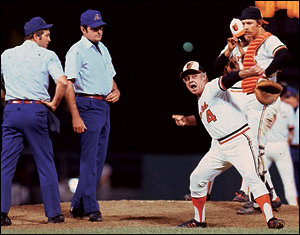
Tom Verducci has a nice long profile of Earl Weaver in the current edition of SI:
As we are watching this 21st-century game in Fort Lauderdale, I ask Weaver if he has ever heard of moneyball.
“Moneyball?” he says, bewildered. “No.”
I tell him it’s shorthand for how Oakland gained a competitive edge by understanding, among many other things, the value of on-base percentage. “Ohhhhh, wait … a … minute!” Weaver bellows. “That was my favorite right there, on-base percentage! Don Buford wasn’t getting to play under Hank Bauer [Weaver’s predecessor]. He’d get in a ball game every now and then and feel like he had to get three or four hits. I told Buford, ‘I’m willing to play you as long as you have a .400 on-base percentage.’ All of a sudden he becomes a regular, and he’s walking a hundred times and hitting right around .300.” Buford had played 669 career games before Weaver was named Orioles manager on July 11, 1968. His OBP was .335. He played 617 games over the rest of his career, all for Weaver. His OBP under Weaver was .388.
Before Moneyball, before Beane, before Bill James—but not quite before Copernicus—Weaver, a white-haired gnome who never played a day of major league baseball, knew what worked. The most recent generation of general managers, armed with their computer printouts and Ivy League–educated assistants, all channel something from the Earl of Baltimore.
“I’ll tell you one thing he did that we all learned from,” Red Sox general manager Theo Epstein says. “He would develop arms on the big league level by bringing up a young pitcher and putting him in the bullpen, mostly out of long relief. Once he got some experience he could move into the rotation. The Twins did it with [Johan] Santana to perfection.”